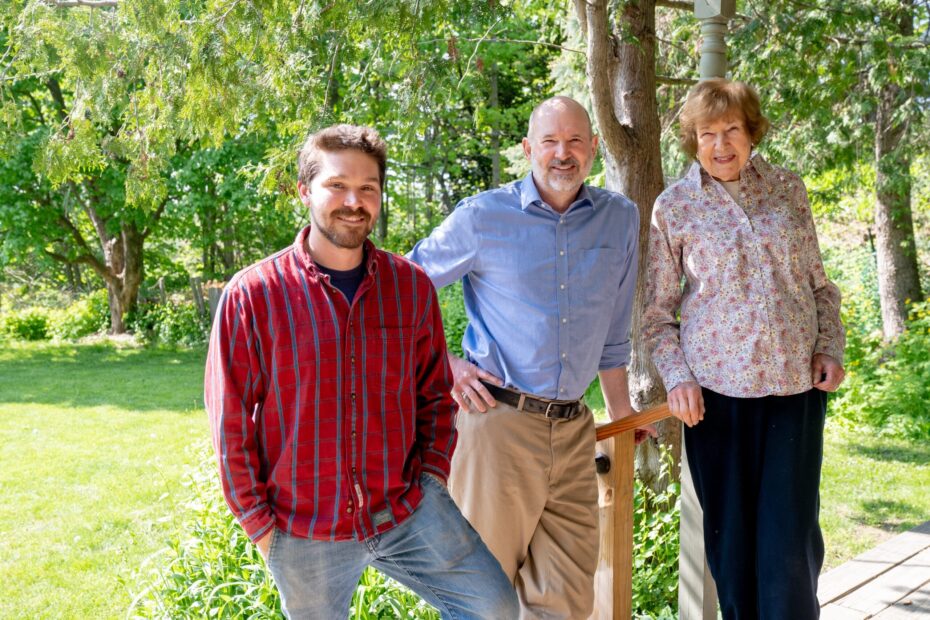
Faced with a tightening budget last summer, retired bishop Willard Schultz turned to a long-running home-sharing program on a friend’s recommendation—a service that pairs seniors with spare space with roommates in search of affordable housing.
Just a couple of months later—following a thorough matching and vetting process by the New York Foundation for Senior Citizens, the octogenarian welcomed a 22-year-old recent Columbia University graduate working as a tutor into his sunny, three-bedroom rent-controlled apartment in the Washington Heights section of New York City.
“He’s very personable and it’s a system that works, and I think it should be expanded all over the country,” Schultz tells Realtor.com®.
In fact, there are roughly 50 to 60 home-sharing programs of various scopes and target audiences— including students, former inmates, and people facing homelessness—currently operating in more than a dozen-and-a-half-states, from Hawaii to Pennsylvania, according to the National Shared Housing Research Center.
At a time of persistent affordability constraints and housing shortages, home-sharing has been touted as an effective way to reduce mortgage and rent burdens, provide companionship and assistance with daily chores, and enhance safety for seniors looking to age in place.
“It’s good to have somebody around at night, just in case it’s an emergency,” says Schultz, who just turned 88 years old.
How home-sharing works
While home-sharing programs vary in structure, the basic concept is consistent: Organizations like the NYFSC, which receives federal, state, and city grants, and HomeShare Vermont, which is funded mainly through donations, offer free screening and matching services that connect “hosts”—people with extra bedrooms in owned or rented homes and apartments—with compatible “guests.”
The New York City-based program requires at least one participant to be over 60 years old and the other over 18. Its Vermont counterpart does not have an age restriction: Hosts range from 28 to 100 years old, while guests range from 19 to 82 years.
HomeShare Vermont Executive Director Connor Timmons says the program’s most senior host joined at 99 years old after having a scare involving a fall in her home, which convinced her that she needed to have someone around in case of an emergency.
Rather than pay traditional rent, guests typically contribute toward the host’s monthly housing costs, perform household chores like cooking and cleaning through what is known as a service exchange, or provide a combination of financial assistance and help around the house.
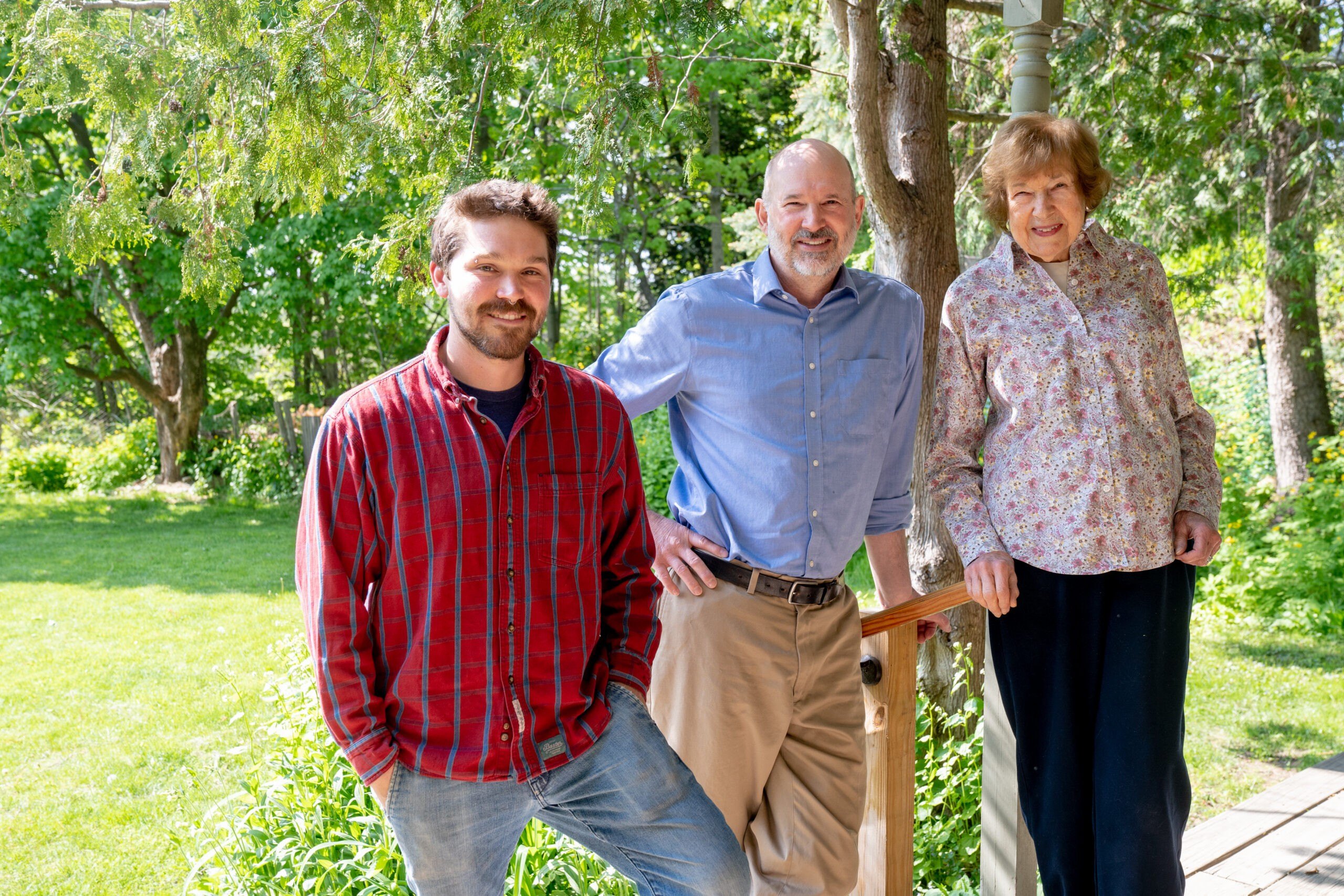
Under NYFSC’s rules, hosts are not allowed to ask their guests to contribute more than 50% of their monthly rent. At HomeShare Vermont, contributions are capped at $650 for standard rooms, and $850 for mother-in-law suits or ADUs, and up to 15 hours of weekly assistance.
Timmons says about one-third of guests pay no rent in exchange for help around the house.
Safety is a top priority requiring prospective home-sharers to undergo in-depth assessments. At HomeShare Vermont, a nonprofit that has been operating for 43 years, the “high-touch” evaluation process involves six background checks and requires no fewer than three references.
“It’s really important to us that there’s no doubt about safety,” Timmons tells Realtor.com. “If there’s a crime against personal or property in someone’s background, then that’s the end of the application. If they mislead us in the application, then that’s the end of application.”
NYFSC’s selection process is similarly rigorous, involving home inspections, interviews, background checks and three references from unrelated people to minimize the risk to either roommate.
“We are very, very careful,” Linda Hoffman, president of NYFSC who founded the program in 1981, tells Realtor.com. “We’d rather not make a match than make a bad match.”
Schultz confirms that the rigorous review process has helped put his mind at ease.
“I never felt threatened or like I was in putting myself in any kind of danger,” he says.
Much like in traditional matchmaking, trained caseworkers ask aspiring hosts and guests to fill out detailed applications covering a wide range of topics, including financial contributions, household tasks they are willing to perform, daily routines, hobbies, and interests.
“If we have someone who’s a vegan chef and we have someone who needs to eat vegan, great,” says Timmons. “Conversely, if we have someone who has celiac disease and can’t live in a space with flour or what have you in the air, then we’re not going to pair them with someone who’s into baking.”
To assess compatibility, program coordinators conduct one-on-one interviews with prospective hosts and guests and visit the home to ensure the living environment is safe and comfortable.
At NYFSC, all that information is fed into the agency’s QuickMatch database, which is then used to find compatible flatmates—similar to a dating site, but with much stricter oversight.
For example, Schultz’s application said that he enjoys reading, going to the opera, and learning about archeology. Based on that information, program staff matched the host with a young academic fond of reading and history who was looking for a more comfortable living situation than the one he had at a dormitory.
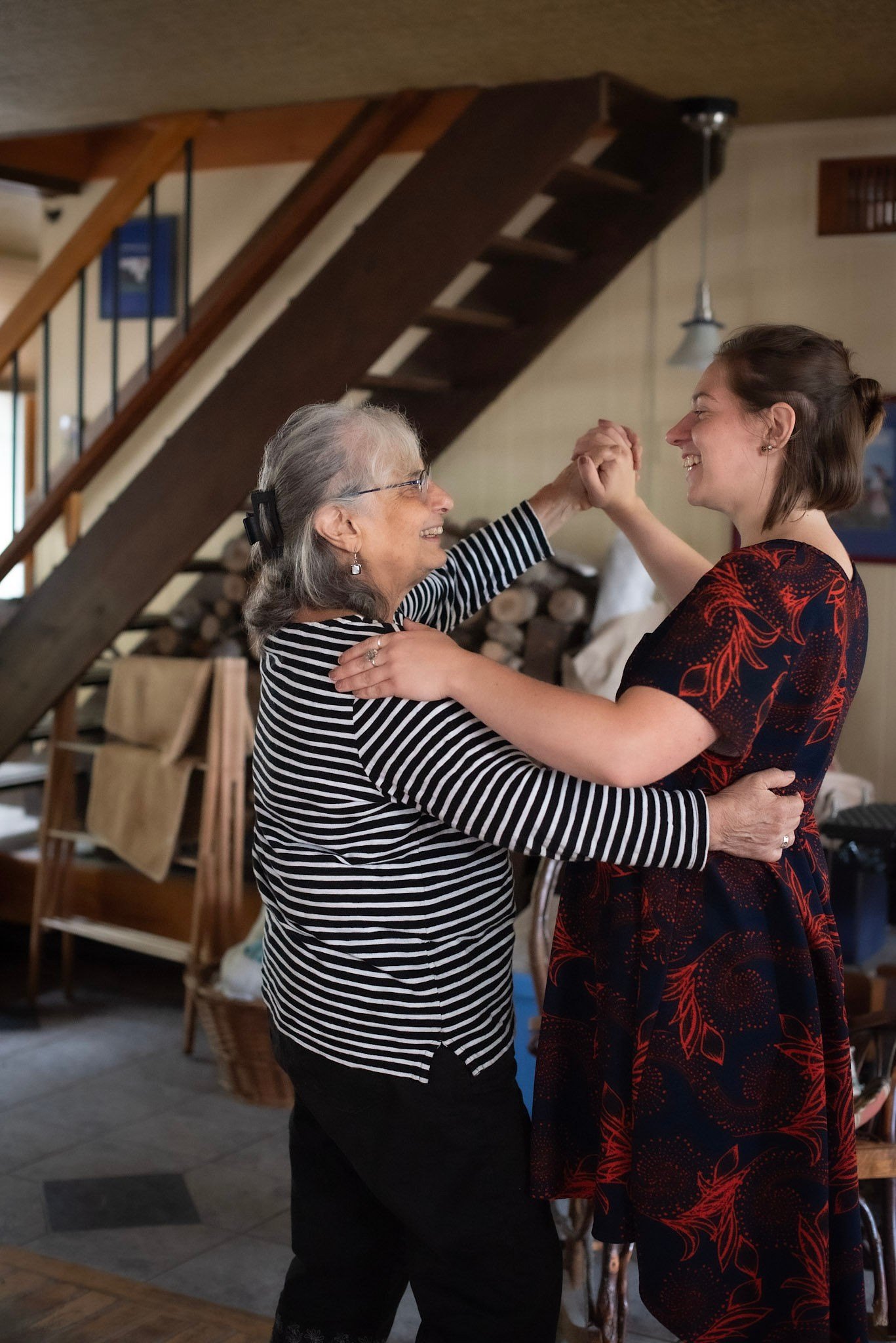
The next step is for the host and guest to review their would-be roommates’ profiles before meeting in person to test out their compatibility and establish a rapport.
Using Tinder lingo, Timmons calls it the “swipe right moment,” which is overseen by program staff engaging in what he calls “shuttle diplomacy” facilitating the interaction between host and guest.
If everyone agrees, the host and guest sign contracts outlining the terms of the house-sharing arrangement. NYFSC’s contract includes an off-ramp option in case things do not work out: within 30 days either party can back out of the deal.
HomeShare Vermont offers a similar escape clause in the form of a two-week, no-strings-attached trial period.
“It’s sort of like a two-week visit with a friend, and at the point of that two-week visit, we will have established our match agreement,” says Timmons, explaining that the agreement outlines all the responsibilities the guest agrees to take on, like taking out the garbage, or walking the dog.
“Everyone looks at it, they get a chance to edit it together, they get a chance to poke at it,” adds the director.
Approximately 90% of trial matches become permanent arrangements, but even then caseworkers’ jobs are not done: They will continue regularly checking in to make sure that everyone is happy with the match.
In September, Schultz opened his apartment to his young flatmate. Five months into the home-sharing experience, he says he has no regrets about his decision.
As part of their agreement, the recent Ivy League graduate contributes $900 toward Schultz’s rent in exchange for having access to a private bedroom and bathroom.
He does not take part in service sharing, which Schultz says works for him because he relies on friends and a home attendant to bring him meals and keep his part of the apartment tidy.
Home-sharing is booming as affordability tightens
Both Hoffman and Timmons say that 2025 was a banner year for their respective organizations, with more matches than ever as housing affordability pressures intensified.
By the end of last year, HomeShare Vermont created 60 new matches and maintained roughly 90 active matches. The average match lasts around two years, though some last much longer.
“We have a match that’s going on two decades,” says Timmons. “We have matches that go 10 years, five years, that’s not unheard of.”
In some cases, guests stay only a few months—long enough to save for their own rental, or put aside money for a down payment on a starter home.
NYFSC also closed out the year on a high note, helping connect 86 hosts and guests across the five boroughs.
Both the New York and Vermont nonprofits were founded in the 1980s, but their directors say the need for home-sharing services has only grown more urgent over the years due to a housing inventory crunch and strengthening affordability headwinds.
The Northeast stands out for seeing the slowest inventory growth in the U.S., at just 6.6% in January, according to the latest monthly housing market trends report from Realtor.com.
Vermont alone needs up to 36,000 new homes built by 2029 to keep up with demand, according to the Vermont Housing Needs Assessment.
Fewer housing units being built mean prices on existing for-sale homes and rental units are rising, squeezing low-income households and people on fixed incomes like seniors.
Timmons notes that in his home state of Vermont, about a third of homeowners and a third of renters are cost-burdened, meaning that they spend more than 30% of their income on housing.
In the next five years, 54% of the state’s population will be over 55, raising the question: How will retirees be able to age in place as housing costs continue to rise?
It’s especially relevant considering that 74% of Americans say they want to remain in their house and receive in-home care, according to Northwestern Mutual’s 2025 Planning & Progress Study.
In New York City, the typical home comes with a $749,000 asking price, which is nearly $350,000 higher than the national median.
At the same time, the latest quarterly New York City rental report from Realtor.com revealed that the median asking rent in New York City at the end of 2025 climbed 6.6% from a year ago, or $223, reaching $3,585.
Manhattan saw the city’s steepest rent growth, with the typical rent registering at $4,886.
“In the old days, part of it was for companionship as well as for financial reasons,” Hoffman says, reflecting on the history of the home-sharing program she launched four decades ago. “Now, it’s primarily financial, although they do end up with a second benefit, which is companionship and removing feelings of isolation and loneliness and depression.”
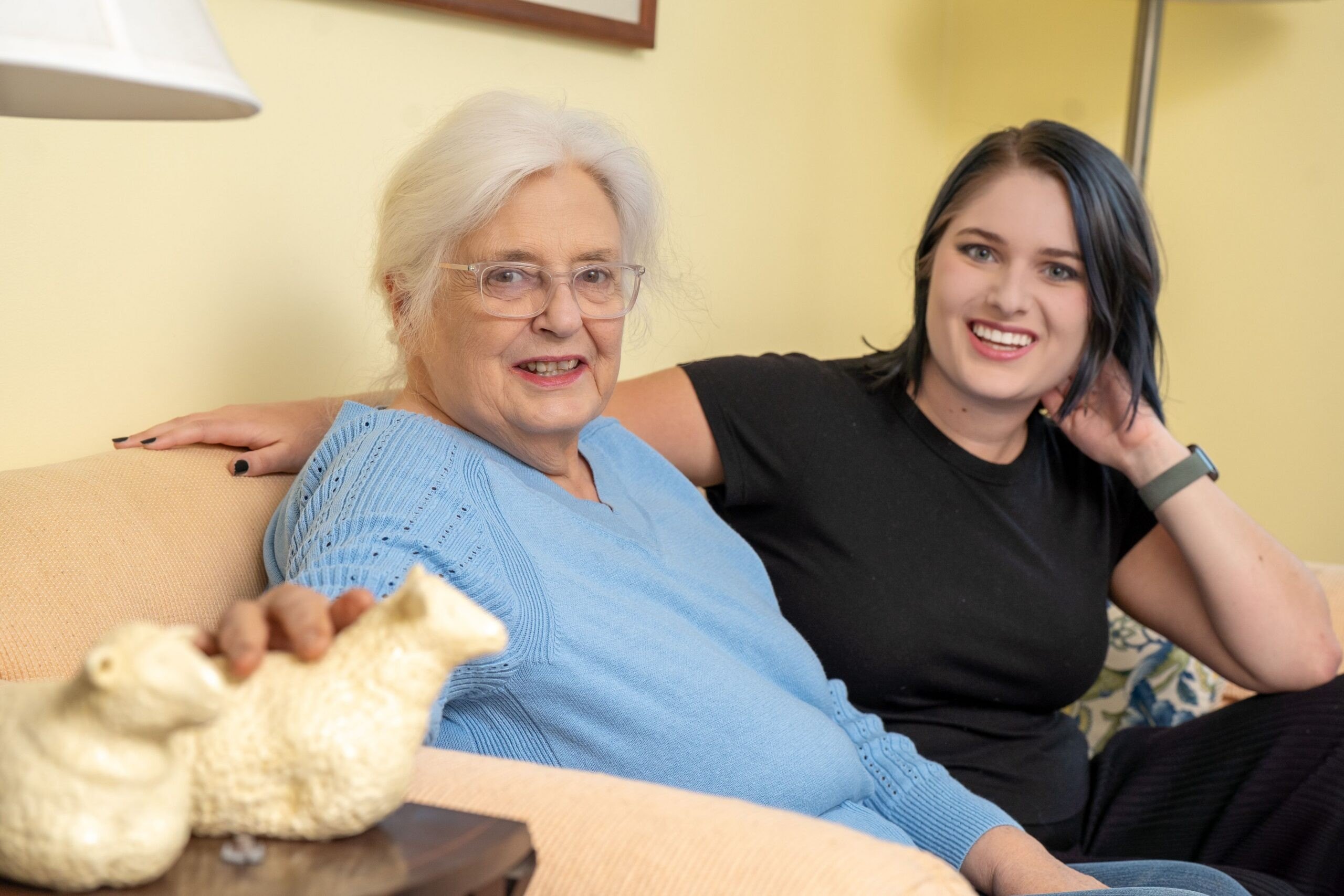
Both Hoffman and Timmons say they believe their nonprofits provide a vital service allowing low- and middle-income people, and especially seniors, to stay in their homes while at the same time helping chip away at the affordability crisis.
“You can’t imagine what the need is,” Hoffman says. “It’s enormous. I don’t understand how people can make it otherwise.”
Timmons said HomeShare Vermont’s mission is to help older residents age with dignity in their own homes while remaining active in their communities—without unnecessarily limiting housing opportunities for younger generations.
“I see us filling that gap in a really meaningful way,” he says, adding that another thing home-sharing does is allowing more people to move to and stay in Vermont.
“The amount of employers I talk to who have had to lose employees or lose potential employees because there’s nowhere for them to land,” he says. “That’s a real economic problem.”