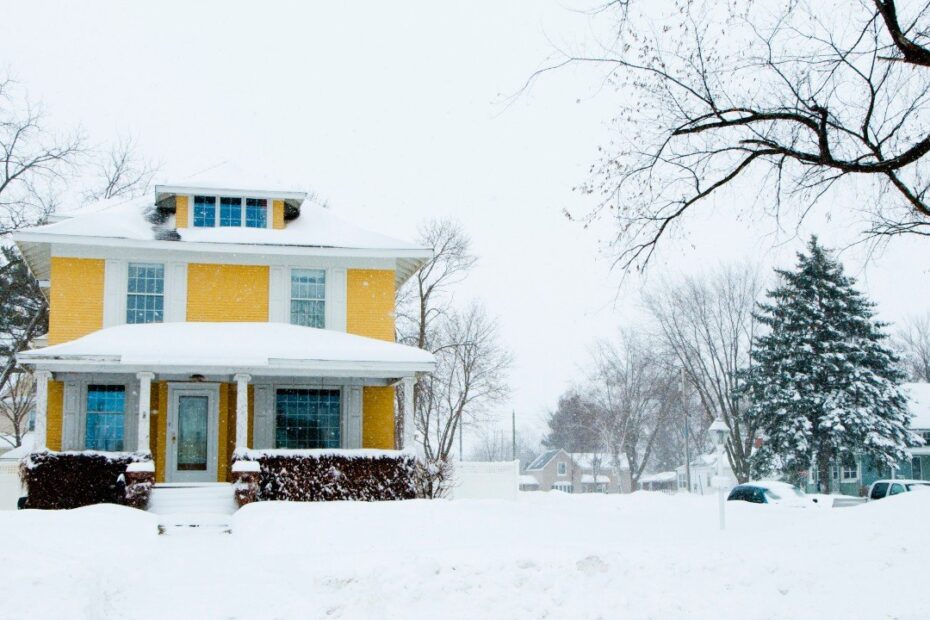
The U.S. is being slammed with yet another winter storm system that is expected to bring snow to the Great Lakes, the interior Northeast, and the Pacific Northwest and Rockies over the next few days.
The setup is producing a little bit of everything: lake-enhanced snow showers in Michigan; squalls in New York, Idaho, and even Texas; heavy mountain snow in the Cascades and Rockies; and moderate to heavy rain along portions of the Gulf Coast, according to a winter weather warning from the National Weather Service.
At the same time, a surge of arctic air is forecast to push temperatures well below average across the central and eastern U.S., with lows dipping below zero in parts of the Midwest.
Cold snaps and heavy snow have a way of exposing every weak spot in a house at once. If you’re in the path of this week’s storms, it’s time to prep your property before the worst weather moves in.
Great Lakes, Northern Plains, and interior Northeast: Snow bands and squalls
Across the Great Lakes and parts of the northern Plains, the next couple of days will feature on-and-off snow. Farther west in the northern Plains, a second system will bring areas of light snow, with pockets of moderate accumulation and reduced visibility.
For homeowners in these corridors, the focus should be on managing repeated bursts of snow and the eventual melt. Over 60% of homeowners have experienced damage to their home due to winter storms like these, according to research from Hippo, so it’s worth taking a quick look at roofs and gutters now.
In the interior Northeast, snow squalls are the bigger threat. These brief but intense bursts bring snow and wind that can turn a dry road into a whiteout in minutes.
Around the house, it makes sense to treat these like mini-storms. Pretreat steps, decks, and walkways with ice melt so they don’t instantly glaze over when a squall blows through, and make sure outdoor lighting is working so you can spot slick patches and drifts in low visibility.

Rockies and Central U.S.: Heavy mountain snow and wintry mix
Out West, a series of systems is lining up to drop substantial snow on higher terrain. The Cascades and northern Rockies are in line for the heaviest totals, with many higher elevations expecting 8 to 14 inches and the highest peaks potentially piling up to 3 feet.
Farther east, from the southern Plains through the Ohio Valley and into the Appalachians, the setup is softer on totals but still tricky—especially for travelers. Light snow and mixed precipitation are expected, with 1 to 2 inches of snow and a light glaze of ice forecast.
Even a thin layer of ice like this can turn steps, decks, and driveways into skating rinks and bring down weak branches onto roofs, vehicles, or power lines. Therefore, preparation in these regions is all about managing weight and ice.
Take stock of how much snow your roof can safely handle and look for warning signs of stress.
“If you have excessive icicles forming or big mounds of snow and ice building up at the eaves, you are likely to experience some water damage to your home,” explains Russell C. Vent, vice president of Paul Davis Restoration.
He recommends finding a local ice dam and snow removal company in your area and keeping their number on speed dial.
Gulf Coast and Southeast: Heavy rain and localized flooding
Moist southerly winds are feeding into a cold front draped along the Gulf Coast and Southeast U.S., laying the groundwork for widespread rain and thunderstorms. Where that front stalls, it can act like a conveyor belt, focusing heavier downpours and storms right along the coast.
Repeated rounds of rain over the same neighborhoods can quickly overwhelm drainage, leading to localized flash flooding even if total expected rainfall doesn’t look extreme at first glance.
For homeowners, the goal here is to give all that water somewhere to go (other than inside your house). Just 1 inch of water damage can cause up to $25,000 worth of damage, according to FEMA estimates.
Before the heaviest rain arrives, clear leaves and debris from gutters and downspouts, and, if it’s safe to do so, check any street drains or culverts near your home so they’re not already clogged. If your home has a history of taking on water, test your sump pump and any backup battery system to make sure they’ll kick on when you need them.

Cold snaps and ‘catch-up’ zones: Midwest, East, Plains, and interior West
In the Midwest and across the northern Mid-Atlantic and New England, a surge of arctic air is set to drop overnight lows into the negative single digits and teens. Daytime highs will struggle to climb out of the 20s in much of the Midwest, and the 20s and 30s in New England.
In these deep-cold zones, homeowners should move pipe protection to the top of their list.
“One sudden cold snap is all it takes for a heating system to fail or pipes to freeze, and when that happens, water damage follows fast,” says Paul Vacquier, CEO of Beagle Services, a plumbing technology company. “A burst pipe or appliance leak can cause tens of thousands in damage, often before a homeowner even notices.”
Vacquier recommends insulating any exposed plumbing with foam pipe insulation or heat tape, and shutting off and draining outdoor spigots and irrigation lines.
And if you experience this kind of freeze often, it may be worth installing a smart leak detector.
“Smart leak detection devices are among the rare smart devices that protect both the home and the homeowner’s wallet,” he says. “These systems monitor water flow, detect irregularities, and can automatically shut off the supply before a drip turns into a disaster.”
Farther south and west, temperatures will be cooler than average but not as punishing. Highs in the central and southern Plains, Texas, the Ohio Valley, and the Southeast will mostly run from the 30s to the low 50s, while the High Plains and interior West sit near or slightly above normal.
Homeowners in these areas should treat this as a gift: a chance to catch up on winterization before the next major cold shot. Use the milder stretch to seal gaps around doors and windows, insulate hose bibs and store hoses, and check how your HVAC system performs when it doesn’t have to work as hard—if it struggles now, it could fail when temperatures really drop.