Americans have been moving abroad to stretch their dollars, escape contentious politics, or simply to have an adventure—and many are relocating to Latin America.
Recent polls show an astonishing one-third of Americans—around 117 million people—would like to ditch the U.S. for somewhere else.
“A concept that once felt ‘out there,’ limited to budget travelers or serious adventurers, is now squarely in the mainstream,” Kathleen Peddicord, founding publisher of expat resource Live and Invest Overseas, told Realtor.com®.
While European countries such as Portugal, Italy, Spain, France, and Greece remain evergreen destinations for expats seeking a better and cheaper way of life—those countries are becoming more expensive. Portugal, for instance, ended its property investment Golden Visa due to climbing real estate costs.
Then, there is the rising tide against immigration. On April 1, Portugal’s parliament approved a revised version of the nationality law, extending the timeline required to apply for naturalization from five years to 10 years for non-EU citizens. The change is not yet signed into law by the president.
And Italy too has been tightening the rules on immigration, even leaving some American expats in the lurch as requirements changed mid-application.
An alternative to Europe
Latin America has been a welcoming continent below the border.
Thanks to its cheaper costs of living, proximity to the States, and favorable time zones—an important consideration for remote workers—not to mention the mild climate, biodiverse landscapes, and friendly expat policies, experts say Latin America is a hot destination.
“Latin America has been popular for U.S. retirees for decades now, with Costa Rica being the number one destination,” Ognjen Pavlovic, founder of expat resource Argentina Expat, tells Realtor.com. “Here, Americans can live in European-style walkable cities, small beach towns, jungle retreats, ultra-modern cities with glass skyscrapers, and everything in between.”
But he notes that some of the traditional expat havens have become too pricey even by American standards.
“The rising cost of living in popular retirement destinations has led expats to look elsewhere, and they’re beginning to choose smaller, lesser-known cities and towns in alternative countries across the region,” he says.
One big driver? Real estate. While Americans wrestle with home prices reaching a median $415,450, Pavlovic says that in Latin America, “one can easily get a mansion in most places for that price.”
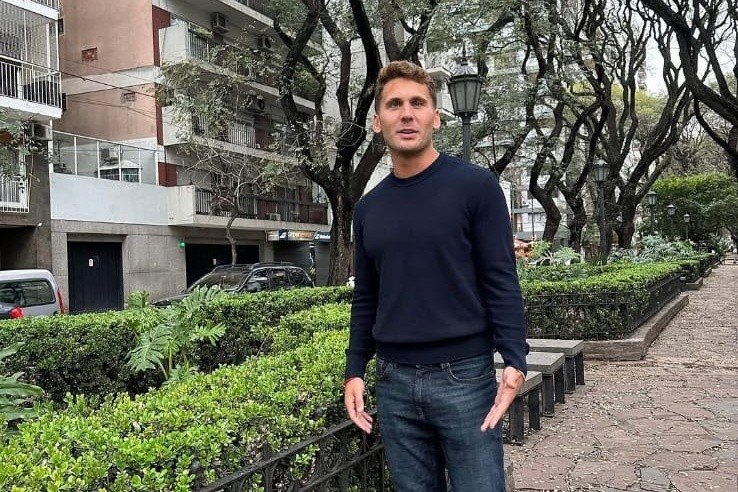
Take expat Alex Barletta, 34. In 2025, he fled the “rat race” of Miami for calmer vibe of Argentina.
After visiting Buenos Aires multiple times (and falling in love with an Argentinian woman—now his fiancee), he plunked down $250,000 for a two-bedroom in an amenity-loaded building in a residential neighborhood, Saavedra.
He estimates a comparable apartment in his former Miami ZIP code would have cost three to four times as much. Nor would he have the enviably low monthly outlay he has in his adopted hometown, which is only $300, including property taxes, common charges, and utilities.
“I fell in love with the lifestyle here,” he tells Realtor.com. “It’s a litany of things—from the day-to-day, to living a more stress-free life so I can focus on the moment.”
In Argentina, real estate runs an average $118 per square foot or $250,000 for a 2,126-square-foot house. Americans are now the country’s its largest foreign landowners, according to Argentina Expat, holding over 2.7 million hectares—an area larger than the state of Vermont.
Keep in mind that purchases are typically done in U.S. currency via wire transfer, with no mortgage.
“Buying land and property in Argentina used to be reserved for the ultra-wealthy like Ted Turner; however, now more and more middle-class investors, retirees, and digital workers are investing in the country,” says Pavlovic.
As the locals say: El argentino nace donde quiere—an Argentine is born wherever they choose.
Where to live in Latin America
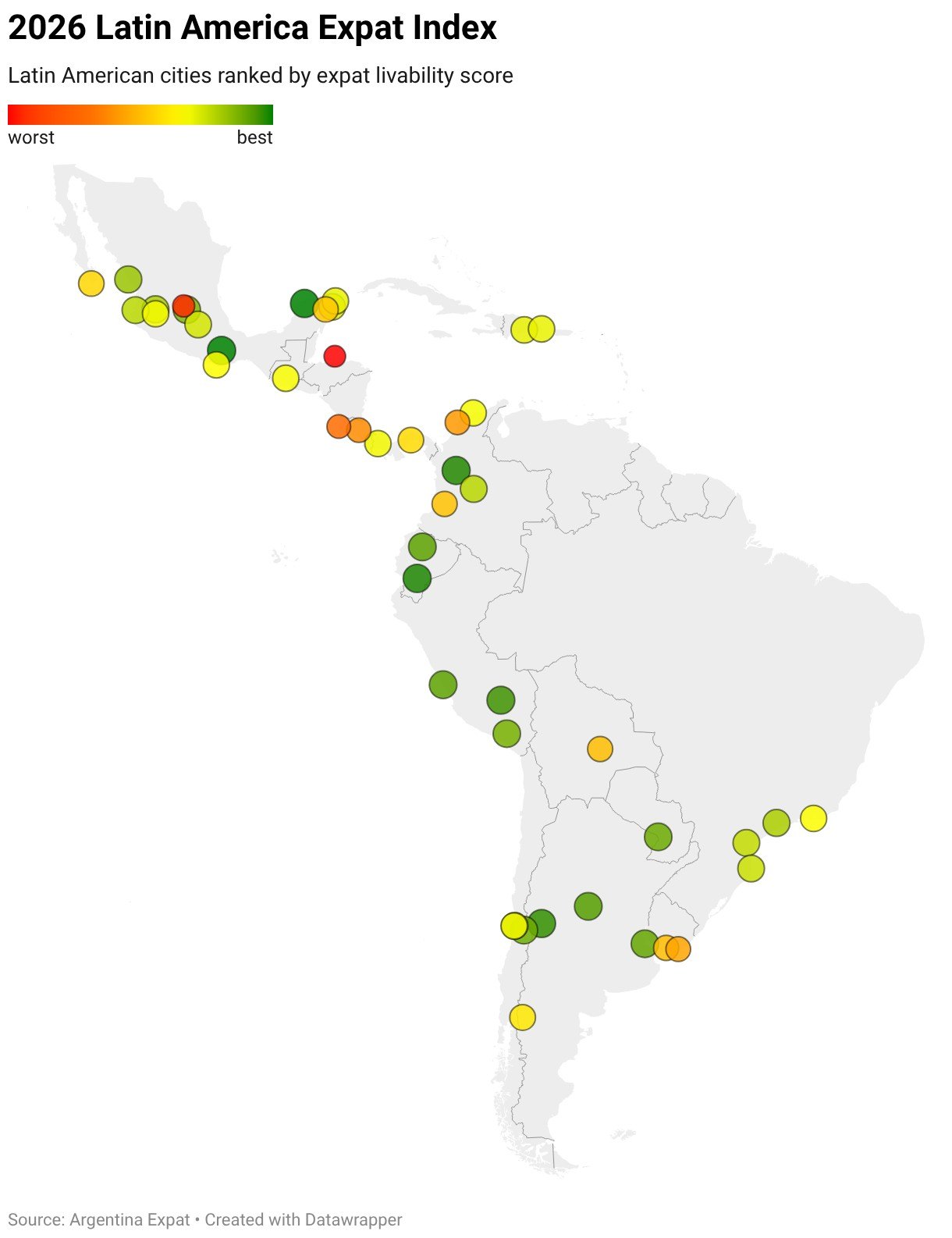
The Latin America Expat Index, compiled by Argentina Expat, examined 47 popular expat hubs and ranked them using metrics such as size of expat community, crime rates, cost of living, access to quality and affordable healthcare, climate, and ease of procuring visas.
The five highest ranking spots include Merida and Oaxaca, Mexico; Cuenca, Ecuador; Medellin, Colombia; and Mendoza, Argentina. While Boquete, Panama is ranked lower at No. 29, it is included here by virtue of its top rank on Live and Invest Overseas’ Best Places to Retire 2026 list.
If you’re itching to pack your bags and fly south, don’t be impetuous. Residency requirements can and do change, and you don’t want your dreams dashed just as you arrive.
“It’s always best to prepare documents before arriving in the country,” Argentina immigration attorney Martin Hecht of MH Legal Hub, tells Realtor.com.
A passive income (Rentista) visa is a good way to secure legal status. Passive income can include sources like dividends, pensions, Social Security payments, trusts, or rental income, and each country has its own minimum.
Passive income requirements are tied to the country’s minimum wage, and can fluctuate, so check the country’s official immigration channels or consult with an immigration expert.
“You’ll need financial statements, background checks, possibly marriage certificates,” says Hecht. “Even if this can be obtained remotely, we suggest that Americans start preparing before the trip to save time and money.”
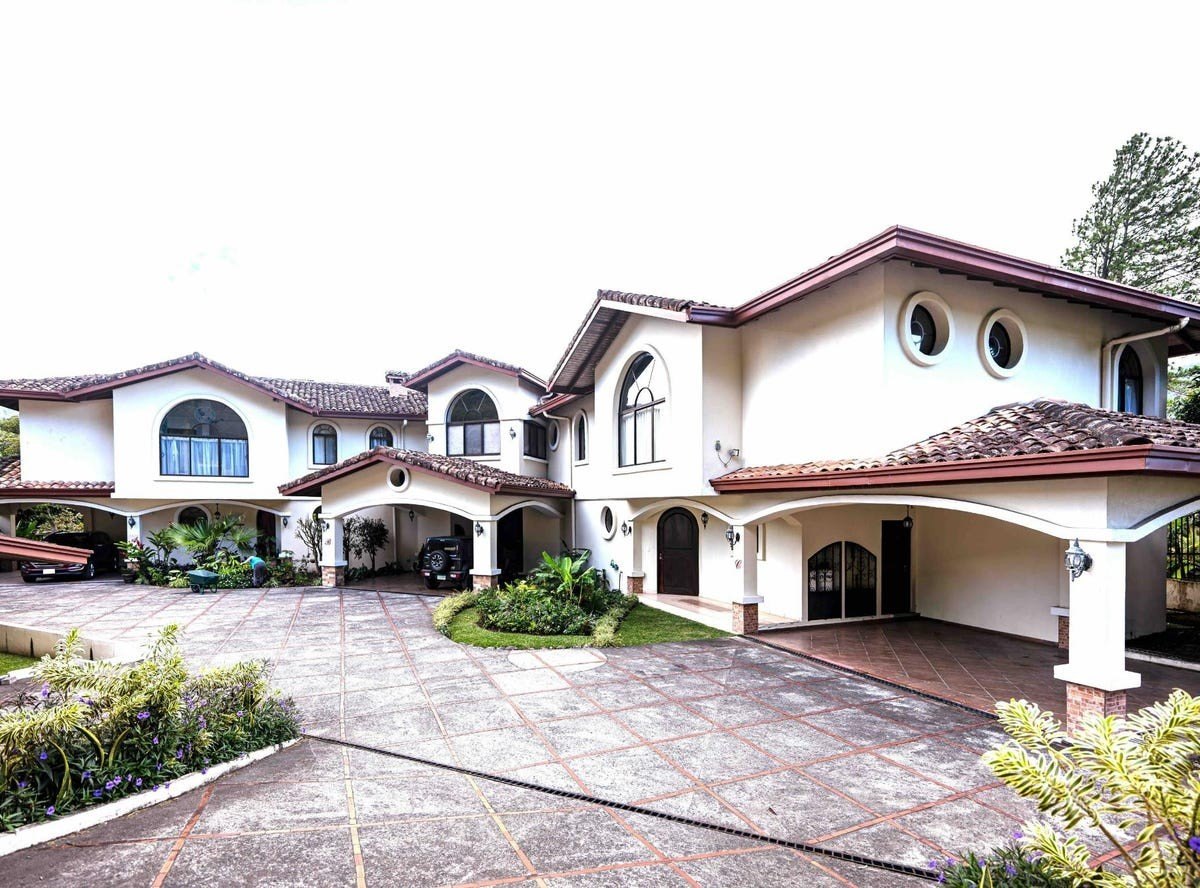
Boquete, Panama
Boquete is quickly becoming an expat favorite. It recently even beat out Algarve, Portugal as the No. 1 ranked country in Live and Invest Overseas Best Places to Retire 2026 list.
With an estimated monthly household budget of $2,400 (compared to the U.S.’s $6,545), this small Chiriquí highlands town is home to only about 25,000 people, a fifth of whom are expats from North America and Europe.
“It was an off-the-beaten track mountain town that few outside of Panama had even heard of,” Peddicord, who has been visiting Boquete for 26 years, tells Realtor.com.
“Back then, retiring in Boquete was a pioneering move. Now, Boquete is possibly the easiest move into expat life you could make.
“The infrastructure is solid, you can get by in English, and there’s a thriving and welcoming expat community. In the past, the one thing in short supply in Boquete was a lack of quality housing. But today, that challenge has been met with impressive new developments springing up.
“And that’s all in addition to Boquete’s eternal attractions, most notably year-round springlike weather, stunning, lush mountain surrounds, and world-class coffee.”
Mendoza, Argentina
While most people know Buenos Aires—Mendoza is only a two hour flight away, and becoming more popular with expats priced out of that capital city.
Pavlovic points to many benefits of the medium-sized (population 2 million) Mendoza: A 8,300-person strong expat community, 300 days of sunshine, a low cost of living, and access to quality healthcare.
Medical care is top notch and free for residents, though Pavlovic says it is so reasonably priced that American expats often pay out of pocket. Many also have a global insurance plan, such as the one offered by Cigna.
The city’s walkability and public transport system means you don’t need to own a car, though you may want one to explore smaller towns and the mountains. Its location in the Andes mountains with little to no humidity makes it perfectly comfortable for sports like hiking and kayaking.
It also gets high marks for its safety.
“Most Argentinians eat dinner very late—early would be 9 p.m.—so it’s quite common to see small kids and families walking around at 11 p.m. or even midnight,” says Pavlovic. “This contributes a lot to the feeling of safety.”
Merida and Oaxaca, Mexico
Although parts of Mexico, such as expat haven Puerto Vallarta, have been in the news for cartel violence, these two Mexican cities rank No. 1 and No. 2, thanks in part to their low crime stats.
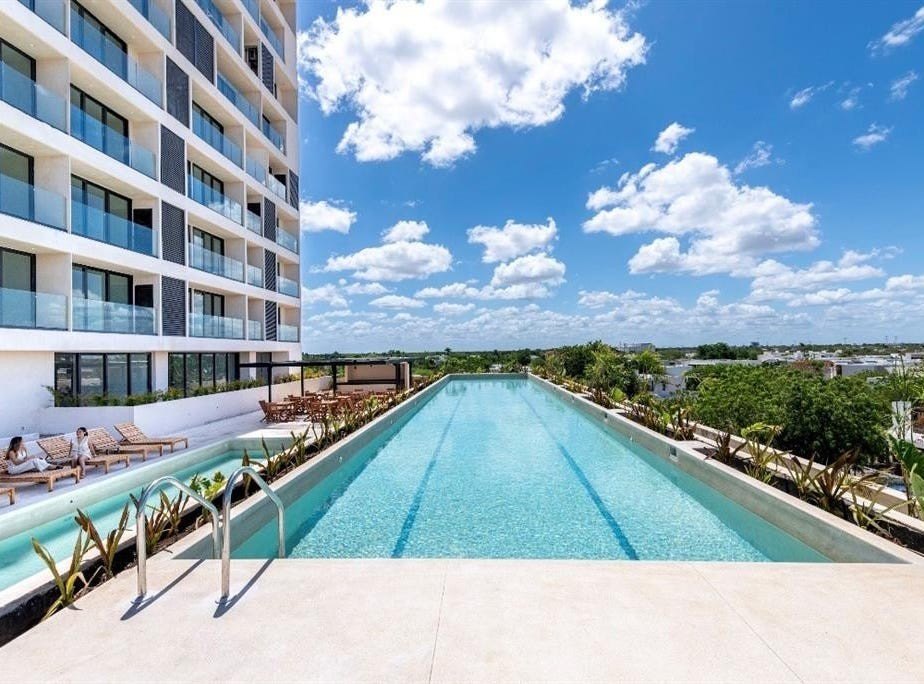
Merida, located in the Yucatan near the Gulf, and Oaxaca, along the Pacific, have become increasingly popular with expats thanks to their lower costs of living, mild climate, miles of pristine beaches, and strong English-speaking expat communities.
“Merida is the ultimate all-rounder,” says the report. “It boasts the second-highest safety score in the entire index, a homicide rate lower than most US cities. Coupled with a highly engaged expat community and excellent healthcare, Merida offers a peaceful, culturally rich lifestyle.”
Oaxaca, only missing out on the No. 1 spot by “a fraction of a decimal point,” is a cultural powerhouse, according to the report.
“It scored incredibly well in healthcare and climate, offering a temperate, mountain-valley climate that escapes the sweltering coastal humidity. Its thriving food scene and artistic community make it a magnet for slow-travelers and retirees alike.”
Cuenca, Ecuador
A UNESCO World Heritage city perched in the Andes, Cuenca, population 600,000, is rapidly becoming an expat hub. The city is known for its historical charm, rainbow-riddled mountains, and rural quiet mixed with urban benefits such luxury retail and plenty of restaurants.
All that with a low passive income visa requirements of only $1,446 a month.
Retiree Edd Staton, who fled Las Vegas to Cuenca with wife Cynthia in 2009, says that his adopted hometown “just keeps getting better and better.”
“Our neighborhood (Puertas del Sol) is booming with residential construction,” he tells Realtor.com. “Trendy restaurants, coffee shops, and Pilates studios are popping up everywhere. A massive state-of-the-art mall is opening next month that will take Cuenca’s shopping experience to a whole new level.”
The town is also planning more hospitals and improving infrastructure to support the growing population.
“Forever is a long time, but we have zero thoughts of relocating in the foreseeable future,” he says.
Medellin, Colombia
While Americans typically think of Colombia as riddled with drug-linked crime, Medellin is a different story than Cartagena or Cali, says Pavlovic.
Located northwest of Bogota, Medellin not only has a high safety score, but a near perfect score for its high quality and affordable medical system, which boasts some of the best JCI-accredited hospitals on the continent.
Calling Medellin the “undeniable digital nomad capital of the Americas,” Argentina Expat’s report says that “you’ll never struggle to find English speakers and networking events.”
Additional perks include year-round springlike weather (hence its nickname, City of Eternal Spring), a modern public transport system, and plenty of restaurants and museums.