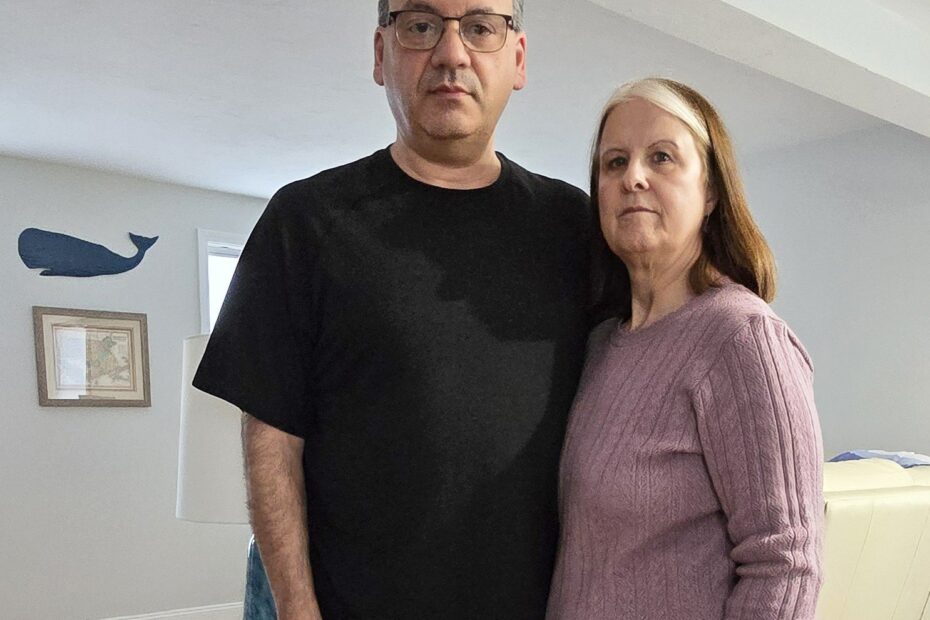
Marc and Joan Hendel thought they were finally done moving. Instead, they’re facing a countdown and an ultimatum.
A month after moving into the home they had meticulously designed for retirement, the couple received a notice that their property was being taken by eminent domain to make way for the $2.1 billion Sagamore Bridge replacement project.
For many longtime Cape Cod, MA, residents, the project had loomed in the background after the bridge was deemed “functionally obsolete” by the Army Corps of Engineers in 2020. But the Hendels—who built their home while living out of state—had no idea they were in its path until the notice arrived.
That was nearly a year ago, effectively starting the clock on the couple’s last days in their brand new dream home. And now, they have an end date.
On March 13, Massachusetts Department of Transportation is set to take possession of the deed to their home. Shortly after, they expect to receive compensation for the taking—money they’ll need to buy again in a competitive housing market. From there, they’ll have 120 days to find a new home, negotiate, close, and move out.
If they miss that window, they’ll have to pay rent to remain in the house they once owned outright.
The timeline has put the couple between a slow-moving relocation process and a housing market that moves at breakneck speed.
“It’s so overwhelming,” Joan says. “It’s like a nightmare all over again.”
Why the spring market matters so much on Cape Cod
In a story full of twists, the greatest one yet may be the Cape’s housing market.
Since the pandemic, Cape Cod has seen explosive demand, driven by desire for luxury and vacation homes, and made worse by chronic under-building.
Today, 1 in 10 homes on the Cape is a short-term rental, and an additional 25% are used only for seasonal or occasional use, according to state data, removing a significant portion of the housing stock from year-round availability.
“The Barnstable County housing market continues to be defined by constrained supply,” says Hannah Jones, senior economic research analyst at Realtor.com®. “Active inventory remains deeply depressed, with listings in December running 62.1% below pre-pandemic levels.”
Homes are also moving faster than they used to, spending roughly two weeks less on the market than they did pre-pandemic.
Seasonality isn’t helping, either. January is historically the slowest month for listings on the Cape, with inventory only beginning to pick up in April and May. In 2025, listings surged 24% month-over-month during both of those months—compared with a pre-pandemic seasonal average closer to 5%.
And while it’s good news that listings are likely to pick up in the months ahead, it does little to slow the ticking clock of their looming date to vacate.
“We don’t have time,” Joan says. “There’s so much against us. Finding a home, negotiating, closing, it takes a long time.”
Few homes, and fewer comparables
But the Hendels’ dilemma runs deeper than a fast-moving housing market. Their real obstacle is inventory—and more specifically, comparable inventory.
When Marc and Joan built their home, they designed a house around the realities of their lives: demanding careers, proximity to family, and Joan’s health needs as a lung cancer survivor.
Those priorities shaped everything from the layout—two separate office spaces to support their jobs—to the location, chosen to keep them within reach of both sides of the family.
Even the materials and systems were intentional: hardwood floors instead of carpet, and mini-split heating and cooling with special filters they can clean regularly to reduce mold and airborne contaminants.
While they were able to build that kind of precision from the ground up, finding it on the open market is proving to be another matter entirely.
To guide their search, the couple created a 61-point checklist for their next home, detailing all of the above and more. Those requirements narrow an already narrow field, turning the state’s timeline into a high-stakes race for a house that may not exist in the current market.
One of their most basic stipulations is that they want a home built in 2024 or later, like their current home. But more than three-quarters of the Cape’s housing stock was built from the 1950s to 2000s, while just 491 homes (or 0.40% of residential housing stock) was built since 2020, according to data from the Cape Cod Commission.
And in Barnstable County—where the couple live and hope to stay—just 85 homes (or 10.3%) of active listings in January were built in 2024 or later, according to data from Realtor.com.
When newer homes do come on the market, they often carry a steep premium: a median of $715 per square foot, compared with $520 per square foot for older homes.
“Limited supply is especially pronounced in newer housing,” says Jones. “When available, these homes command a significant premium, nearly $200 more per square foot than older properties, raising the barrier to entry even further for buyers seeking newer housing options.”
Keep in mind, this is also more than a matter of preference. Older housing stock introduces knock-on complications like higher maintenance and insurance costs. And while the Hendels are entitled to just compensation for the loss of their home and relocation expenses, those added costs aren’t part of the deal.
“Those sorts of future expenses that they may incur, increases in insurance, increases in taxes, really aren’t covered,” explains Steve Mollica, a relocation specialist who has overseen eminent domain cases. He notes that while there is a mechanism to deal with differences in mortgage interest, he’s not aware of a similar precedent for the potential added costs of homeownership.
Insurers generally consider homes built more than 40 years ago to be higher risk, due to outdated systems and materials that are more prone to failure and more expensive to rebuild if disaster strikes. As a result, these homes are often more expensive to insure.
That pressure is already being felt across Massachusetts. In late 2025, the state’s insurer of last resort saw a surge of 15,000 new policies, as private carriers pulled back or priced out homeowners entirely.
On Cape Cod, the gap is especially stark: Roughly 40% of homes on the islands are now covered by the FAIR Plan, the state-backed program for homeowners who can’t secure standard coverage. Those policies account for more than half of all FAIR Plan enrollment statewide.
‘We don’t think it’s unreasonable to ask them to pay rent’
Still, Mollica says he’s confident that the Hendels and their neighbors will receive ample compensation.
“They’re good people looking to do good work,” he says of MassDOT employees. “But they also do have to comply with what these regulations require.”
It’s those regulations that seem to be in the starkest opposition with the reality of a housing market that has gone through radical changes post-pandemic, especially when it means the Hendels could have to pay rent on a home they own outright if they miss the state’s 120-day window.
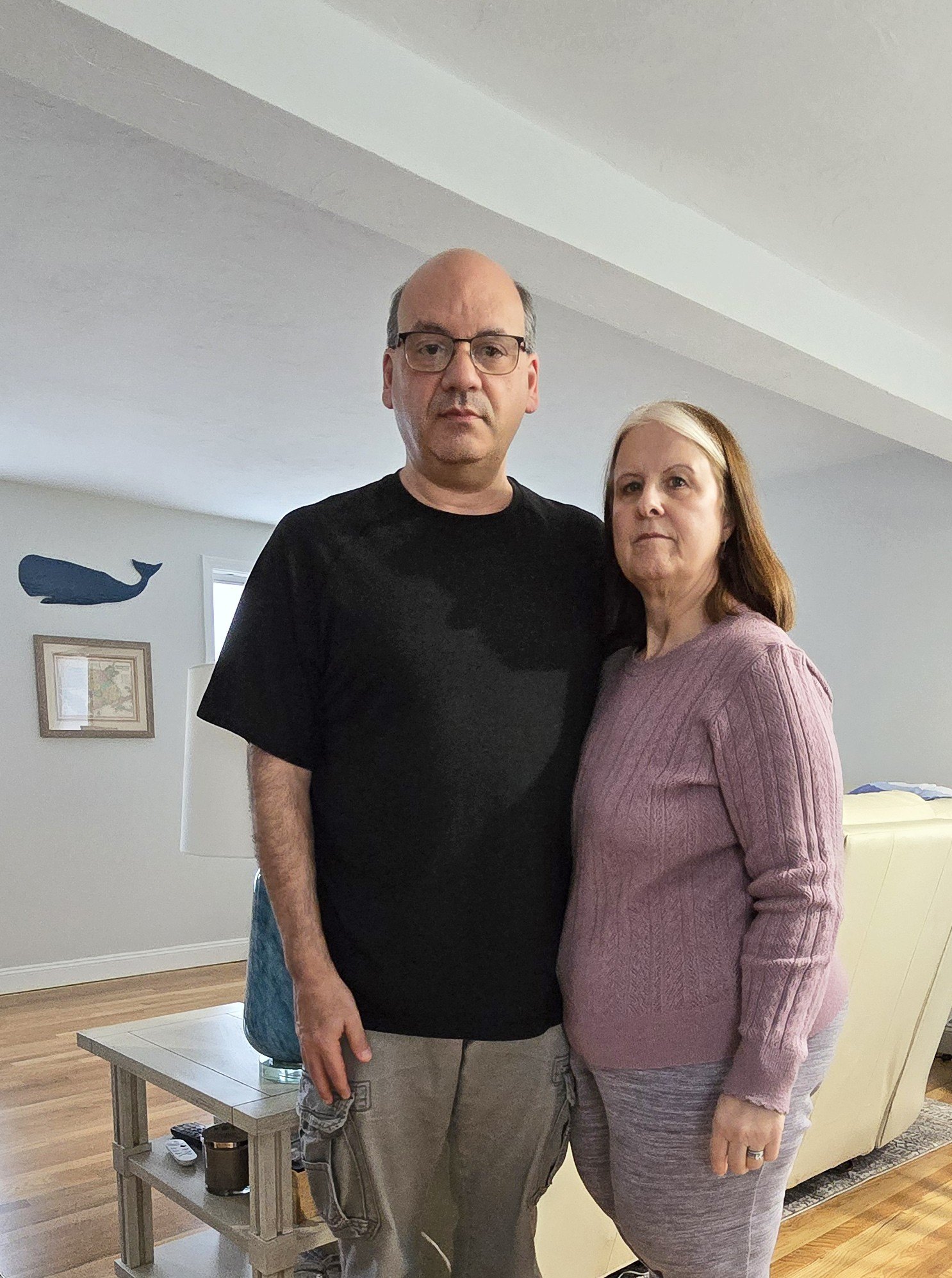
“We don’t have a mortgage,” says Marc, “forcing us to pay rent to live in our own home would make us worse off, and we are going to absolutely refuse to do that.”
But, Luisa Paiewonsky, executive director of MassDOT’s Mega Projects Delivery Office, disagrees.
“We don’t think it’s an unreasonable thing to ask, we don’t think it’s a major burden to ask them to pay rent on a home that they no longer own,” she told Boston 25 News. “But we understand that feelings run high sometimes and we empathize with what they’re going through.”
When I spoke to Paiewonsky, she emphasized the fact that they will no longer be owners of their house after the agency takes possession of the deed.
“They’re renting a home from the Commonwealth,” she says, framing the rent requirement as a duty to the taxpayers whose tax dollars funded the acquisition of the home. “We’re not trying to create a financial burden for [the homeowners], but we do want them to have a financial stake in this process.”
She also points to the fact that the 120 days is a statutory requirement. “We don’t have flexibility about that, but we do have flexibility about allowing them to stay and rent it for from us,” she adds.
For the Hendels, that framing feels detached from the reality of trying to buy again in a tight market while they wait for funds, sift through listings that don’t meet their needs, and race to a deadline they didn’t choose.
“It has looked like an empty glass,” Marc says of MassDOTs assistance. “They are not communicating with us. They are not telling us what the process is. We have questions.”
The couple says the state has provided little guidance on what they should be doing now to prepare for a reimbursable move, and has not yet provided insight on finding comparable homes.
Mollica emphasizes that these things take time.
“They’re like snowflakes,” he says of relocations. “Each home is different. Everyone has different situations and different circumstances, whether they’re financial or whether they’re personal.”
Even under ideal conditions, he added, truly one-to-one replacements are rare. “Nothing’s ever like-for-like exact,” he says. “I think that the idea is that it’s meant to be possible, a mutually cooperative sort of process where the homeowners and the agency are kind of working together to come to a solution.”
But on Cape Cod—where supply is tight, newer homes are scarce, and competition moves quickly—there may be little room to find that kind of common ground.
For their part, Paiewonsky insists the state is working hard to find that common ground.
“We recognize that it’s not easy for them, and we have plenty of procedures and compensation in place to help ease that process to the extent we can,” she says. “And we need to keep moving forward on this bridge. It’s not optional for us. We really owe it to the people of Cape Cod to replace these bridges.”
The Hendels are equally hopeful. When I asked what the state could to do ensure they are treated fairly, Marc offered a simple vision:
“In a year from now, I want to be living in a home that we are very happy with, that we are proud of, that we can invite friends and relatives over and say, ‘You know what? This isn’t the home we built, but we are pleased to live here.’”