
Buying your dream home means making sure you can afford not only the mortgage and upkeep, but also the property taxes. In some areas, this extra bill will be a mere nuisance. For others, it can be a burden so heavy it may force a relocation.
“Americans who are considering moving and want to maximize the amount of money they take home should take into account property tax rates, in addition to other financial factors like the overall cost of living, when deciding on a city,” says writer and analyst Chip Lupo in WalletHub’s latest property tax report.
The states with the highest property tax burden, according to WalletHub, are, from highest to lowest, New Jersey, Illinois, Connecticut, New Hampshire, Vermont, New York, Nebraska, Texas, Wisconsin, and Iowa.
While the average U.S. household pays $3,119 per year in property taxes, in the highest-ranked state, New Jersey, the average homeowner shells out a whopping $9,590.

The push to eliminate property taxes
Property taxes have become so unpopular that many states are pushing to lower them or even abolish them completely. States such as Ohio, South Dakota, North Dakota, Nebraska, Kansas, Pennsylvania, and Florida are at the forefront of the revolt against property taxes.
And it’s no wonder. A steep property tax bill can be a significant additional bill to homeowners already burdened with high mortgage and insurance rates and median home prices.
“Unlike sales taxes, which are spread across many purchases, property taxes hit a single asset and are mostly beyond a homeowner’s control, making them feel unpredictable and unfair,” Lupo tells Realtor.com®.
“If you own an average-priced home and move from the highest property tax area to the lowest property tax area, you’d experience more than $6,000 in annual savings,” says Matthew T. Phillips, a business law and ethics professor at Wake Forest University in North Carolina, who also specializes in property rights.
While it might seem a no-brainer to get rid of a tax no one really wants, the reality is that states rely on property taxes to pay for essential services. Low or even no property tax might seem like a great idea until it’s time to call the fire department.
“A better approach is reform, not repeal—targeted relief for vulnerable homeowners and more transparency, while preserving the stable funding local communities depend on,” says Lupo.
“While increasing property taxes is not ideal, it is a fair way to tax those who own property within the area that will use the proceeds to fund projects like city improvements, the police and fire departments, updated utilities, school funding, etc.,” Mallory Meehan, a real estate professor at the Borelli Institute of Real Estate Studies at Penn University, says in the report.
However, Meehan admits that the rise in property taxes can unfairly burden some. Just because you live in a home that is worth a million dollars doesn’t necessarily mean you have the funds to pay property taxes on a home with such a high value.
“The group that is hurt the most by increased property taxes are the elderly who are on a fixed income,” she says. “Most of the time, those individuals have lived in a home for an extended period of time and are now faced with the ever-growing appreciation of their property but no increase in their income.”
To determine the states with the highest and lowest property tax burden, WalletHub calculated a state’s “effective real-estate tax rate.”
To do so, it divided the “median real-estate tax payment” by the “median home price” in each state. WalletHub then used the resulting rates to obtain the dollar amount paid as real-estate tax on a house worth $332,700, the median value for a home in the U.S. as of 2024, according to the U.S. Census Bureau.
“There are few things property owners like to complain about more than property taxes, especially when they go up,” Bruce Ailion, a Re/Max agent based in Atlanta, tells Realtor.com. “Usually, property taxes go up when their property value increases, which is a good thing that people often overlook.”
He notes that in Atlanta, some counties are taxed higher than others—and it shows when government services are required, such as the case when an “unusual” hurricane strikes the area.
“In the high-tax counties, the roads were cleared in two to three days,” he says. “In the low-tax counties, it was three to four weeks before the streets were cleared. Is it any surprise the people who benefited from low taxes were complaining about inadequate services?”
New Jersey
Effective real-estate tax rate: 2.11%
Annual taxes on a home priced at the state median value: $9,590
January median home list price, per Realtor.com: $519,999
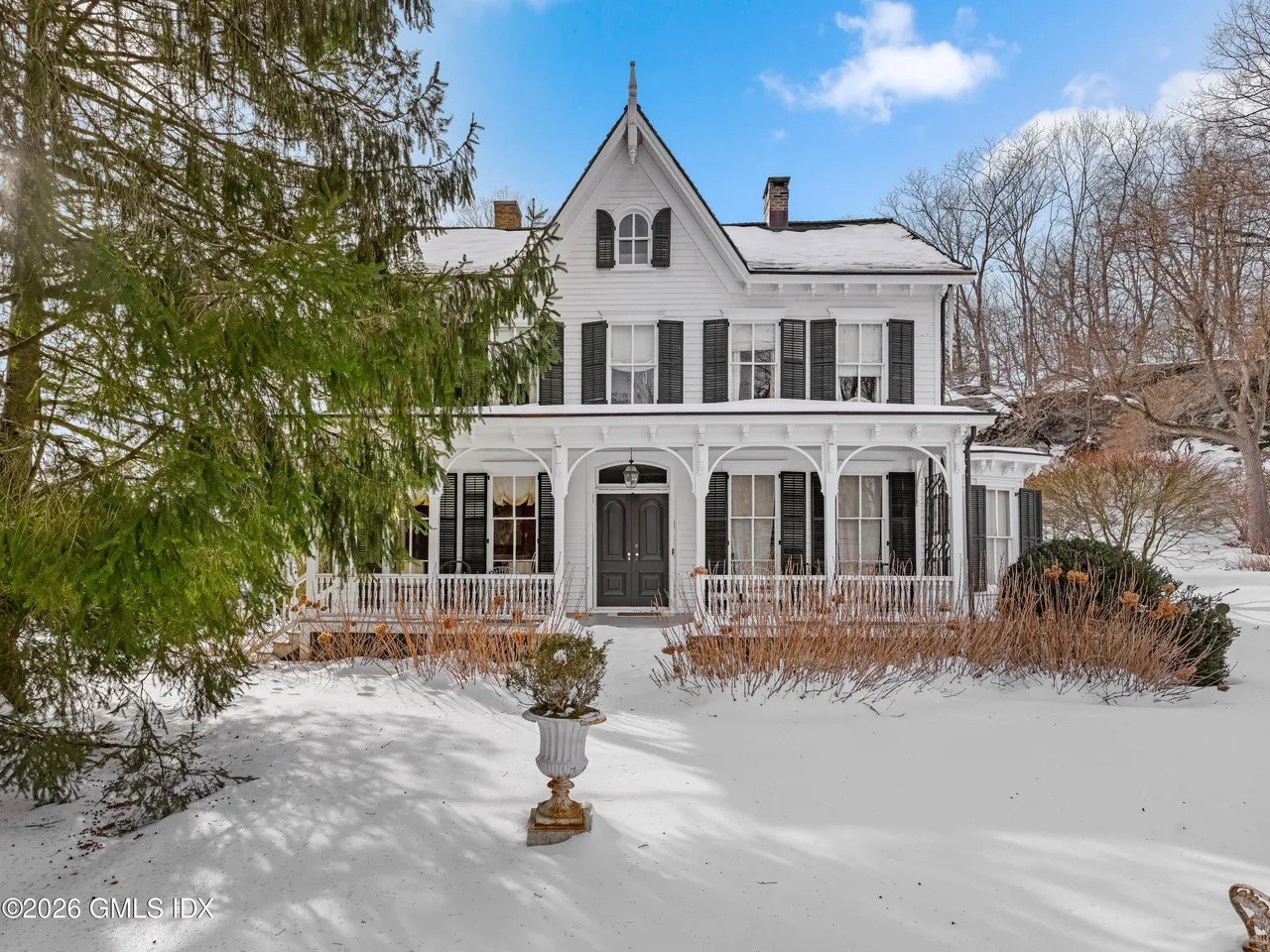
Hate real estate taxes? New Jersey might be one state you want to avoid. It not only has the highest property tax burden in the country, according to WalletHub, but it has also implemented a newly expanded mansion tax.
Starting on July 10, 2025, home sellers get slapped with a tiered tax on the sale price above $1 million, ranging from 1% to 3.5% depending on the property’s value. Given how expensive homes in the state have become, this new tax will affect more than millionaires.
Illinois
Effective real-estate tax rate: 2.01%
Annual taxes on a home priced at the state median value: $5,298
January median home list price, per Realtor.com: $280,000
Illinois residents have long shouldered one of the highest property tax burdens in the country. It is also the only state that still allows private investors to strip homeowners of their equity over debts as small as a few thousand dollars.
In one horrific example, Cook County sheriff’s deputies battered down the door of a 74-year-old who’d fallen behind on property taxes, according to a May report from Injustice Watch. A private investor then snapped up the senior’s deed and equity.
There are currently 161 bills related to property taxes pending in the state, covering everything from exemptions and abatements to assessment reform and surplus redistribution.
But given Illinois’ lower median price point for a home, residents might find the trade-off worth it.
Connecticut
Effective real-estate tax rate: 1.81%
Annual taxes on a home priced at the state median value: $6,643
January median home list price, per Realtor.com: $480,000
A Nutmeg State homebuyer needs to seriously consider not only their mortgage payments but also their yearly property taxes.
“A $3 million to $4 million home here is not unusual for a four-bedroom in a prime neighborhood, but annual taxes alone can exceed $40,000 to $70,000, depending on the town,” Evangela Brock of Douglas Elliman, who’s based in Greenwich, CT, tells Realtor.com.
However, many are willing to suck up the cost, especially those who want to live within commuting distance of New York City but have a slower way of life, a larger plot of land, and better quality public schools.
New Hampshire
Effective real-estate tax rate: 1.66%
Annual taxes on a home priced at the state median value: $6,667
January median home list price, per Realtor.com: $565,000

Vermont
Effective real-estate tax rate: 1.59%
Annual taxes on a home priced at the state median value: $5,039
Current median home list price, per Realtor.com:$595,000
New York
Effective real-estate tax rate: 1.55%
Annual taxes on a home priced at the state median value: $6,582
Current median home list price, per Realtor.com: $649,000
While New York’s tax rate is high, some experts argue that it is well worth it when you factor in other metrics, such as the fact that one can get along very well in New York City without a vehicle.
“We have worked with buyers from New York who initially considered moving to lower-tax states such as Florida, but later reassessed after factoring in the broader cost of living,” Ben Jacobs of the Chestler Jacobs Team at Douglas Elliman for New York tells Realtor.com.
“In major Florida markets like Miami and Palm Beach, rising home prices, higher insurance costs, and annual property taxes, often around 2% of the purchase price, have made the move less compelling for some families,” he says.
“Many buyers, particularly young families, are willing to pay more for a home in order to access strong public school districts, whether in Manhattan or Brooklyn.”
Kirk Eckenrode, real estate agent with Howard Hanna New York City, says that it can be hard to get over that New York state of mind.
“I’ve had clients move to low-tax states thinking they solved the problem, only to miss the New York City lifestyle, walkability, and overall energy,” he tells Realtor.com.
Nebraska
Effective real-estate tax rate: 1.49%
Annual taxes on a home priced at the state median value: $3,549
Current median home list price, per Realtor.com: $335,000
Texas
Effective real-estate tax rate: 1.49%
Annual taxes on a home priced at the state median value: $4,232
Current median home list price, per Realtor.com: $349,000
It might be shocking to find Texas ranked so high on this list, given the state’s reputation as being a pro-business tax haven.
“Many people associate Texas with low taxes because it has no state income tax,” says Lupo. “But when you look specifically at property taxes, the picture is very different.”
Los Angeles real estate investor Jameson Tyler Drew, who witnessed the exodus of residents from California to Texas during the COVID-19 pandemic, says many people—both current and potential residents—are disenchanted with the Lone Star State.
“The luster of Texas seems to be fading pretty quickly as prices increased these last few years,” he tells Realtor.com. “People I’ve spoken to have found its property taxes higher than that in California.”
“In Texas especially, the state’s reputation as a low-tax paradise is fading fast due to high property taxes and especially sales taxes and user fees,” adds Martin Orefice of Rent to Own Labs.
Wisconsin
Effective real-estate tax rate: 1.42%
Annual taxes on a home priced at the state median value: $3,792
Current median home list price, per Realtor.com: $370,000
Iowa
Effective real-estate tax rate: 1.39%
Annual taxes on a home priced at the state median value: $2,897
Current median home list price, per Realtor.com: $369,000