
With $6 trillion changing hands from older generations to younger ones in 2025, many with newly inherited funds are running to their nearest real estate agent.
While those lucky enough to inherit significant wealth from their family can have their pick of investment vehicles, there is a healthy demand for luxury properties that will continue into the next generations, say experts.
“Having watched real estate appreciate significantly over recent decades, the next generation shows a strong appetite for long-term housing investments across diverse markets,” Brad Nelson, chief marketing officer with Sotheby’s International Realty, tells Realtor.com®.
Generational wealth by the numbers
An estimated $124 trillion will transfer intergenerationally through 2048, mainly from the Silent Generation (born 1928–45) and baby boomers (born 1946–64) to the younger generations, including Gen X, millennials, Gen Z, and Gen Alpha, according to a report by Cerulli Associates, a wealth research and consulting firm.
Of that enormous figure, $25 trillion will be put into real estate, according to Federal Reserve data, reports Sotheby’s International Realty.
Those who come into a cash windfall need not worry about interest rates, thus contributing to the strong luxury real estate market, which remains robust despite a general softening of the broader market.
“The general real estate market was more impacted by elevated interest rates and affordability issues such as higher prices, but the luxury real estate market is positioned for continued outperformance,” Philip A. White Jr., president and CEO of Sotheby’s International Realty, said in the luxury report.

According to the firm’s latest survey, agents who sell in the $10 million-plus range are most optimistic about the year ahead in terms of sales.
“The fundamentals supporting luxury real estate remain strong,” said White. “We are seeing sustained wealth creation at the high end.”
Luxury home market by the numbers
The threshold for a luxury home in the U.S. now starts at $1.2 million nationally and is much higher in markets such as New York City, Boston, San Francisco, and Los Angeles, according to the latest Realtor.com luxury report. “Ultraluxury,” which is the top 1%, starts at $5.49 million.
Real estate remains not only a solid investment and way to diversify, but also a place to live, vacation, or derive extra income.
“For inherited wealth, real estate is less about chasing returns and more about preserving value across generations,” says Anthony Smith, senior economist at Realtor.com.
“Prime properties tend to be more resilient through economic cycles, benefiting from scarcity, location, and structural supply constraints,” he says. “That combination supports long-term appreciation and makes high-end real estate a tangible store of wealth that families are more likely to hold, use, and pass down rather than buy and sell frequently.”
But Chip Lupo, analyst at WalletHub, points out that real estate isn’t always the best (or easiest) investment.
“Real estate can feel like the obvious way to preserve and grow wealth, especially for heirs who lack confidence in their financial knowledge or don’t have a formal financial plan,” Lupo tells Realtor.com.
But “it isn’t automatically the best choice. It can be illiquid, costly to maintain, and hard to manage or divide, and it has historically delivered lower returns than stocks. For many heirs, real estate works best as part of a broader, diversified portfolio rather than as the primary place to invest inherited wealth.”
Where are the newly minted millionaires buying homes?
According to the Realtor.com luxury report for November, the top luxury markets are Heber, UT (luxury listings start at $6,637,500), Key West-Key Largo, FL ($5 million), Los Angeles ($4 million), Stamford, CT ($4 million), San Jose, CA ($3.8 million), Kahului-Wailuku, HI ($3.66 million), Santa Rosa-Petaluma, CA ($3.5 million), Naples-Marco, FL ($3,497,000), Ventura, CA ($2,996,000), and New York City-Jersey City, NJ ($2,995,000).
“Areas like Laguna Beach and Newport Beach are popular places to buy for people that have inherited money in Southern California,” says real estate agent Cara Ameer, who sells in both California and Florida.
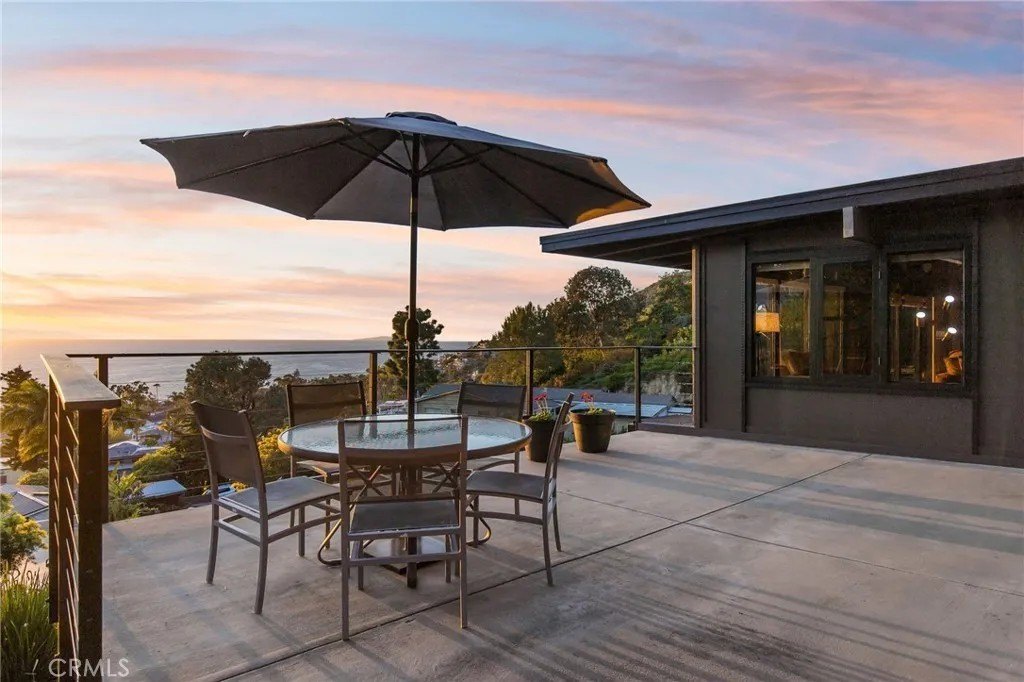
As for Florida, “Jacksonville Beach and Old Ponte Vedra Beach are legacy, moneyed areas where a longtime family beach home often gets sold and the adult children may then buy something else in the same area, or a second home in the mountains of North Carolina, Colorado, or Montana,” Ameer tells Realtor.com.
Additionally, the U.S. remains a popular location for foreign individuals with an ultrahigh net worth to buy a home due to its relative stability and variety of locations, including coastal, mountainous, rural, urban, desert, and wooded areas.
So where do these foreign buyers generally go? Florida remains the top spot, accounting for 21% of purchases, followed by California, Texas, and New York, according to the National Association of Realtors®.
Additionally, “lifestyle” destinations such as Charleston, SC; Nashville, TN; Austin, TX; and Puerto Rico, along with ski markets such as Aspen and Vail, CO, and Utah, remain popular for luxury buyers, according to Sotheby’s.
Hot international locales include London, Dubai, Hong Kong, Queenstown (New Zealand), Japan, Thailand, and Australia.
Location, location, location
“The greater Boston area as a whole is flush with generational wealth,” Craig Brody of Douglas Elliman tells Realtor.com. “These clients understand that buying real estate and holding it over time is not only great for personal enjoyment, but also good for continuing the generational cycle within that family.”
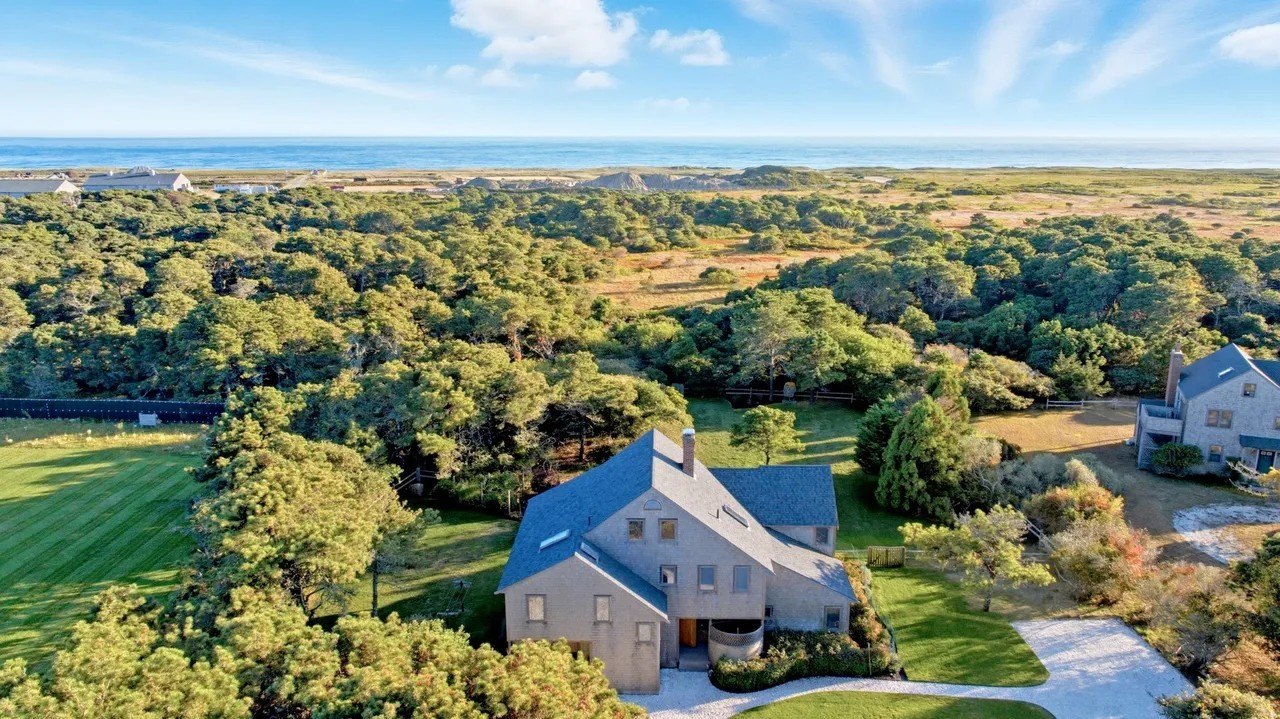
Popular summer locales such as Nantucket and Martha’s Vineyard remain attractive to newly minted high net worth individuals. Not only do the buyers get to enjoy the sun and surf, but their investment—in areas that are not facing coastal erosion—is likely to appreciate handsomely.

“Martha’s Vineyard and/or Nantucket will always be in demand from a pool of wealthy families not only locally, but nationally and internationally, keeping the demand in place,” says Brody.
“Recently, a client of mine lost his father to a long battle with cancer and, after the dust settled, he inherited nine-plus figures. The first order of business was purchasing an estate in Martha’s Vineyard as a second/third home for his family.”
Likely a savvy investment.
Median home prices on Martha’s Vineyard rose from $1,375,000 in December 2016 to $2,295,000 by December 2025, a nearly 67% increase, compared with roughly 60% nationally over the same period. Luxury listings in the top 10% of the market climbed from $5,085,000 in December 2016 to $8,740,000 today, representing a nearly 72% increase.
By comparison, the S&P 500 had a +236% total return, or roughly 15.35% annualized, from early 2016 to late 2025. But the stock market doesn’t give you a gorgeous summer home to make fabulous memories in.
“Clients inheriting significant capital tend to upgrade their primary living situation first, then use real estate intentionally to diversify and separate wealth,” Miami Douglas Elliman agent Fernanda Moreno tells Realtor.com.
“One of my loyal clients who inherited substantial capital was renting in the Venetian Islands,” she says. “Our first move was transitioning her into ownership through a 1970s estate purchase in Coconut Grove [in Miami], an orchestrated guidance that combined lifestyle with market timing and has since resulted in nearly triple the property’s value.”

The client then went on to purchase a “sleek loft” in the Tribeca neighborhood of New York City, which she moved into while renting out the Miami estate.
Internationally, Moreno says she is seeing Italy as a popular destination for those with inherited wealth looking to expand from the U.S.
“Whether that’s a historic home or castle in the countryside, or a condo in Capri, the goal is to spend several months a year there enjoying la dolce vita while owning something tangible with cultural and generational value,” she says.
Palm Beach agent Steven Presson, with Corcoran, tells Realtor.com he is “absolutely” seeing buyers who’ve recently come into inherited wealth, particularly families from Manhattan and the Northeast, snapping up trophy properties in South Florida.
“Many of them view luxury real estate here as one of the safest tangible assets—especially in markets like Palm Beach where inventory is limited and long-term value is well protected,” he says.
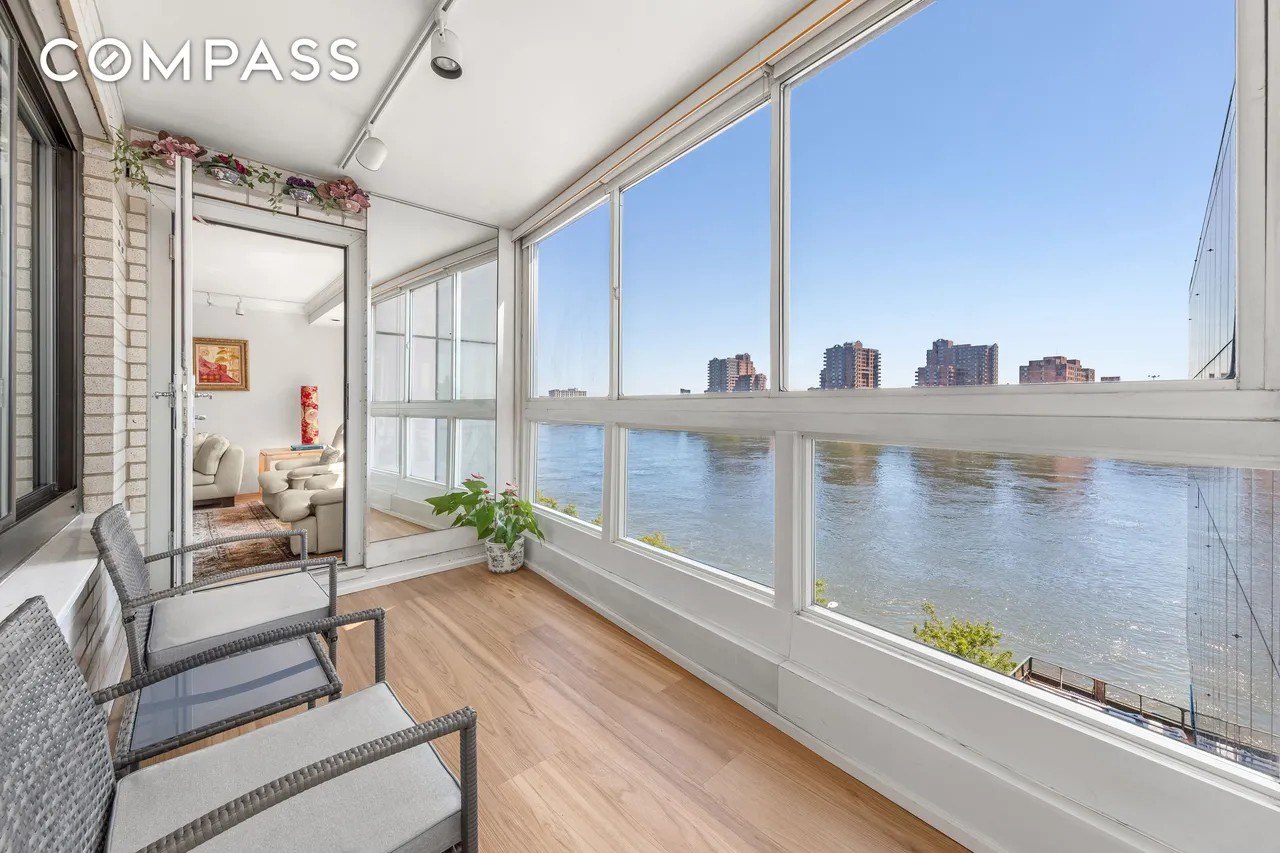
Steven Gottelieb, a real estate broker at Coldwell Banker Warburg in New York, tells of a client in her 30s who will inherit a “substantial amount of money” when her late father’s estate is settled. She’s looking to graduate from her one-bedroom apartment on Manhattan’s Upper East Side to a three-bedroom.
“She could invest the inherited money in a different asset class or in real estate elsewhere, but it is important to her to put down more permanent roots in the city and neighborhood where she envisions her future,” he says.
Manhattan agent Lisa K. Lippman, at Brown Harris Stevens, tells Realtor.com that inherited wealth gives “substantially increased buying power.”
“Where typically someone [30 to 45 years old] would probably be able to afford a $3 million to $4 million maximum on an apartment,” she says, “with inherited wealth, they are buying properties for over $10 million, and usually on the Upper East or Upper West Side, once they have school-age children.”
Refusing to downsize
And yet the Great Wealth Transfer will often have to wait for the specter of death.
Of boomers who own homes, 54% say they never plan to sell the house they live in while they are alive, according to a poll from Clever Real Estate.
Atlanta Re/Max agent Bruce Ailion points out that seniors are living longer than ever—and holding onto their paid-off, highly appreciated homes, choosing to age in place rather than downsize.
Additionally, he is seeing the older generations, flush with home equity and ballooned retirement accounts, buying second or third homes, often in a sunny, coastal area such as South Florida.
“The population over 65 is the wealthiest it has ever been, and the generation under 35 is the poorest it has ever been,” he says.
Los Angeles–area real estate investor Jameson Tyler Drew, of Anubis Properties, warns that the younger generations might sometimes inherit less than they bargained for.
When his father died, Drew tells Realtor.com, he was taken aback to find that his supposedly “free and clear” Arizona house actually had a reverse mortgage on it that “sucked up most of the equity.”
“It was a not-so-friendly surprise,” Drew says.