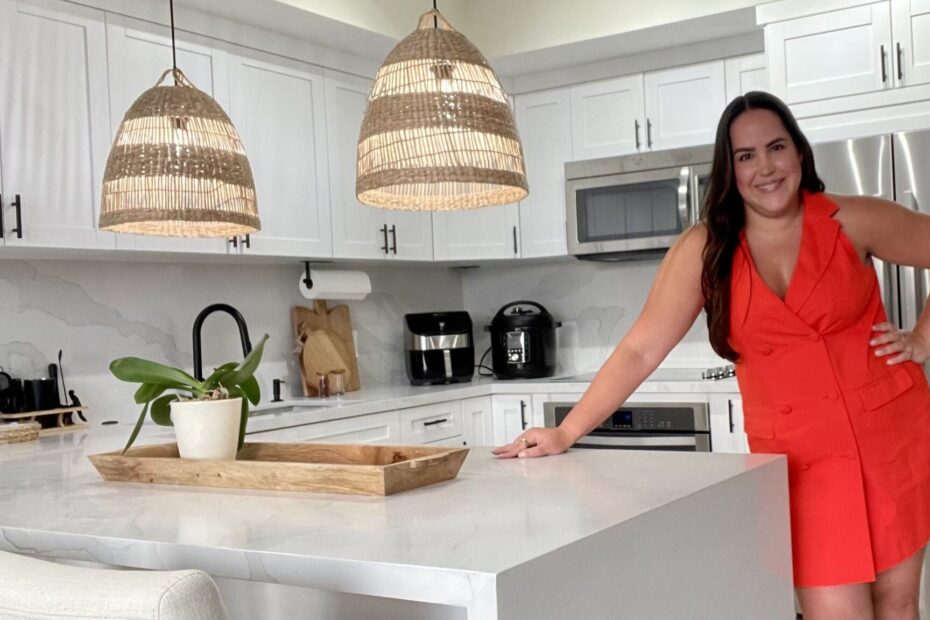
When Karla Cobreiro bought her home in 2022, she didn’t think she would be contributing to a growing demographic.
Over 20 million single women own homes, significantly outnumbering the roughly 14 million single men who do, according to new research from the National Association of Realtors®.
“I lived with my parents for almost a decade after college to be able to save a hefty down payment that would make it feasible for me to pay my resulting mortgage alone,” Cobreiro—a publicist who purchased her Doral, FL, condo solo in 2022—told Realtor.com®.
“Over the past two decades, homeownership among single men has been relatively flat, while single women have consistently maintained higher homeownership rates—and you see that showing up in today’s market,” NAR senior economist Nadia Evangelou tells Realtor.com.
“Single women make up about 21% of homebuyers, compared to about 9% for single men.”
Who are these single women homeowners?
Over the last 10 years, homeownership has grown among divorced, separated, and never-married women.
“Homeownership has increased across all three groups,” says Evangelou. “The gains are especially larger among separated and divorced women, while never-married women have also seen, though slightly more modest, increases. So overall, single women across different life stages are making progress in homeownership, even in a more challenging affordability environment.”
Specifically, homeownership among divorced women climbed from 55% to 60%, separated women from 33% to 39%, and never-married women from 30% to 34%.
Widowed women remain the most likely to own homes, with a homeownership rate of about 73%.
“That’s not surprising,” says Evangelou. “Homeownership tends to increase with age for everyone, as people are more established professionally.”‘
When single women become homeowners
The median age of single women homeowners is about 63, compared with 57 for single men.
However, women under 35 have seen notable gains in homeownership over the last 10 years.
For instance, among those ages 25 to 34, the rate increased from 20% in 2014 to 25%.
“Despite affordability challenges, younger single women are still finding ways to enter the market, and in many cases, they are making steady progress,” says Evangelou.
Women 35 to 44 also saw an increase in homeownership, from 36% to 40%.
How they afford it
The median income for single women who own homes is roughly $58,000, compared with $69,000 for single men—meaning single women earn about 84 cents for every dollar earned by single men. Yet, despite earning less, single women are still more likely to own a home.
At the same time, the data indicates that single women face greater financial pressure.
“Single women typically spend a higher share of income on housing, about 30% versus 26% for single men, reflecting tighter budgets on a single income,” says Evangelou. “But at the same time, many single women homeowners have built substantial equity over time, which strengthens their financial position.”
Where the most single women own homes
According to NAR, single women have a higher homeownership rate than single men in 57% of U.S. metro areas.
Cities such as Vallejo, CA, McAllen, TX, Asheville, NC, and Davenport, IA, stand out for showing some of the largest gaps. In these metro areas, single women are far more likely to own homes than single men.
“What’s surprising is that this trend still shows up in high-cost markets like San Jose or Seattle, as well,” says Evangelou. “Even where affordability is most challenging, women are finding ways to enter the market.”
The markets that have experienced the fastest gains in homeownership among single women are more concentrated in Florida, in markets like Palm Bay and Cape Coral.
“What these areas have in common is that home prices are still more aligned with local incomes, making it more realistic to buy on a single income,” says Evangelou.
One single woman’s homebuying journey
Cobreiro, a millennial, says she kept waiting until she had a better job and made more money to put herself in a better financial position.
“Then, I kept waiting until I had a higher down payment saved up,” she says. “Then, I wanted a big emergency savings account since I was going into this alone. Sometimes, I wish I hadn’t waited as long or thought about it as much!”
When Cobreiro finally did take the plunge, she says being single made the homebuying process all the more challenging.
“I had to save a lot of money alone, get pre-approved with just one salary, do all the legwork of searching and touring by myself, then pay for and oversee renovations on my own,” she says.
Another challenge of buying a home solo is that you don’t have a built-in safety net.
“I always joke ‘It’s just me and this mortgage’ to my friends now,” Cobreiro says. “Though I live comfortably, I am also aware that I don’t have a backup person or support system if I get laid off tomorrow.”
Despite the pressures she faces, Cobreiro says she has no regrets about buying a place on her own.
“Overall, it just felt like such an incredible achievement and accomplishment,” she says.