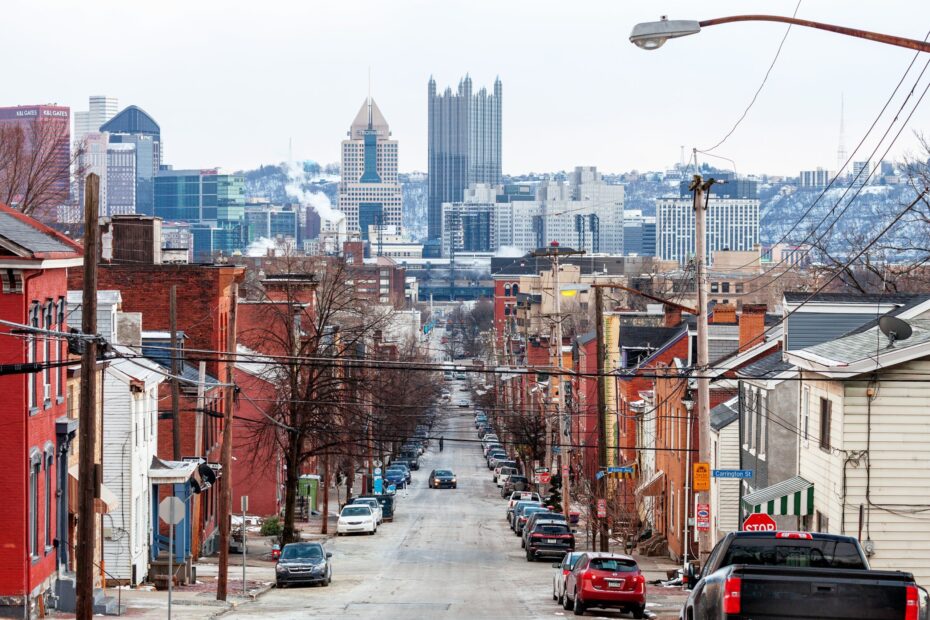
Pennsylvania needs to update its laws and invest money in housing production to create 450,000 new housing units by 2035, Gov. Josh Shapiro said.
The Democratic governor unveiled the state’s first long-term housing strategy in Philadelphia on Thursday, calling for public investment in infrastructure, modernizing planning and regulatory policies, and adding legal protections for tenants.
Shapiro said Pennsylvania needs to address its lagging construction and affordability metrics, given limited development and aging housing stock. The Realtor.com® State-by-State Housing Report Card gave the state a C, reflecting modest affordability.
“We must build more housing in Pennsylvania, and we must do a better job of preserving what is already here,” Shapiro said.
Five key areas in the long-term housing strategy
The recommendations include five key areas, revolving around speeding up home construction, bringing down the cost of building, reducing homelessness, working with local governments to modernize zoning laws, and cutting the equity gap.
And they come as Shapiro has pitched a $1 billion critical infrastructure fund in the state’s two-year budget, which he hopes will mean more money invested for housing.
More than half the state’s homes are more than 50 years old. Given its population and economic projections, Pennsylvania needs 450,000 new units by 2035. But at its current pace, the state will fall 185,000 units short, Shapiro said.
That budget also proposes capping application fees, sealing some eviction records, and easing transfer-on-death deeds that allow people to pass on real estate after they died. Statewide standards for accessory dwelling units and streamlining mixed-use development in commercial corridors are other ways to build more housing.
“It’s a simple supply and demand concept that starts at the very local level,” Shapiro said. Zoning laws vary widely across 2,560 municipalities in the state, and the state is putting together a “catalog” to understand them and share best practices.
Debates on housing loom
Democratic State Sen. Vincent Hughes, minority chair of the Pennsylvania Senate’s Appropriations Committee, said those resources will back up what localities in the state are doing.
That’s important because some municipalities are putting their own funding toward housing, including Philadelphia Mayor Cherelle Parker, who last year announced a $2 billion plan to create and preserve 30,000 homes in that city.
Shapiro acknowledged much of the plan requires actions in the legislature and local governments. But he said he’s heard housing concerns from Democrats and Republicans alike, which he hopes will motivate other state lawmakers to get behind the ideas.
The resources behind the project will nonetheless be a sticking point in negotiations with Republicans, who said they were concerned with the spending levels in the state’s $53.3 billion two-year budget. The legislature must approve the budget.
“Some I can do by executive action, and a lot does require the legislature to act and to work in concert with local government,” Shapiro said. “The good news is, we work really well with our local governments.”