Moody’s Chief Economist Mark Zandi has upgraded the odds of a recession, saying an economic downturn will be “difficult to avoid” if oil prices remain elevated.
“Recession is once again a serious threat,” Zandi wrote in a post on X this week, revealing that Moody’s forecast model now projects a 49% chance of a recession in the next 12 months.
That assessment, which takes recession odds to near their highest of the post-pandemic era, was made before the U.S. and Israel launched their war with Iran, rattling markets and sending oil prices soaring.
“It isn’t a stretch to expect the indicator to cross the key 50% threshold amid the Iranian conflict and the resulting surge in oil prices,” wrote Zandi. “Oil prices are an important variable in the model, and with good reason: every recession since WWII, save the pandemic recession, has been preceded by a spike in oil prices.”
Global oil prices have been sharply higher since the U.S. and Israel launched war with Iran on Feb. 28. Brent crude, the international standard, has traded above $100 per barrel this week, up from around $70 before the war.
The Trump administration’s announcement of the release of 172 million barrels of oil from the strategic reserve has barely made a dent, with the price of oil continuing to climb.
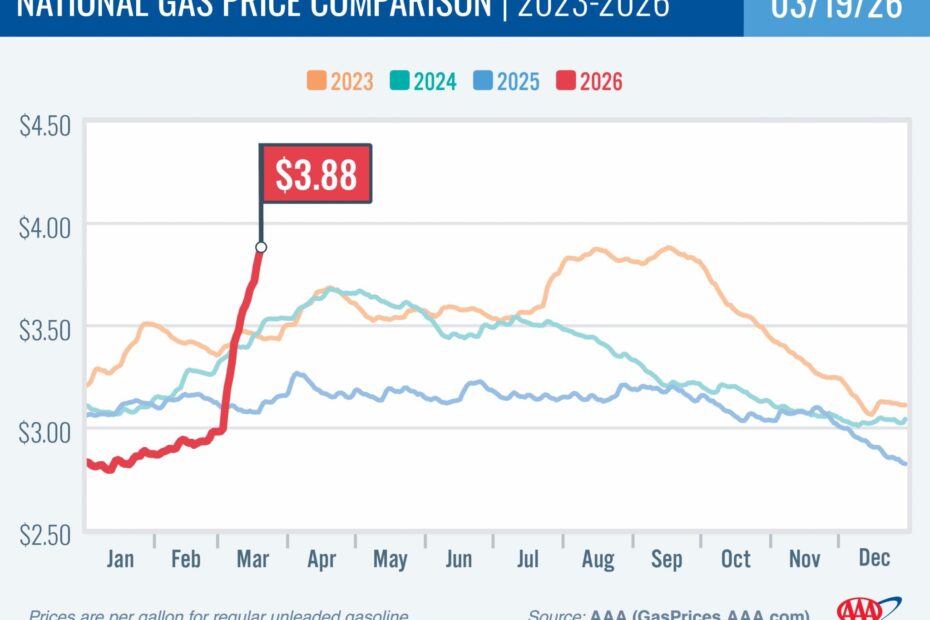
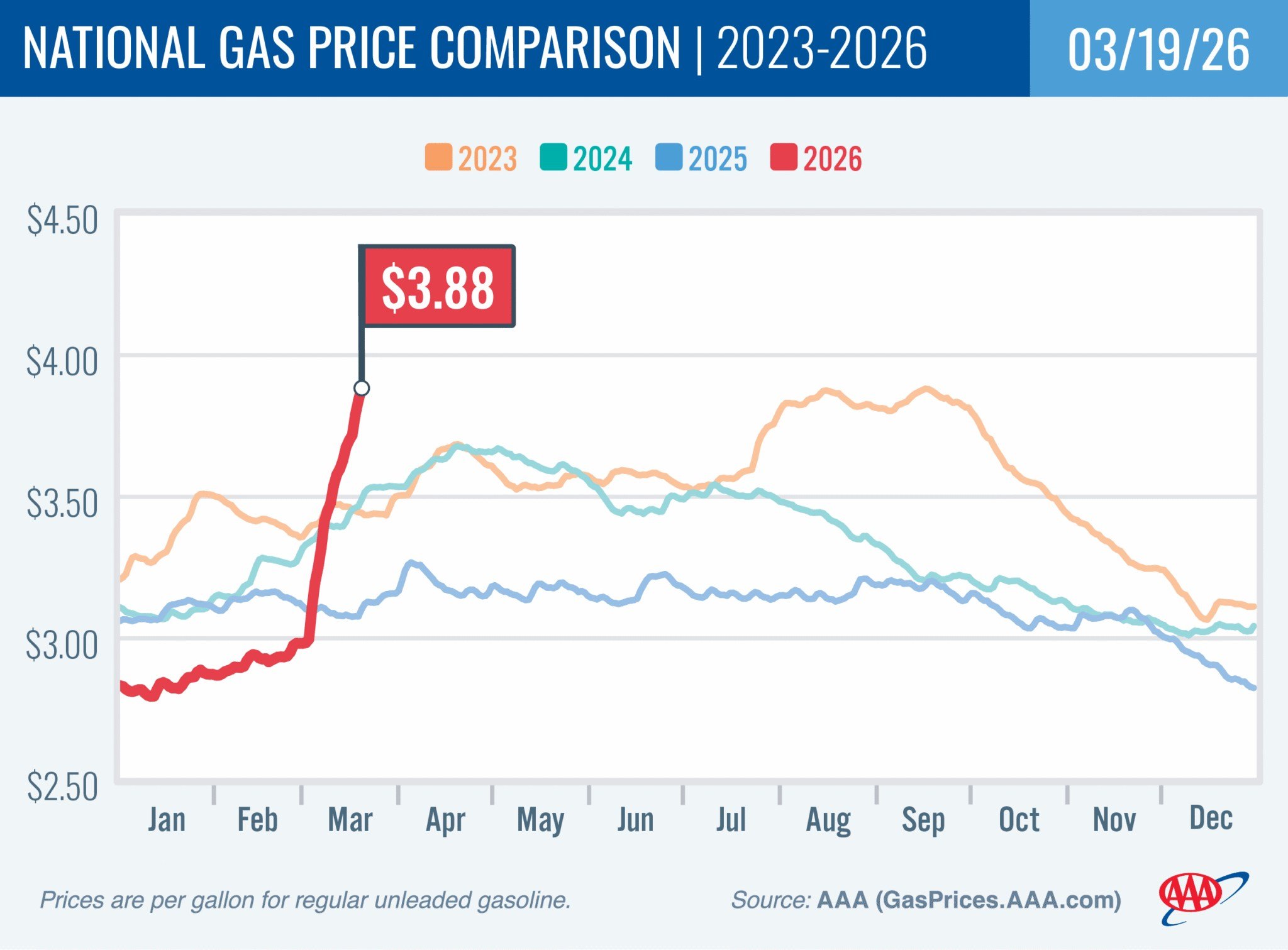
That has sent gas prices soaring in the U.S., with regular gasoline reaching a national average of $3.88 per gallon on Thursday, according to AAA.
“Despite mounting evidence that the economy is struggling and recession risks are high, economists will be loath to utter the word ‘recession,'” says Zandi. “However, if oil prices remain elevated for much longer (weeks and not months), a recession will be difficult to avoid.”
The outlook for ending the war quickly turned dimmer on Thursday, after Israel launched a unilateral attack on key Iranian energy infrastructure, drawing a rebuke from President Donald Trump. Iran retaliated by attacking oil and gas sites in neighboring Persian Gulf states.
Already, the threat of a global energy crisis has driven mortgage rates sharply higher, casting a pall over the crucial spring housing market.
“A prolonged oil shock will deteriorate already-weak homebuyer sentiment,” says Realtor.com® Senior Economist Joel Berner. “Before the war was initiated, things had been shaping up nicely for homebuyers this spring as prices were falling, inventory was rising, and mortgage rates had finally fallen below the 6% threshold.”
Still, homebuyers were jittery in January and February despite lower mortgage rates, perhaps waiting for signs of a stronger economy before making a life-changing purchase.
“Now, they’re even less confident, and as they feel the pinch at the pump and see prices rising across all sectors of the consumer economy, they’ll feel even less inclined to take on a new mortgage at a higher rate,” says Berner.