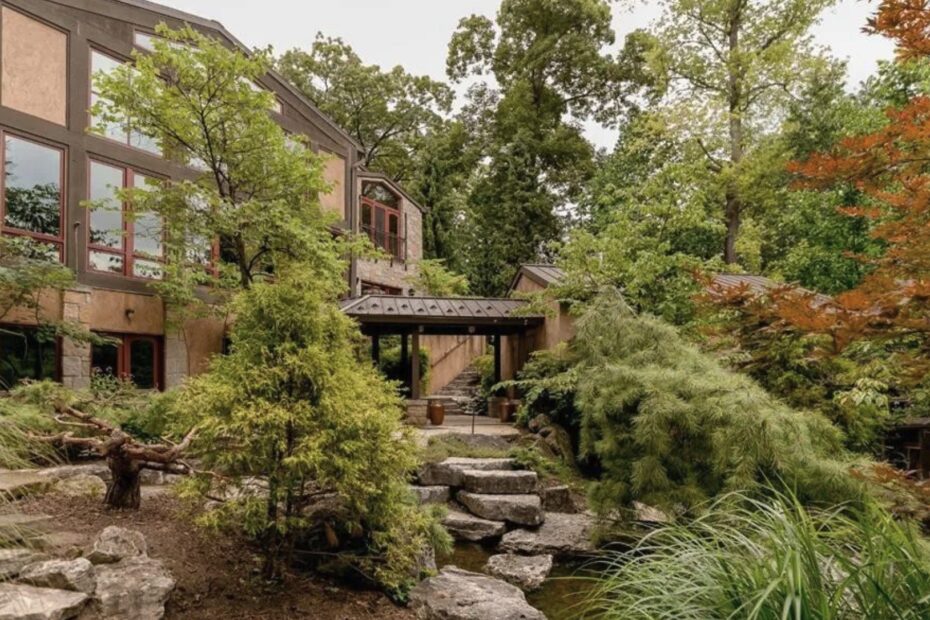
Just outside Detroit, in the affluent community of Bloomfield Hills—where billionaires and auto industry leaders have long made their homes—sits a stone house unlike any other.
That’s because the 4,800-plus-square-foot residence, newly listed for $3.75 million with Brandon Curry of Signature Sotheby’s International Realty, isn’t just offering scale and luxury, but a deeply personal custom build rooted in craftsmanship and local history—all with the touch of an artist’s eye.
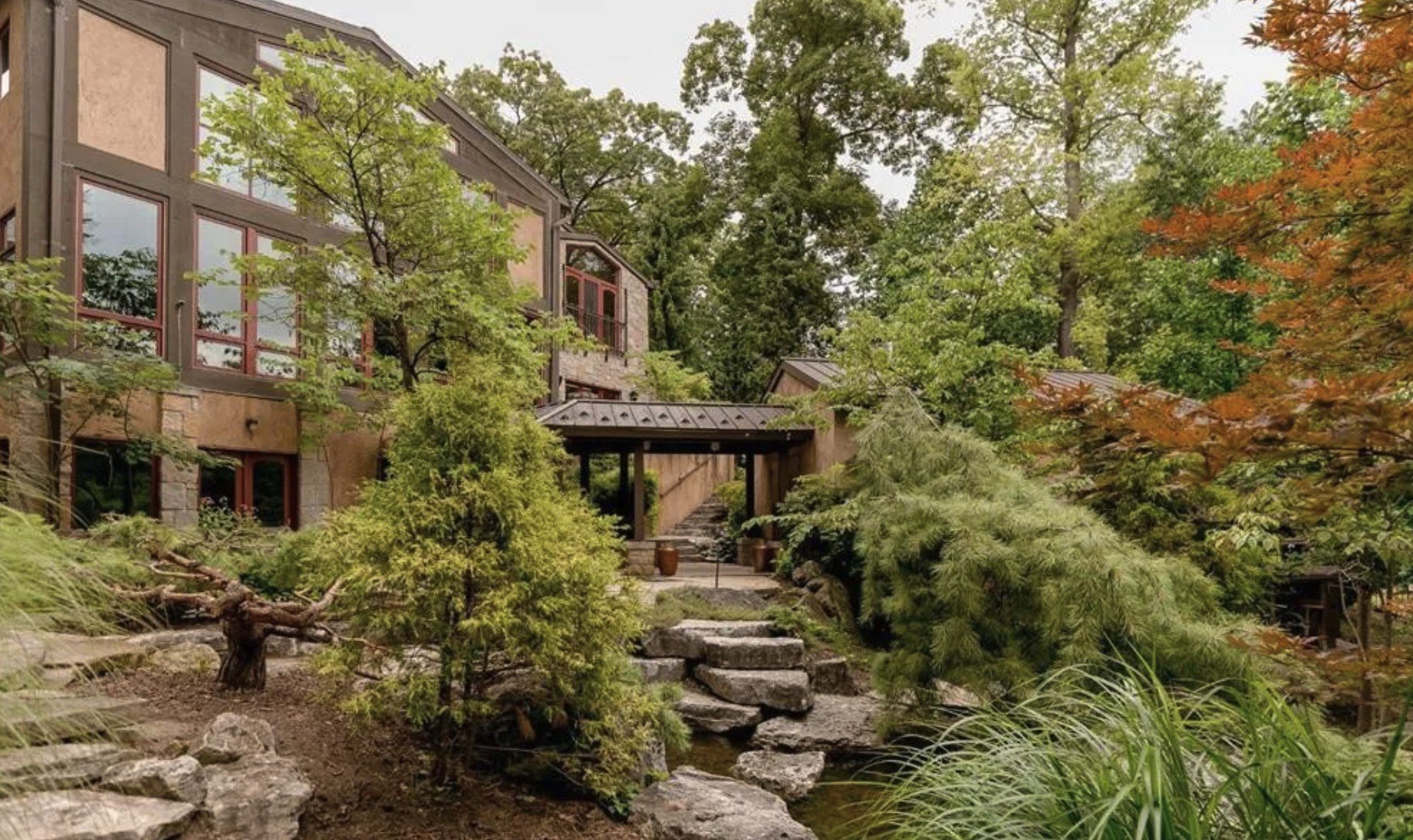
The four-bedroom estate at at 7357 Lindenmere Drive stands apart from typical high-end listings, not only for its careful stone construction surrounded by lush water gardens and mature landscaping, but for the remarkable attention to detail found throughout the interiors.
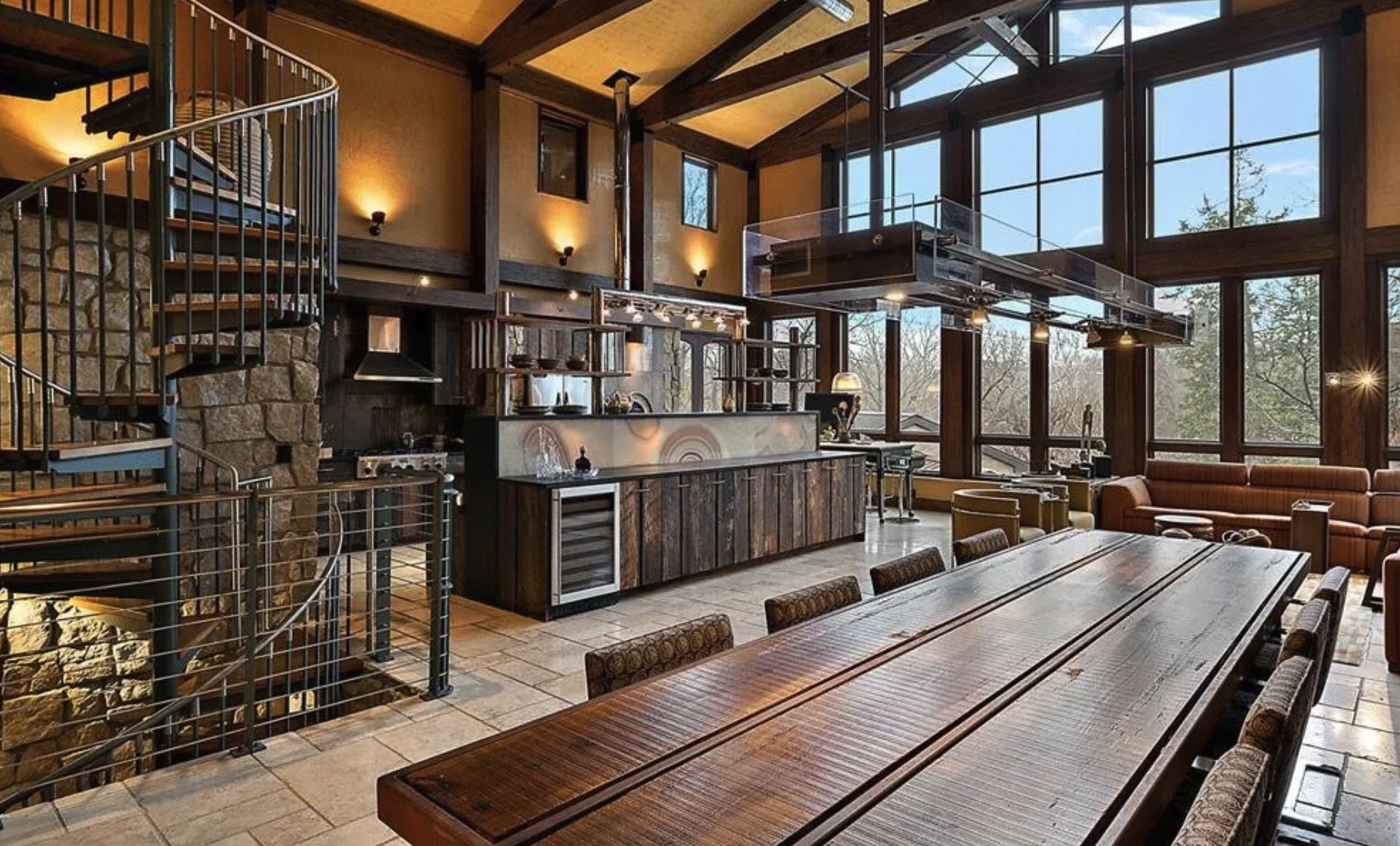
Stone, marble, and reclaimed wood surfaces lend a refined rustic sensibility that carries through the home, which was built by its current owners, Nancy and Peter Stockman—and even incorporates materials salvaged from Ford’s disused Wixom Assembly Plant, which was shuttered in 2007 after 50 years.
“Every inch of our home was thoughtfully planned,” says Nancy. “Our architect and friend Larry Raymond shopped with me for everything, from the marble and cork all the way to the timber beams made of five different species of Michigan hardwood trees.”
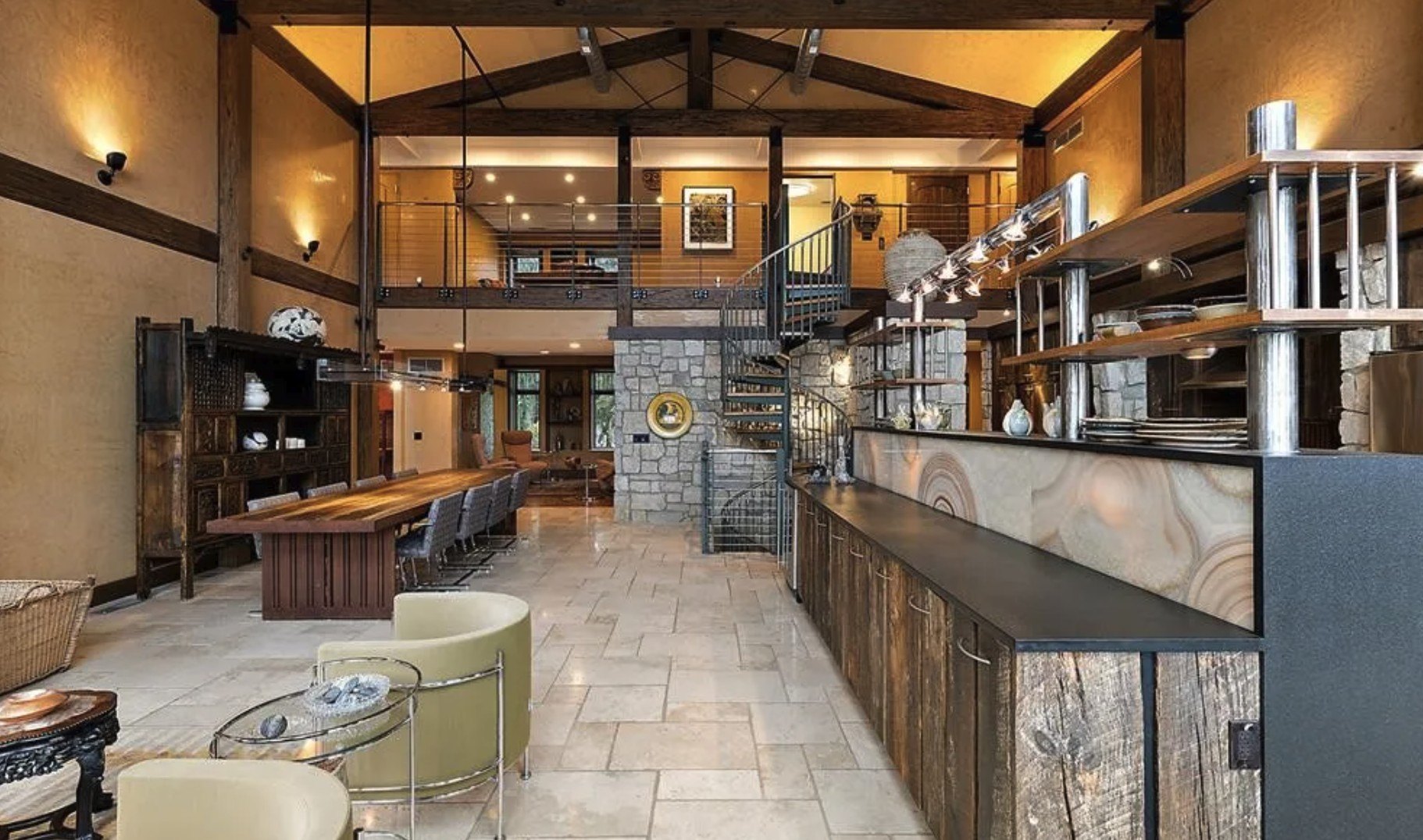
The home’s distinctly industrial-modernist influence is no coincidence either; Raymond was part of the Albert Kahn Architectural Firm—named for the legendary architect and contemporary of Frank Lloyd Wright, best known for designing the Ford Rouge Plant.
Kahn’s philosophy centered on open, light-filled spaces, which helped define a movement of industrial buildings that were both functional and beautiful.
That same ethos can be felt throughout the home, and is also quite literally embedded within it.
In the kitchen, custom cabinets were made using wood taken from the roof of a former Ford plant in nearby Wixom, MI, which opened in April 1957 and grew to become one of the car giant’s largest manufacturing facilities in the U.S.
However, in 2007, amid a drastic decline in Detroit’s once-prominent status as the center of America’s auto industry, the plant was shuttered, and in 2012 Ford began dismantling the plant.
“The wood for the kitchen cabinets came from the roof of the Wixom Ford plant,” Nancy says. “We had to be interviewed by the collector to ensure we were doing justice to it.”
Raymond, who died just two years after the home’s completion and worked on the project even while undergoing treatment for cancer, helped to bring that vision to life. The result is a subtle but meaningful nod to Detroit’s industrial legacy, woven directly into the estate’s design.
In total, the home includes three bedrooms, each with its own en-suite bath, along with an additional bathroom and powder room.
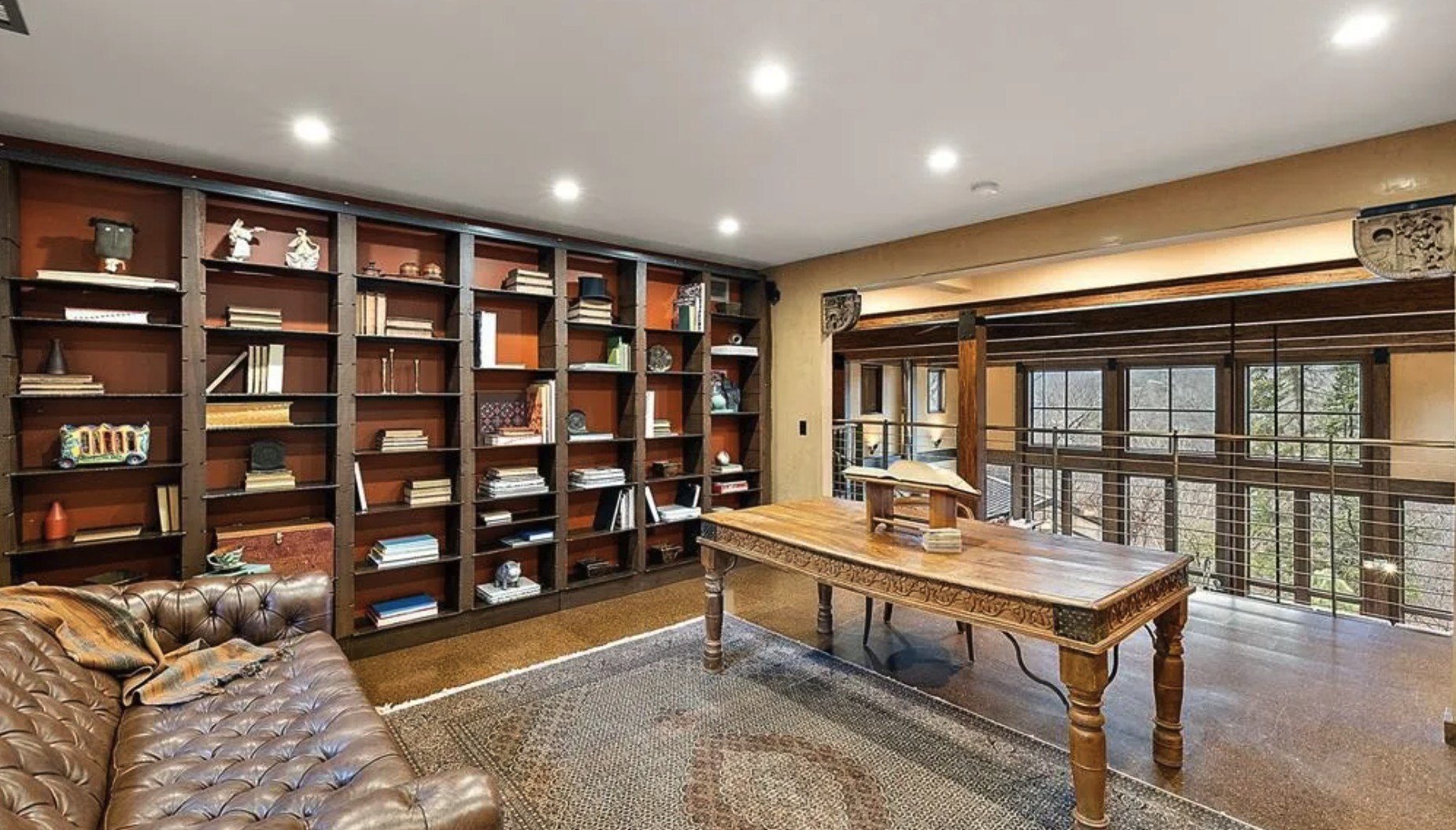
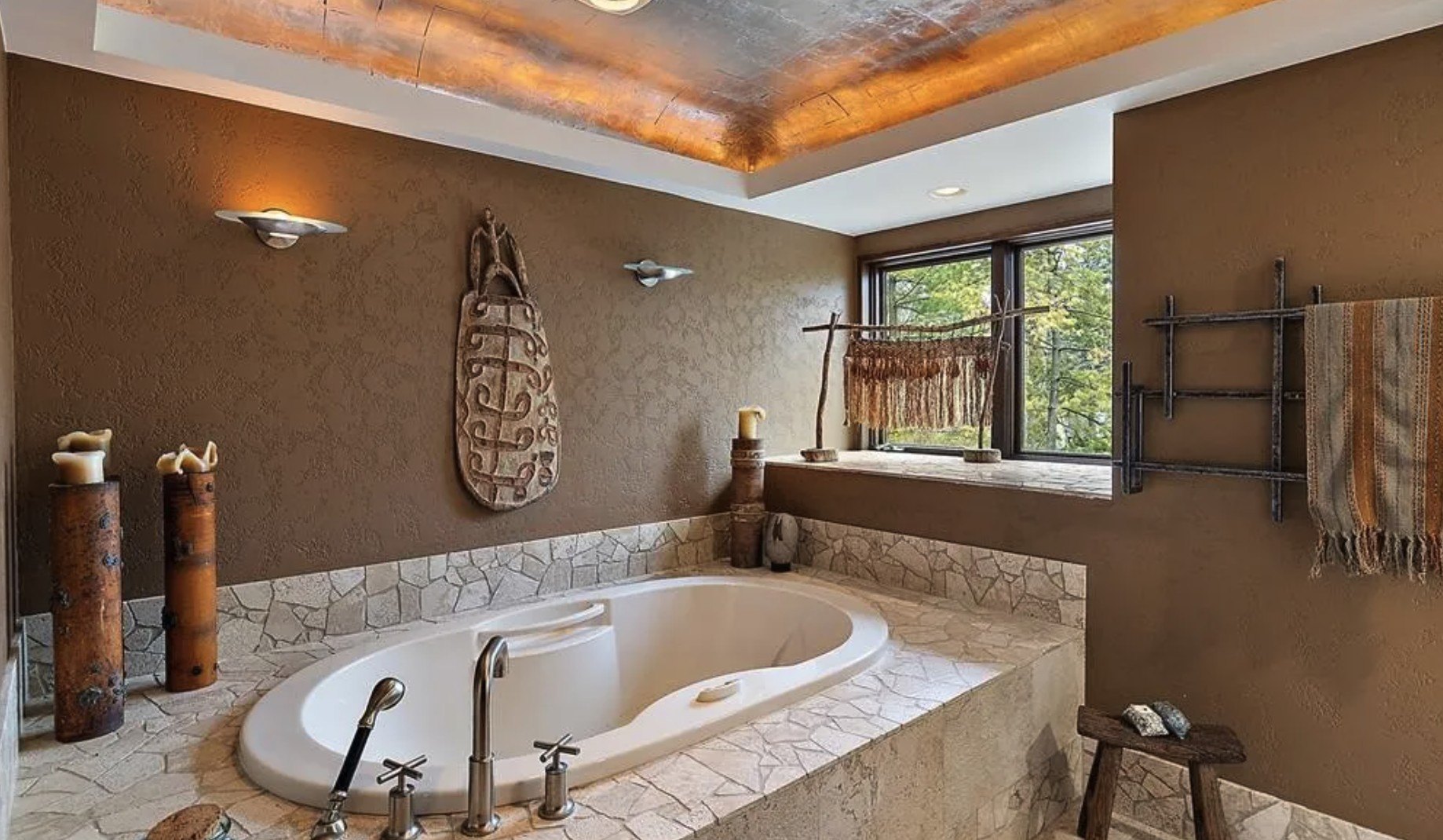
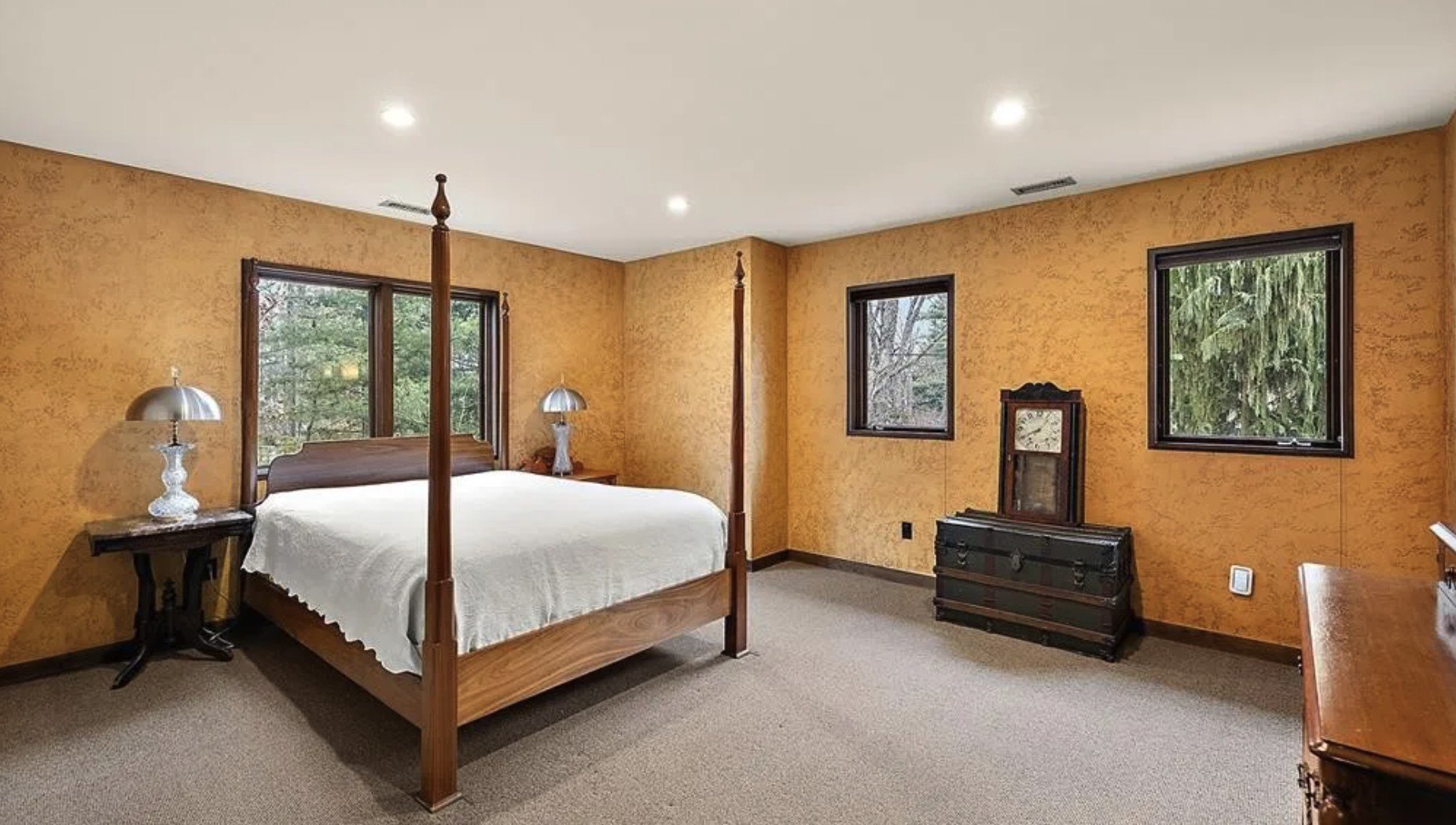
A full walkout lower level expands functionality with a second kitchen, sauna, exercise room, and even a pottery studio, complete with an outdoor kiln. A four-car garage with a workshop further enhances the appeal, making the one-acre property something of a “hobbyist heaven.”
Nature also plays a central role here. The property features more than 100 tons of boulders integrated into the landscape with 200-year-old oak trees, alongside a custom-built waterfall and stream that winds through the grounds.
Even trees removed during construction were repurposed into interior elements, including the main staircase and a dining table, ensuring that nothing was wasted.
The creation of the home was not only an artistic endeavor, but a deeply personal one, particularly as Raymond continued working on the project despite his illness.
“This home was built on the love of friendship,” Nancy says. “He told us, ‘I think it’s the home that will sustain me.’”
Inside, every detail reflects a commitment to artistry, from hand-applied Venetian plaster walls to a labor-intensive metal roof bent piece by piece.
“I’ve been an artist all my life,” Nancy says. “Handwork and the care it takes to create something are what matters to me. My dream was to build a home for my soul—to celebrate family, friendship, and art.” That vision is evident throughout.
In a market filled with impersonal new builds, this Bloomfield Hills estate offers all the luxury of its ZIP code, plus a whole lot of soul.