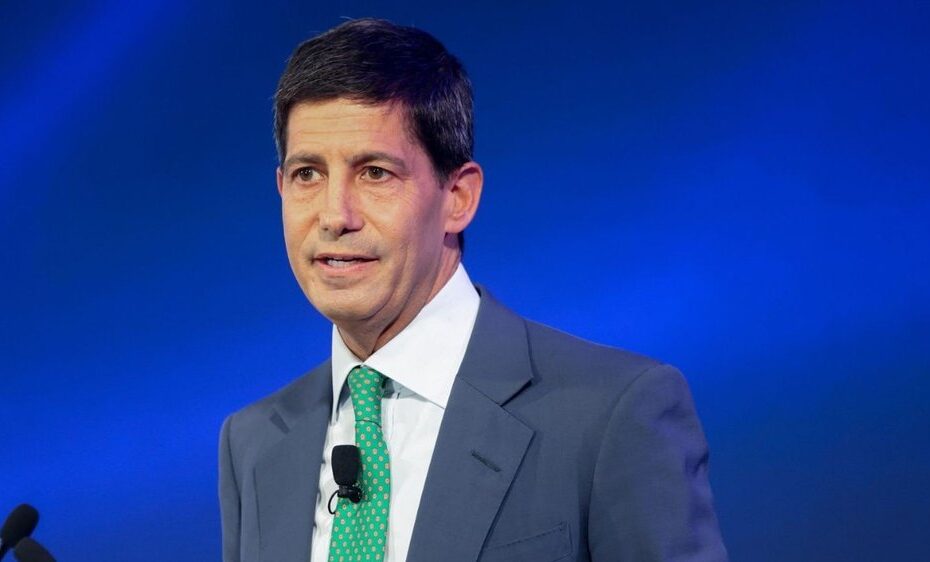
Fed chair nominee Kevin Warsh would be the richest chair in history by far, if he is confirmed, according to financial disclosure forms.
Warsh is President Donald Trump‘s nominee to succeed Jerome Powell, whose term expires in May. The banking executive has holdings worth approximately $131 million to $209 million, according to a recently released financial disclosure report.
Additionally, his wife, Jane Lauder, granddaughter of cosmetics mogul Estée Lauder, disclosed hundreds of millions of dollars in assets, while Forbes puts her net worth at $2 billion.
In the 69-page document, Warsh disclosed that he made $10.2 million as a consultant to investor Stanley Druckenmiller and raked in millions as an adviser for companies ranging from GoldenTree Asset Management to Stanford University.
Warsh noted in the filing that his advisory business, Vicarage, would be inactive during the appointment.
According to the disclosure, Warsh has hundreds of thousands of dollars in cash kept in multiple bank accounts, up to $5 million in a money market fund, and UPS stock worth between $1 million and $5 million.
If confirmed, Warsh has pledged to divest many assets, including equity in venture capital funds Bessemer Venture Associates VIII and DCM Investments IX.
Warsh is also a prolific investor in cutting-edge tech, AI, blockchain, and crypto, with holdings in dozens of companies, including Elon Musk‘s SpaceX.
Given that he would oversee future central bank regulatory decisions on digital currency, Warsh would likely have to divest of most of these investments, according to CoinDesk.
While the couple reportedly have owned homes in Manhattan, Palm Beach, and Washington, DC, the only real estate holding mentioned in the filing is “undeveloped land” in Suffolk County, NY, worth between $5 million and $25 million.
A “mortgage on personal residence” with an enviable 2.875% rate was taken out in 2013, and between $1 million and $5 million is still owed to the bank.
Will Warsh’s extreme wealth affect the housing market?
At a time when the average American feels that homeownership is out of reach, what will an ultrawealthy chair of the Federal Reserve mean for the market?
“There will be much hand-wringing about someone with that wealth and background running the Federal Reserve,” Richard Redmond, real estate financier and CEO of Redmond Mortgage Capital, a private lending firm, tells Realtor.com®.
“While I don’t think proximity to that much affluence will directly affect any of his decisions, I think it may affect the way that he understands the application of the Fed’s dual mandate of maximum employment and stable prices. Lived experience is very important,” says Redmond. “He may struggle to fully grasp how his decisions will ripple through the lives of those without financial stability or a safety net.”
On the other hand, Alex Thomas, research manager at John Burns Research and Consulting, says: “Fed chairs hold a lot of sway, but they don’t set monetary policy by themselves. Interest rate decisions are made by the FOMC, where Warsh would be just 1 of 12 votes.
“Also, Warsh has historically pushed for higher interest rates and tighter financial conditions, which tend to work against asset prices.”
Warsh, a former Fed governor who served during the 2008 Global Financial Crisis, has recently advocated for shrinking the central bank’s balance sheet and cutting interest rates for the benefit of homebuyers and consumers.
“His fortune is not what singularly concerns me the most,” real estate coach Lee Davenport tells Realtor.com. “It’s his fortune combined with his portfolio holdings in companies like SpaceX and Polymarket, whose valuations can be significantly impacted by Fed policy and regulatory decisions.
“Yes, Warsh has pledged to divest problematic assets if confirmed. But this places the burden on the public and the Senate to trust his postconfirmation actions rather than ensuring a clean break beforehand.”
Additionally, Davenport says she is concerned that “Warsh’s background as a banker at Morgan Stanley could bias him toward Wall Street interests over Main Street.”
Real estate consultant Jonathan Miller, director of markets at StreetMatrix, tells Realtor.com that perception is often as important as reality.
“Warsh’s personal wealth doesn’t directly set mortgage rates, but it shapes perceptions at a time of housing stress,” he says.
“Markets care more about whether he can remain independent and maintain credible policy. If investors worry he’s politically influenced, yields could rise, indirectly affecting borrowing costs, even if he favors rate cuts.”