When Shane Coderre moved from Newport Beach, CA, to Wilmington, NC, in the early 2000s, he couldn’t believe how cheap coastal land was. So much so that he immediately started shopping.
The Tar Heel State is home to approximately 412 islands. Coderre’s early searches kept leading to the same seller who owned 22 islands and “hadn’t been to half of them.” As luck would have it, the seller happened to want to sell en bulk as he was aging past the ability to care for the land.
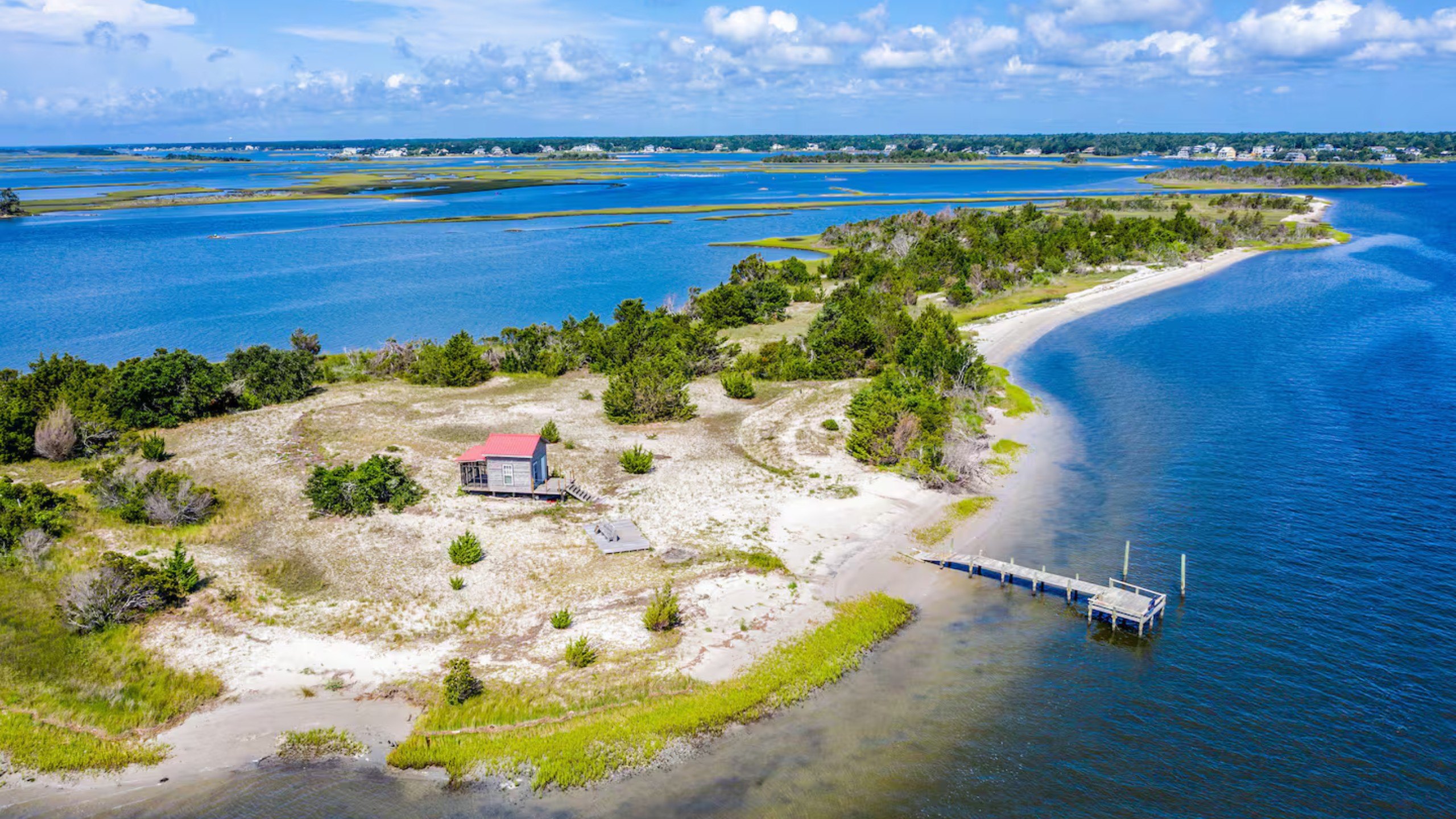
The first few plots Coderre saw along the White Oak River were swampy, with too many bugs and gators. The seller then showed him an island in the Intracoastal Waterway. After growing accustomed to seeing 25,000-square-foot plots in Newport Beach trade for $3 million, his first reaction was, “I could never afford something like this.”
But the asking price in 2006 was only $50,000. Within a week, Coderre completed the deal, going on to invest with his business partner in two more islands from the same seller. One of the islands is an 84-acre parcel rented out to hunters and currently listed for $1,790,000.
Owning an island wasn’t always ‘the best experience’
Initially, Coderre’s first island purchase was a weekend sanctuary, where he occasionally brought dates for bonfires. When he went solo, he enjoyed dolphin-watching, crabbing and birding, and July Fourth displays where three different fireworks shows would fill the skies simultaneously.
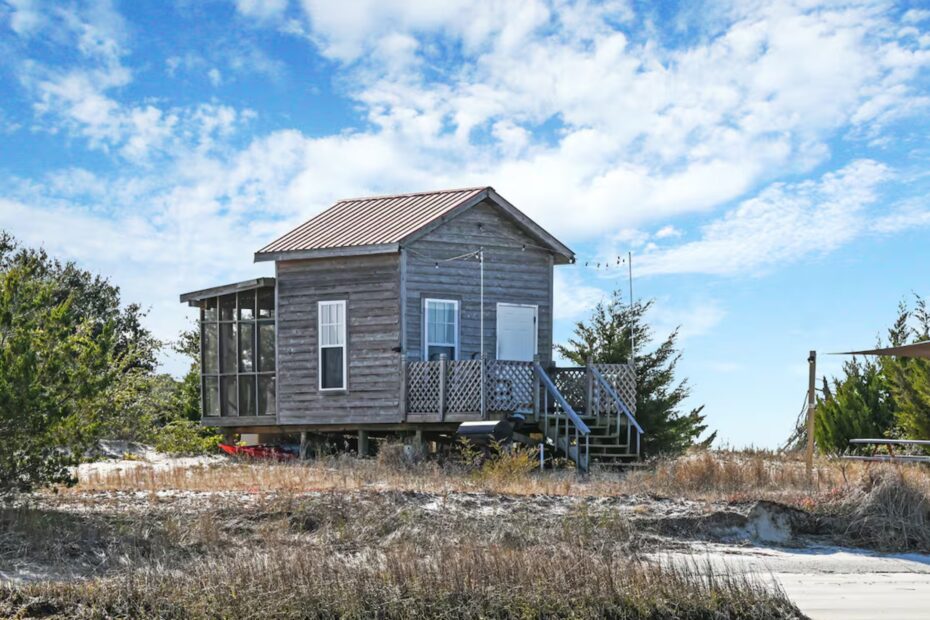
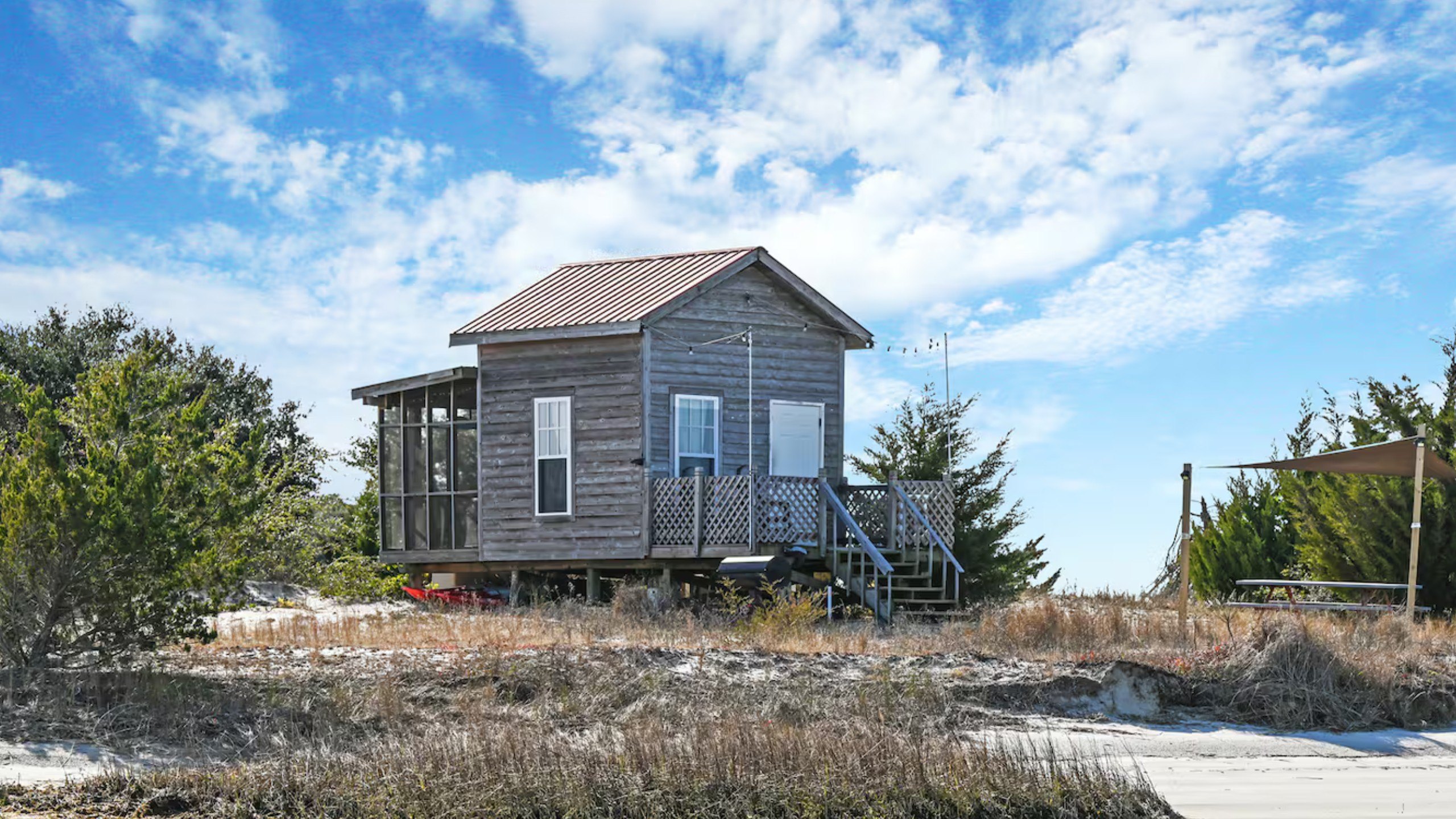
When he decided it was time to add a shelter, a local dockbuilder came and stayed three months. For $26,000, he built a dock and the two-story cabin that remains the island’s only residence.
After a few months, Coderre realized his two jobs were keeping him from enjoying the island all that much, and he started renting it out.
In the years before Airbnb, Facebook and Craigslist connected him with his first renter. It didn’t go well. A woman rented the place for three days, checking out and leaving “chicken wings all over and the door wide open.”
“That wasn’t the best experience, and they didn’t pay me,” he says. It wasn’t worth the 70-mile trip each way from his house to clean the place, so he paused renting it out, only to return to the fold when Airbnb launched.
Starting a real rental business
This time, Coderre handed off the management to Aaron Seelbinder, who specializes in investment acquisitions and short-term rental operations. Seelbinder tackled logistics, starting with lining up a regular boat captain, Mike Diehl, so that this private-island rental can be “accessible to everyone.”
Seelbinder had run a variety of unique rentals on Airbnb in different locations, from Austin to the jungles of Puerto Rico. In his experience, the biggest hurdle for managers is that property owners buy a place first, then decide how much the home should bring in based on the purchase price. Instead, he suggests that people who want to buy a rental talk to him or other potential managers to make sure what they buy will meet their financial expectations.
Then, once the property is ready to be rented out, Seelbinder leans heavily on processes. He streamlined what happens after each booking, including making sure he has a welcome call with each party so that they understand precisely what is available on the 3-acre getaway. For example, the island relies on a composting toilet.
The island’s appeal lies in its rusticity. For most guests, “it’s a memory that lasts a lifetime.”
“You can see civilization from the island—but this isn’t it.”
Over the years, the cabin has seen a handful of upgrades, like a generator that powers AC and heat. There’s also a fireplace, charcoal grill, and propane shower. It remains a pack-in, pack-out style of glamping, where all drinking water, firewood, and other supplies must be brought in by boat.
Seelbinder says they thought about adding a TV to the cabin. They purchased one, but it remains in storage as no guest has requested it.
The roughing-it nature of the destination is the attraction.
Diehl, the boat captain, sees that it’s commonly booked by “families teaching their kids how to disconnect from the hustle and bustle.”
The island has welcomed a mix of “vagabonds,” birders, YouTube personalities, single moms trying to do something different with kids during COVID-19, as well as travelers from as far away as Australia, Europe, and Southeast Asia. The island is friendly to all manner of pets, which have included a three-legged poodle, a hairless cat, and even a sugar glider.
Making money with an island
The island, the only one Coderre owns outright on his own, grosses about $70,000 a year. Half of that goes to him, and the other half covers the management, cleaning, firewood, and ferry transportation for guests.
Nightly rates before taxes depend on the season, with winter months sometimes dipping to $89 a night. Peak July season can be as much as $417 for July Fourth. Weekly and monthly discounts are available.
Seelbinder has seen someone rent for all three months of the summer, then do it again the next year. A few years back, a writer stayed for a month—and that was before the propane shower was installed.
There’s an appeal, and it doesn’t fade with time.
Right now, Coderre plans on giving the island to his three daughters with the advice that they “keep the natural beauty as it is.”
But at the “right price”—which for him is to the tune of $3 million—he thinks he’d sell.
But he knows that if he did, he would “never find another one” quite like this.