
A tiny-home maker once touted by Elon Musk as a “cool product” has taken a heavy hit in its first week as a publicly traded company.
Boxabl, a modular housing company based in Las Vegas, was listed on the Nasdaq exchange on Monday through a merger with a special purpose acquisition company, a method of going public that avoids a traditional initial public offering.
Shares of the company initially surged 20%, but have since given up those gains, and ended Thursday’s session down nearly 50% from its initial offering price.
Boxabl was founded in 2017 by Paolo and Galiano Tiramani. The father-and-son team crowdsourced an astounding $230 million from more than 50,000 investors across multiple crowdfunding platforms.
The pitch, as Paolo said in his public offering announcement, was that “the housing market is broken, and nobody was going to fix it.”
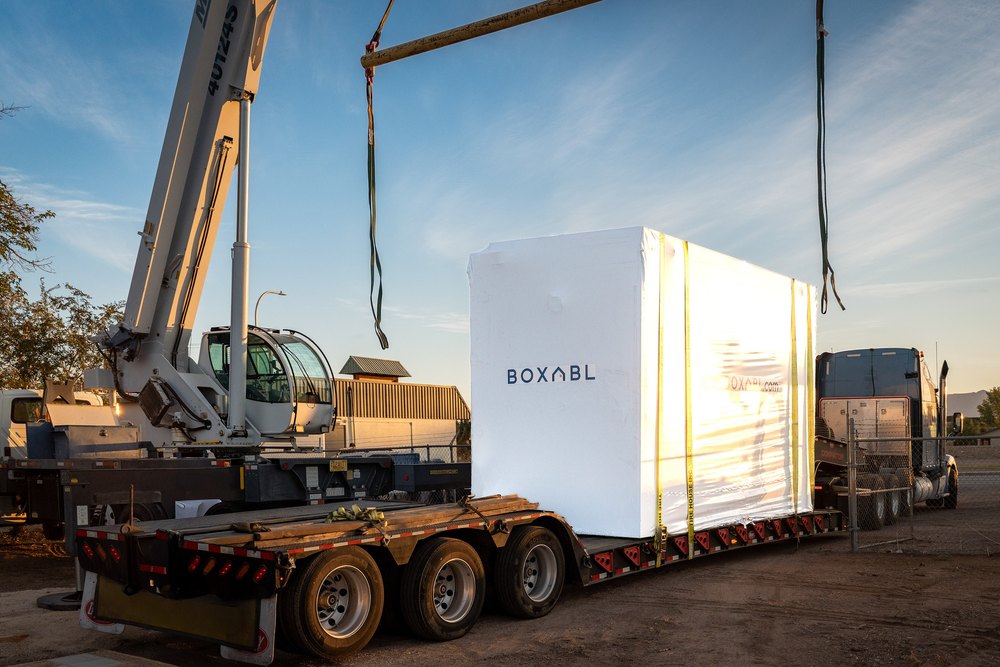
Boxabl’s primary product is The Casita. The manufactured tiny home comes in a studio, one-bedroom, or two-bedroom version with a full kitchen, bathroom, and utilities.
The studio starts at $140,000, while the two-bedroom version is priced at $200,000. The homes are designed to be unfolded on-site and assembled in less than an hour.
After a modular house was spotted on the grounds of SpaceX’s Boca Chica, TX, compound, many assumed Musk had purchased it from Boxabl.
Musk cleared things up with a tweet: “I’ve actually been living in a ~$50k house in south Texas for past 2 years, not Boxabl (cool product tho).”
The company was heralded as a “disruptor” in the housing industry, part of the growing modular housing boom. That market grew to $20.5 billion in 2025 and is expected to grow an additional 6.5% by 2030.
On Monday, the company went public in a special purpose acquisition company deal with FG Merger II Corp. at a price of $10 a share, putting it at a $3.5 billion valuation.
But that valuation quickly plummeted. By Thursday, the stock was trading at around $5.
Can Boxabl live up to its valuation?
Ksenia Levina, the founder of Vienna Property Investment and a real estate expert specializing in property acquisition and investment strategy, suggested the sell-off came because the company’s valuation was based largely on “brand hype and buzz, and not on any actual finances.”
In reality, the company hasn’t generated much revenue. In 2024, it reported around $3.4 million in revenue, “an absolutely insignificant amount that cannot possibly justify such a multibillion valuation,” says Levina.
Prior to the public offering, secondary private markets priced Boxabl shares at around 24 cents—”a huge discrepancy from the $10 IPO baseline price,” Levina notes.
Levina says the company’s failure to adequately scale its production has greatly hobbled its prospects. The founders claimed in 2023 that they had a waitlist of more than 160,000 orders. But in 2024, their Las Vegas factory produced only 140 homes, despite its factories having the capacity to produce 1,200 Casitas a year.
“This space is ripe for disruption with modular building, and investors are correct to be optimistic about potential growth in this sector,” says Ben Mizes, president of Clever Real Estate. “However, investors have placed their bets on the willingness of companies to execute their lofty visions and ideas. Great concepts will always be tempered with the reality of deregulation, cost, and building at scale.”