Florida voters will decide this November whether to approve one of the largest property tax cuts in state history, after lawmakers passed Gov. Ron DeSantis’ proposal to dramatically expand the state’s homestead exemption.
The plan, titled “Save Our Homes From Excessive Property Taxes,” was revealed last week and debated this week during a special session. After several major provisions were changed, the measure passed the House of Representatives 75-26 and the Senate 30-9.
Now it heads to the ballot, where it will need support from 60% of voters to become part of the state constitution. In an April survey, 77% of Florida voters said they would support a constitutional amendment to increase the homestead exemption, with 53% saying they would definitely support it and 24% saying they would probably support it.
At first glance, the appeal is obvious. Property tax bills have become a major source of frustration in Florida, where rising home values, insurance costs, and local government budgets have collided with homeowners’ growing affordability concerns.
One couple told Realtor.com® last year that their annual property tax bill had skyrocketed from $15,000 to a “life-altering” $91,000 after a major remodel triggered a reassessment at market value.
But the plan wouldn’t come without serious trade-offs—among them: a potential $8 billion shortfall for local budgets in fiscal year 2027/2028 alone.
What the plan would do
The constitutional amendment would create a much larger homestead exemption for primary residences, allowing more homeowners to shield a bigger share of their home’s value from taxation.
Starting Jan. 1, 2027, homeowners would be able to exempt the first $150,000 of assessed value, and that exemption would rise to $250,000 in 2028 and increase with inflation each year after that.
Just how much that would lower a homeowner’s bill, though, would depend on a homeowner’s assessed value, local tax rates, and which taxes are covered. A lower-value homesteaded property, for example, could see a much larger share of its taxable value erased than a higher-value home.
But it’s not as simple as who has the more expensive home, because in Florida, assessed values are not always the same as market values. Under the state’s existing Save Our Homes rules, longtime homesteaded owners can have assessed values that are significantly lower than what their homes would sell for today.
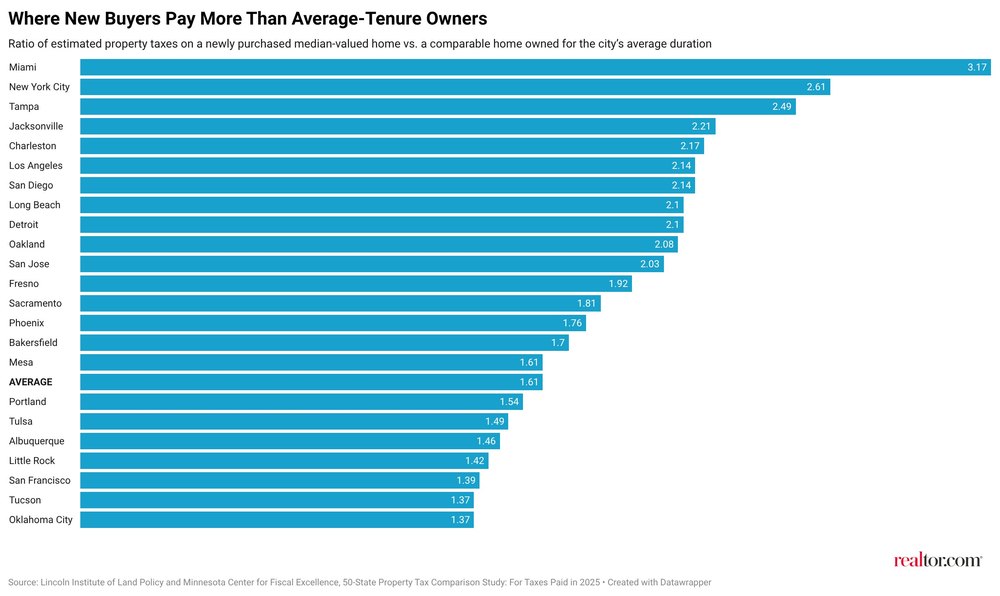
That gap has already created sharp disparities on Florida tax rolls. In Miami, for example, new buyers of median-priced homes pay more than three times as much as average-tenure homeowners with similar homes.
Speaking last week to announce the special session, DeSantis said, “A $250,000 limit—that eliminates property tax for 60% of Florida homeowners.”
However, PolitiFact, in partnership with WLRN, reported a more measured estimate, citing the Florida Legislature’s Office of Economic and Demographic Research. According to that analysis, about 28% of Florida’s homestead properties have a just value, or market value, of $250,000 or below.
But again, the comparison is not perfectly one-to-one because the proposal applies to assessed value, not necessarily market value. It does, however, underscore central questions around the plan: How broad will the benefit actually be, and how much relief will the average homeowner see?
The unanswered question: Who is picking up the tab?
The biggest unresolved question, though, is how cities and counties would make up the lost revenue—a question that has dogged the national movement to abolish property taxes.
A Florida House staff analysis estimates the proposal could reduce local government revenues by more than $8 billion in the first year and more than $14 billion the following year. Those totals include billions in both school and nonschool property tax revenue, underscoring how widely the effects could be felt.
It’s also a question that became even more pressing after lawmakers stripped out a proposed state trust fund that would have helped lower-population and rural counties backfill money for essential services, added protections for school and constitutional office (like sheriffs, clerks, etc.) funding, and lowered the current 10% assessment cap for nonhomestead properties (like second and vacation homes) to 5%.
The concern is especially sharp in rural areas. Democratic state Rep. Allison Tant of Tallahassee illustrated the problem by pointing to Jefferson and Madison counties in her district, where public school districts are among the largest employers and local tax bases are smaller.
“What is the answer to funding public safety there?” Tant asked Republican state Rep. Toby Overdorf during debate.
“The governor’s resolution is silent on how to fund … and on ways to fund government,” Overdorf answered.
Florida TaxWatch, a nonprofit research organization, raised a similar concern in a June 1 statement. The group praised the governor for starting a conversation about property tax relief, but warned that the state needs limitations.
“If guardrails aren’t put in place to curb local government spending, any reduction in homestead property tax revenue will simply be passed on to nonhomestead property owners or replaced with other taxes, fees, and assessments,” the group said.