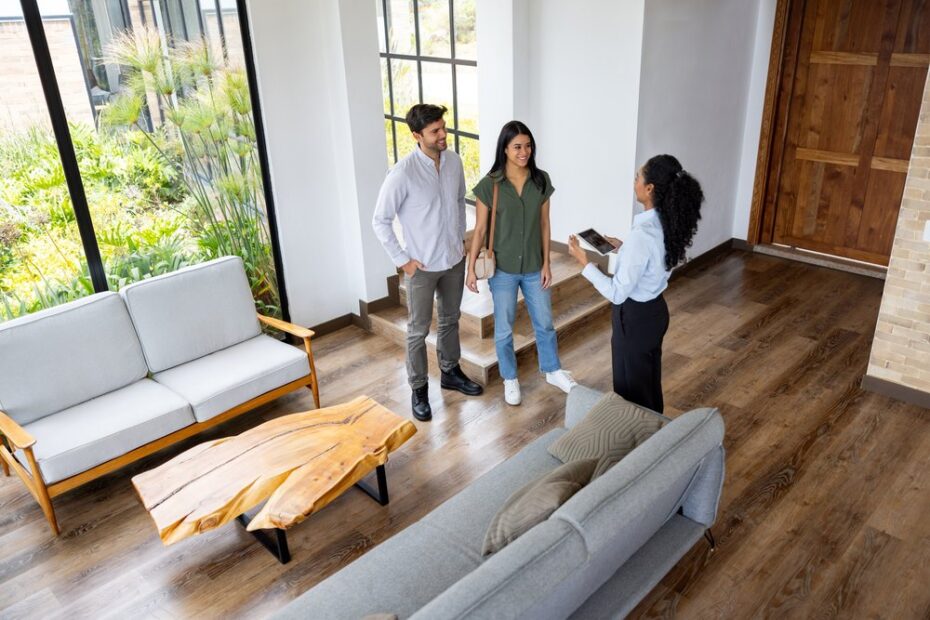
The time-honored process of selling a home often includes the open house, where sellers spruce up the place and invite people to stop by and imagine what it would be like to live there.
Open houses have become less prevalent in recent years, however, between the advent of digital listings, virtual stagings, and a post-pandemic housing market where many homes were bought sight unseen.
Today, some real estate agents operating in hot markets may say that an open house isn’t necessary. And that’s probably appealing to some owners—open houses often involve staging, or at the very least making their home accessible to strangers when they’d rather be living their lives.
The open house, however, is more than just a courtesy. Even in a hot market, an open house still drives real value, insist some experts, and skipping one can mean leaving money and other benefits on the table.
Bringing people together creates competition
If you’re selling a home in a competitive market, you may have the urge to list your home and let the market go to work. Just allow people to do virtual tours and minimize the amount of effort you need to put in to sell the place.
Here’s the thing: Almost all experts agree that this method leads to a lack of competition.
“Here’s what AI photos and virtual tours can’t replicate: the feeling of standing in a kitchen and knowing you’re not alone,” says Mindy Price, a real estate broker at eXp Realty. “When a buyer walks through an open house and sees three other couples doing the same thing, something moves. The home stops being a listing and starts feeling like something they could lose.”
This is the feeling you want—because people motivated not to lose something are more likely to make competitive offers, such as at asking price or even above.
“That psychological trigger—live, visible competition—is one of the most powerful motivators in a purchase decision, and you simply can’t manufacture it with a Matterport [3D virtual] tour,” says Price.
You can condense the timeline and foster urgency
A hot market means you’re likely to sell—the question is, how quickly?
An open house is particularly powerful in creating competition because it limits when your prospective buyers can see the property.
“From a strategic standpoint, an open house compresses the timeline in the seller’s favor. Instead of staggered private showings spread across a week, you’re creating a concentrated window of energy and urgency,” says Price. “That’s not just anecdotal. Agents who host well-run open houses often see faster offers at stronger prices because buyers feel the momentum.”
Don’t let interested buyers think they can drag their feet on getting you an offer. Scarcity creates demand. Opening your home up to visitors, but only for a limited time, gives them a taste of what they could have while making them aware that the opportunity is fleeting.
Build trust in an era of misinformation
Artificial intelligence is making its mark on almost every aspect of life, and selling a house is no exception. It’s increasingly common for sellers to use AI to adjust aspects of their home in photos, or to virtually stage the home. Rather than inspiring buyers, however, these virtual efforts often fall flat.
“Buyers in this market are skeptical in a way they were not five years ago. They know how a wide-angle lens stretches a small room and they have scrolled past enough listings where virtual staging catfished them,” says Erik Leland, a real estate broker at Realty First, describing the phenomenon of housefishing.
Touching up your photos is one thing, but know that your open house is where things will get real for buyers—and they’ll want an experience that matches their expectations.
“Strong photos still get buyers to look, and digital curb appeal does a lot of the heavy lifting in our market. But the open house is where the listing has to prove it was honest. A buyer who walks in and feels the home matches the marketing that drew them in is ready to write a strong offer,” says Leland.
Unearth new possibilities through unattached buyers
An additional benefit to an open house is that it brings in potential buyers who otherwise would not be in the conversation.
“In a hot market, the strategic value of an open house is not the 10 buyers with agents. It is the one or two without one,” says Leland. “Post-NAR settlement, many buyers want to avoid signing a representation agreement. Open houses are a way to engage with a broker and ask questions without that commitment.”
Leland has seen firsthand how buyers are drawn in by open houses and quickly move from passively intrigued to actively interested.
“An unrepresented buyer told me they had been looking for months but were not ready to buy. We had a conversation about the property, and after I double-checked with my seller, they ended up writing the offer with me the following day. We were able to structure the deal efficiently because I was involved from the beginning. That would not have occurred if 3D tours were our only strategy,” he says.
Tips for making the most of an open house
An open house with no foot traffic is a bit like a tree falling in the forest with no one around. Neither one will make much noise.
There are a few things sellers can do to maximize the results of going with an open house strategy.
For one, take marketing the open house seriously. Price recommends marketing the open house as its own event—not just as a listing footnote—and even using directed social ads in the week leading up to it to bring in buyers who would have otherwise missed it.
The timing of your open house is also important.
“Go live Thursday, and have your first open Saturday. A large gap between listing and the open can kill the momentum,” says Leland. He also recommends running the open house over multiple days—both Saturday and Sunday, for example—in case certain buyers can’t make one day or another.
Finally, don’t forget the little details that make an open house different from simply letting folks in to look around. That starts with staging specifically for the open house—cleaning the windows, touching up the trim, and opening the blinds to let natural light in. Remember, the open house is a bit like an interview—both sides need courting.
“Prepare the home like you’re hosting people you’re trying to impress, not just buyers you want to screen,” Price says.
It also means being ready to provide buyers with all the information they need to make an informed decision.
“Give buyers a takeaway sheet. Provide a floor plan. Detail any recent improvements with dates and costs. Provide utility averages if you have them. Buyers who have all their questions answered are much more likely to write offers,” says Leland.
No one is suggesting forgoing digital marketing and outreach entirely in favor of plopping an open house sign outside of your home. The tactics you use to sell must work together to bring you the best offers possible. The open house is just one tool in your toolbox—but in the increasingly virtual world we live in, the physical connection it offers is a surprisingly powerful one.