Cities across the country have been betting that looser zoning rules will unlock more housing and, eventually, lower costs. A new report suggests that the gamble can pay off—but only in the right places, and not on demand.
Looking at major rezoning efforts in New York City and Philadelphia, researchers at the Urban Institute found that upzoning did lead to more housing production. However, the gains depended heavily on local market demand, the timing of the reforms, and whether other policies helped make projects financially feasible.
In some places, like Philadelphia, the reforms successfully spurred more density while failing to increase the volume of projects. In others, like Jerome Avenue in the Bronx, rezoning produced no significant increase in housing, pointing to the importance of other economic factors in enticing new development.
As local, state, and even the federal government continue to push zoning reform as a response to the housing affordability crisis, the report offers a clearer sense of where the strategy is most likely to work—and where it may fall short.
How New York City turned rezonings into more than 4,000 homes
The clearest evidence of upzoning’s success comes from the Big Apple.
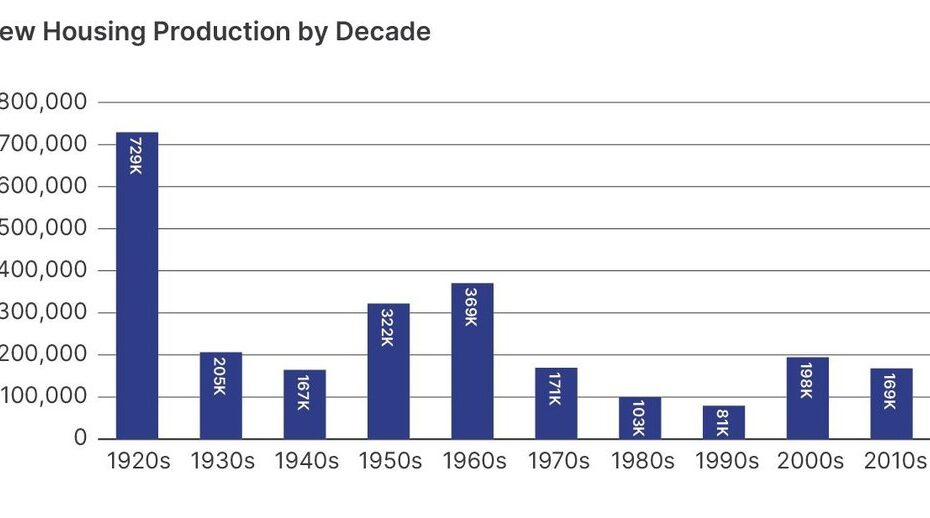
Gotham has faced a severe housing shortage for decades—one that many planners argue was self-inflicted by zoning rules that became increasingly restrictive after the 1960s. After those ordinances were passed, housing production dramatically dropped, and today, the housing shortfall is estimated at roughly 560,000 units, while the city’s vacancy rate sits at a record-low 1.4%.
In response to the crisis, the Bill de Blasio administration rolled out a series of neighborhood-by-neighborhood upzonings between 2016 and 2021, following an earlier Michael Bloomberg–era wave of rezonings in the 2000s.
Urban Institute researchers estimate that seven of these neighborhood-scale upzonings collectively produced nearly 4,100 additional housing units within four years, compared with similar parcels that were not upzoned.
Again, these are actual units—not just permits. That’s an important distinction in a shortage exceeding half a million units, because they represent real homes people can move into, not just the promise of future ones.
But there was a catch to New York’s headline result.
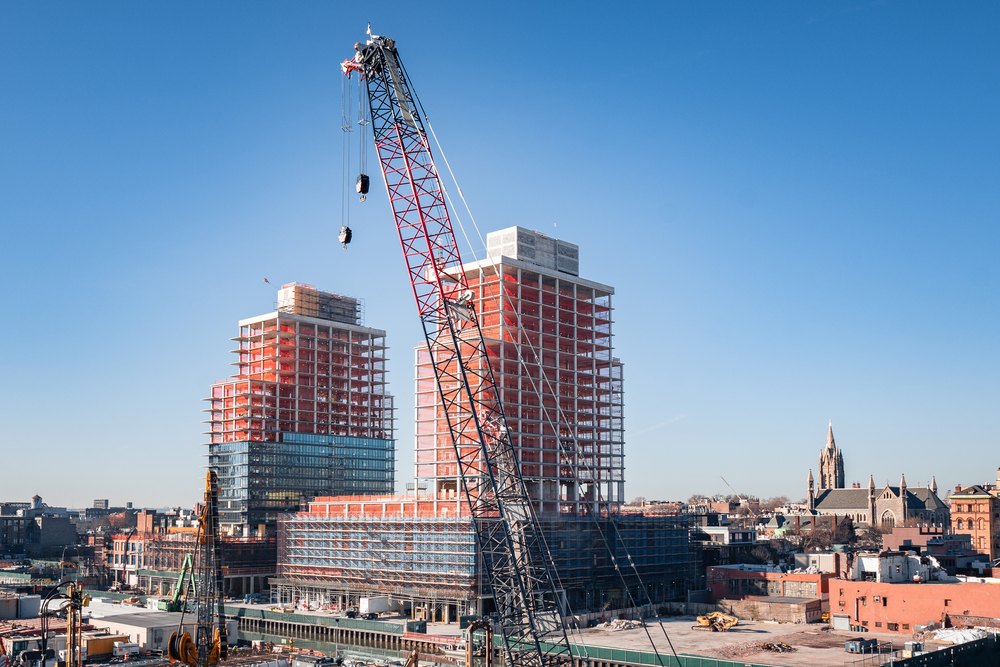
One neighborhood, Gowanus, accounted for much of the gain, far outpacing the other rezonings with roughly 15 additional units per upzoned parcel four years after rezoning, compared with about 1.1 across all upzoned parcels citywide.
That makes Gowanus something close to a best-case scenario for upzoning. The northwestern Brooklyn neighborhood is centered on a formerly industrial canal corridor that had been undergoing cleanup for years, and it entered the rezoning with some of the strongest demand in the city.
Christian Perry, a globally connected Realtor® at Sotheby’s International Realty, says that kind of momentum can translate into unusually fertile ground for new housing.
“Going back to my days at Merrill Lynch, I often decided which towns and cities were worth buying bonds in for my clients by simply counting the cranes,” he says. “Crane counts told you where capital had confidence and where real development was happening.”
It’s both encouraging and limiting for the broader case for upzoning. Gowanus’ success offers a clear example of where the policy can work, while also raising harder questions about how easily that success can be replicated elsewhere.
Philadelphia proved upzoning can work—even without more projects
Philadelphia offered a different kind of proof point.
The City of Brotherly Love is grappling with a housing crisis that is just as severe as New York’s, even if it plays out on a different scale. More than half of renters are cost-burdened, and the city is short more than 64,500 homes for extremely low-income households, according to a recent report from the National League of Cities.
The Urban Institute found that Philadelphia’s 2012 zoning overhaul did not meaningfully increase the number of development projects being proposed, but it did lead to more housing units being permitted within those projects.
By 2021, the effect amounted to about 0.17 additional housing units permitted per upzoned block face per year, which added up to a maximum of roughly 4,000 additional housing unit permits citywide.
That still counts as a meaningful win, especially in a city where zoning still leaves relatively little room for multifamily housing. Philadelphia allows two-family homes by right on just 19% of residentially zoned land, and three-family and larger housing on only 13%, according to National Zoning Atlas data.
Why some neighborhoods saw little to no payoff from upzoning
But the report is just as clear that upzoning is not magic, even in cities with a high demand for housing.
The clearest example was Jerome Avenue in the Bronx, where the study found no statistically significant postrezoning gains and, by four years out, housing supply was actually trending negative relative to comparable areas, though not at a statistically significant level.
The likely reason, the authors suggest, is that zoning was not the main thing holding back construction there.
Jerome Avenue had the slowest rent growth of any of the New York neighborhoods studied before upzoning, and it lacked the same kind of widespread momentum that Gowanus had.
It’s proof that in a weaker housing market overall, allowing bigger buildings alone isn’t enough to entice new projects, likely because developers need more confidence that their projects will pencil out after they break ground.
What cities can take from this
For cities rushing to pitch zoning reform as a housing cure-all, the report offers equal parts encouragement and warning.
Changing the rules can lead to more homes, by either producing more housing outright or allowing more units in the projects that were already likely to move forward. But the authors stop short of claiming that any supply gains from upzoning automatically improved affordability. Instead, they suggest that more research is needed to understand how these policies trickle into affordability and displacement.
If you’re skeptical, just look at Gowanus. Despite its headline success, the median asking rent currently sits at $4,845 per month—more than $1,200 more than the city’s median rent of $3,585.