The effects of the war in Iran are being felt all over the world, but in the U.S, one possibly overlooked casualty of the conflict is the housing market.
President Donald Trump said on Wednesday night that American military objectives in Iran were on track to be completed, but that the war was weeks from being over. This is not the news homebuyers and sellers were hoping to hear.
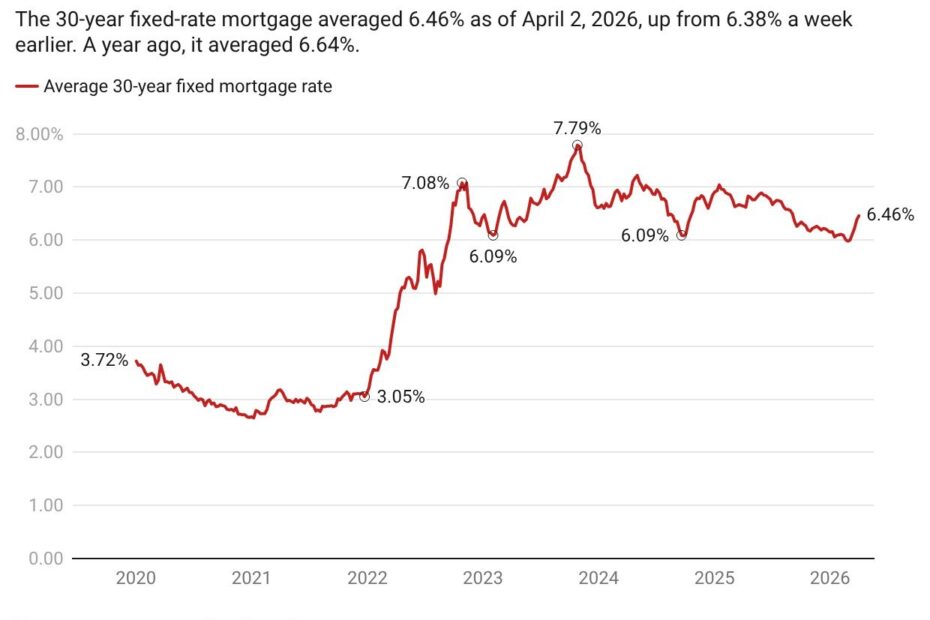
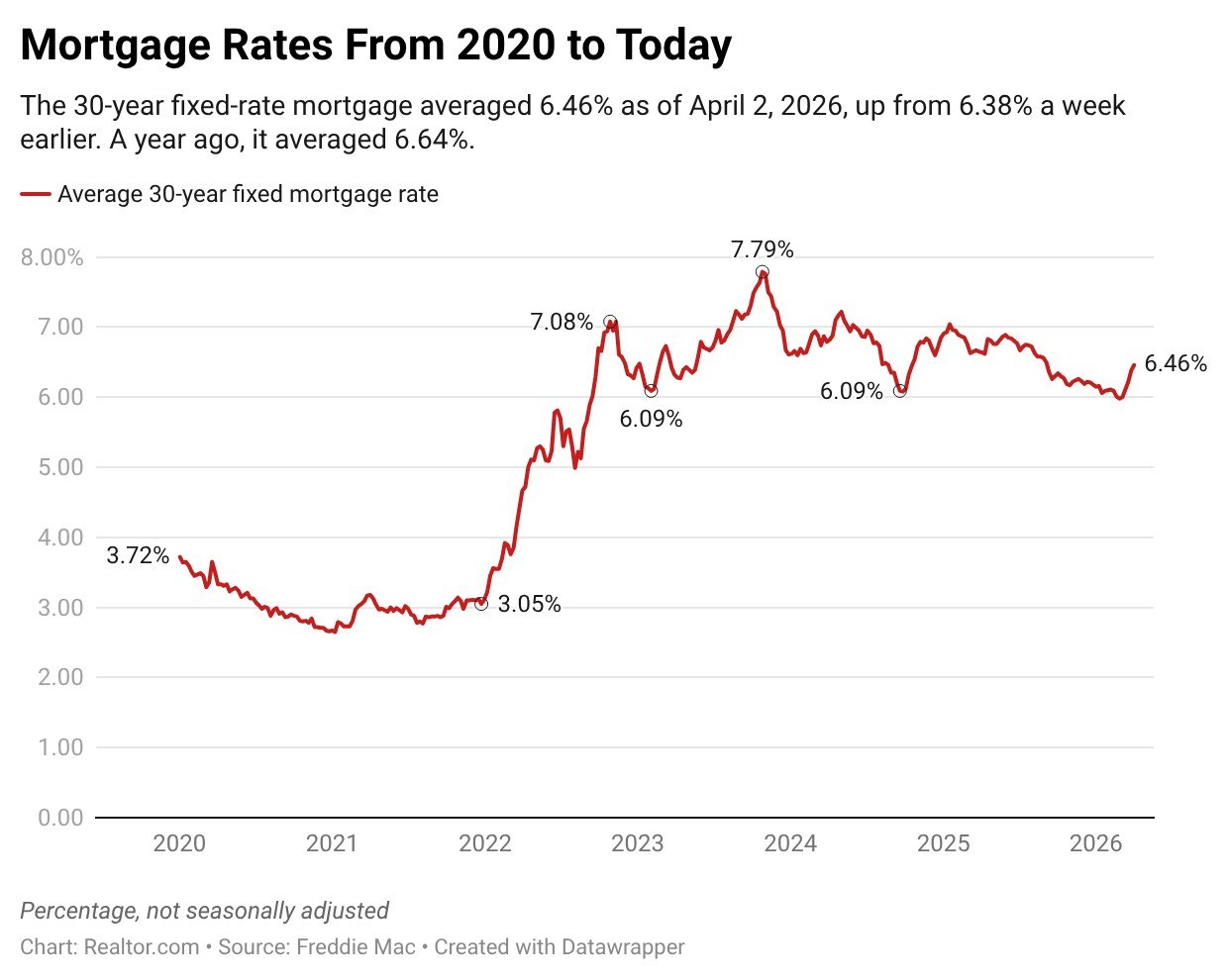
Before the war started a little over one month ago, the 30-year fixed mortgage rate had been on a long, smooth decline, and it even dipped below 6% for the first time in 3.5 years.
Since then, we’ve seen five consecutive weeks of increases, and this week, the Freddie Mac rate came in at 6.46%—the highest in seven months.
The war is stoking fears of inflation, which drives up interest rates. If prices in the future are expected to be higher, then a dollar in the future is worth less, and more dollars are required to make a purchase today, such as buying a home.
The effect on the housing market is that the monthly payment on March’s median-priced home with 10% down is $117 higher at today’s mortgage rates than it was just one month ago. We know that buyers’ budgets are already stretched thin, and this increased cost of financing a home purchase could keep many of them out of the market.
The market, as evidenced by our monthly data from March, is positioned nicely for buyers this spring.
Home prices are falling, down 2.2% from last year to $415,450. This is the lowest median listing price in March since 2022.
Active listing count, or the number of homes for sale, is rising, up 8.1% from last March to 964,477. There are more homes for sale in March than in any year since before the COVID-19 pandemic.
Time on the market is up, as homes spend 57 days for sale, four days longer than last year. It’s still five fewer days than the average before the pandemic.
What’s the takeaway from the March market data? Buyers have more options to choose from at lower prices and in less of a hurry.
And even though mortgage rates are climbing right now, they’re still lower than they were last year at this time. The best time of year to sell a home is approaching, that’s April 12-18th. This spring is shaping up nicely for buyers as well.
In more good news for homebuyers, this week’s jobs report showed the unemployment rate ticking down to 4.3% as 178,000 jobs were added, and wage growth came in at 3.5% year over year.
Incomes growing at a steady, if slightly slow pace, while home prices continue to fall, means that affordability is improving for buyers. In addition, this positive jobs outcome takes some pressure off the Federal Reserve, which can now focus on managing inflation with less fear of the no-growth scenario that February’s report hinted at.