A new master-planned community 40 minutes from the beach in Delaware will focus on “community through consciousness.”
If you’re wondering what that means exactly, think walkability, third spaces, microbreweries, and plenty of stargazing.
The project, called The Granary at Draper Farm, located in Milton, will likely double the 3,500-person population of the historical town.
Developer Colby Cox, of Convergence Communities, is uniquely poised to reimagine the 450 acres of former farmland on which the approximately $180 million project is being built—his family used to own it. In fact, he purchased the land from his mother.
“Most families don’t have the option of someone like me in the family who’s been in the master-planned community business for 24 years,” he adds. “It’s exciting.”
But he stresses that his mom didn’t cut him any kind of sweetheart deal.
“It became a natural conversation of, ‘Look, I’ve wanted to develop this land for 20 years, and it should be developed, so I’d like to buy it from you,'” he says, noting that the family farmland had fallen into underuse.
He’d suggested buying the property a couple of decades ago, but his grandfather, who owned it at the time, wasn’t yet ready to sell. Now, Cox sees that as a blessing in disguise.
“I wouldn’t have been as experienced then, or have had the journey of learning what makes a great community,” he admits.
The inspiration
While traveling through South Korea and Bali last year to celebrate his 20th anniversary with his wife, Cox kept noticing how content all the locals seemed, and how there existed a “real sense of community”—one he felt was lacking in much of the modern-day U.S., with its suburban sprawl and “loneliness epidemic.”
“In suburbia, you can literally leave your office in your car, drive into your garage, go to your home, sleep, wake up, get back in your car, repeat, and never talk to another human being in your neighborhood for years,” he says.
Determined to figure out what made the locals seem so happy, he quizzed them until a hotel worker in Bali summed it up as this: connection to nature, connection to fellow humans, and connection to God.
Cox decided these three pillars would be the basis for his latest project: The Granary at Draper Farm.
Inside The Granary
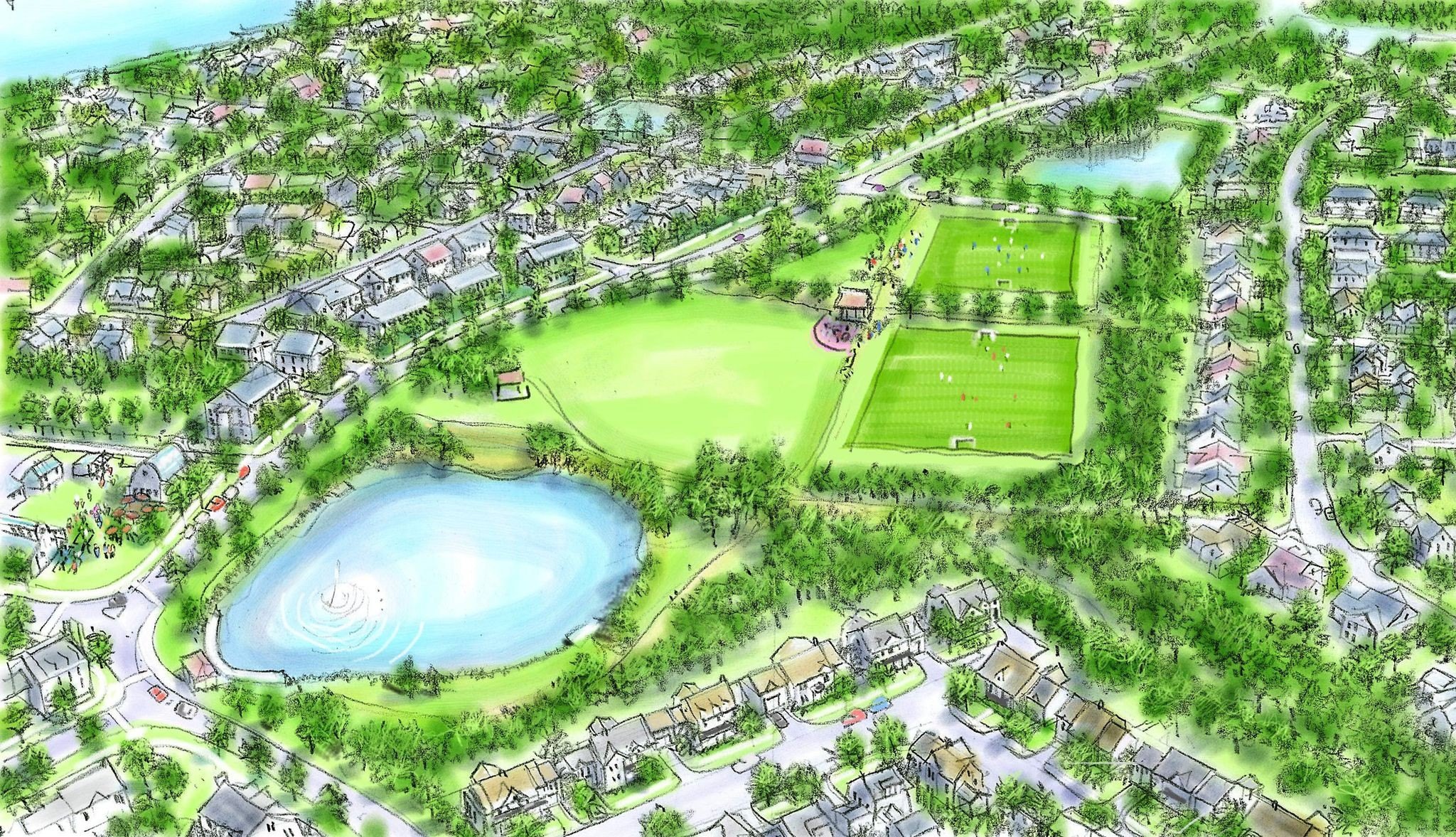
Over a 10-phase plan spanning 15 years, the MPC will eventually have 1,350 residences, including an estimated 900 single-family homes in addition to 450 specialty residential units such as townhomes and condos, all while preserving 110 acres of open space.
The first phase of homes, built by DRB Homes and D. R. Horton, with some custom homes by Kimmel Studio, hit the market in February with approximately 20 sales.
Starting at $420,000, the houses are a price point typical of the area. Currently, the median listing in Milton is $571,475, an approximate 70% increase over the same month in 2019, according to Realtor.com® data.
Guided by the three tenets of “community consciousness” as articulated by the Bali local, the MPC plans to offer a plethora of ways to connect with nature and neighbors—shared parks, event spaces, recreational facilities, etc.—but also ways to plug in spiritually, if that’s up your alley.
And while Cox says his former projects were careful to incorporate nature and community, he realized they were missing a connection to the spiritual.
“My version of what it means to connect spiritually is really about stillness and detaching from the things that distract us from the spiritual,” he says. “That’s whatever that looks like to you in a nonreligious way—the idea that there’s something greater than yourself.”
To that end, there are planned mindfulness gardens sprinkled around the complex, along with quiet nature-filled spaces where people can sit and reflect.
Artwork dotted throughout will encourage people to stop and “get off their phones, out of their minds, and into their hearts,” he says.
Keeping the sky dark
And what could be more spiritually awakening than gazing upon the vast universe?
“For millennia, the stars in the sky have been a very important part of our understanding of our connection to the earth and universe,” Cox notes.
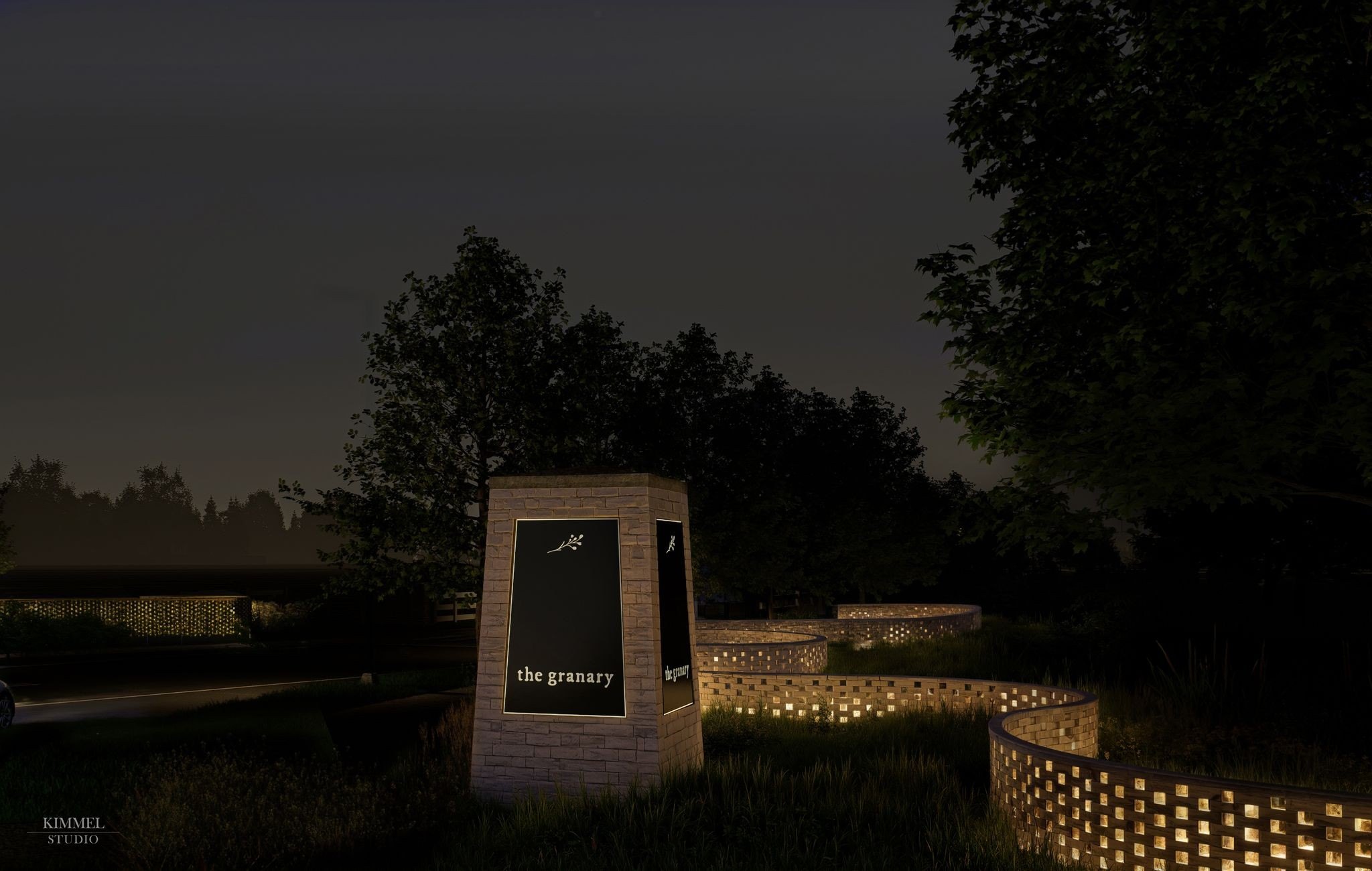
To ensure that residents can actually see the stars, a key feature of the MPC will be incorporating Dark Sky principles, which aim to reduce or even eliminate light pollution. There are currently around 270 Dark Sky-certified places in the world.
Lighting in the community will include motion-detecting lights (so it is only used when necessary), lights that face downward, and a limit on lumens.
“If you stand on the property now, you have a magnificent view of the sky since there’s not a lot of light pollution,” he says. “I want to preserve that as much as possible.”
Access to nature is paramount, so there are 50 acres of parks, including the 20-acre Granary Greens central park, all within strolling distance.
“After a long day at work, you can come home, put on your jacket, and in three minutes, be in the woods,” he says.
The parks will be open to the public as Cox doesn’t want his project to be a “subdivision” but an integrated extension of the town where he spent so much time as a child, visiting family from nearby Lewes (where he was born), and where he lived for a few years in the early 2000s.
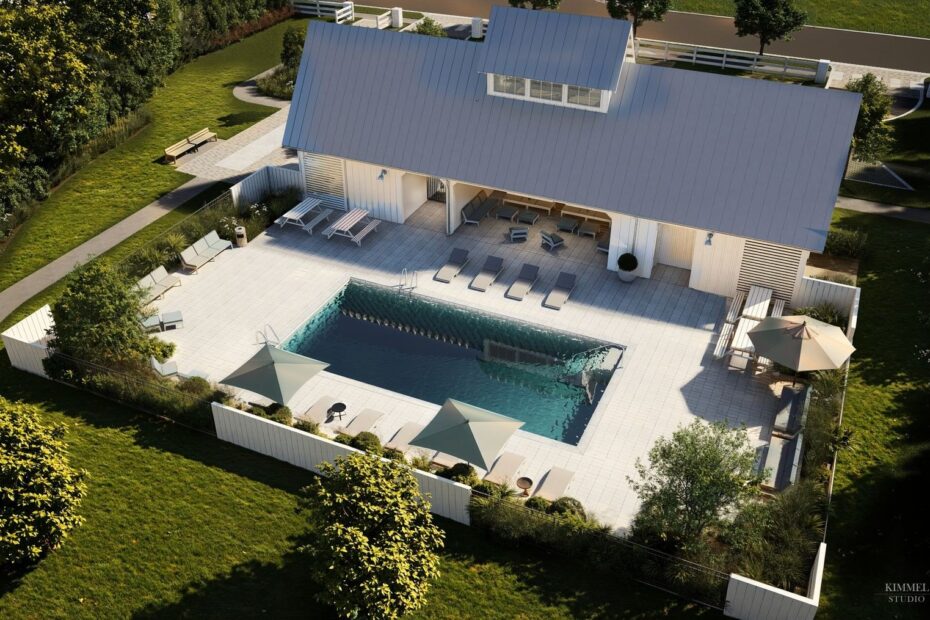
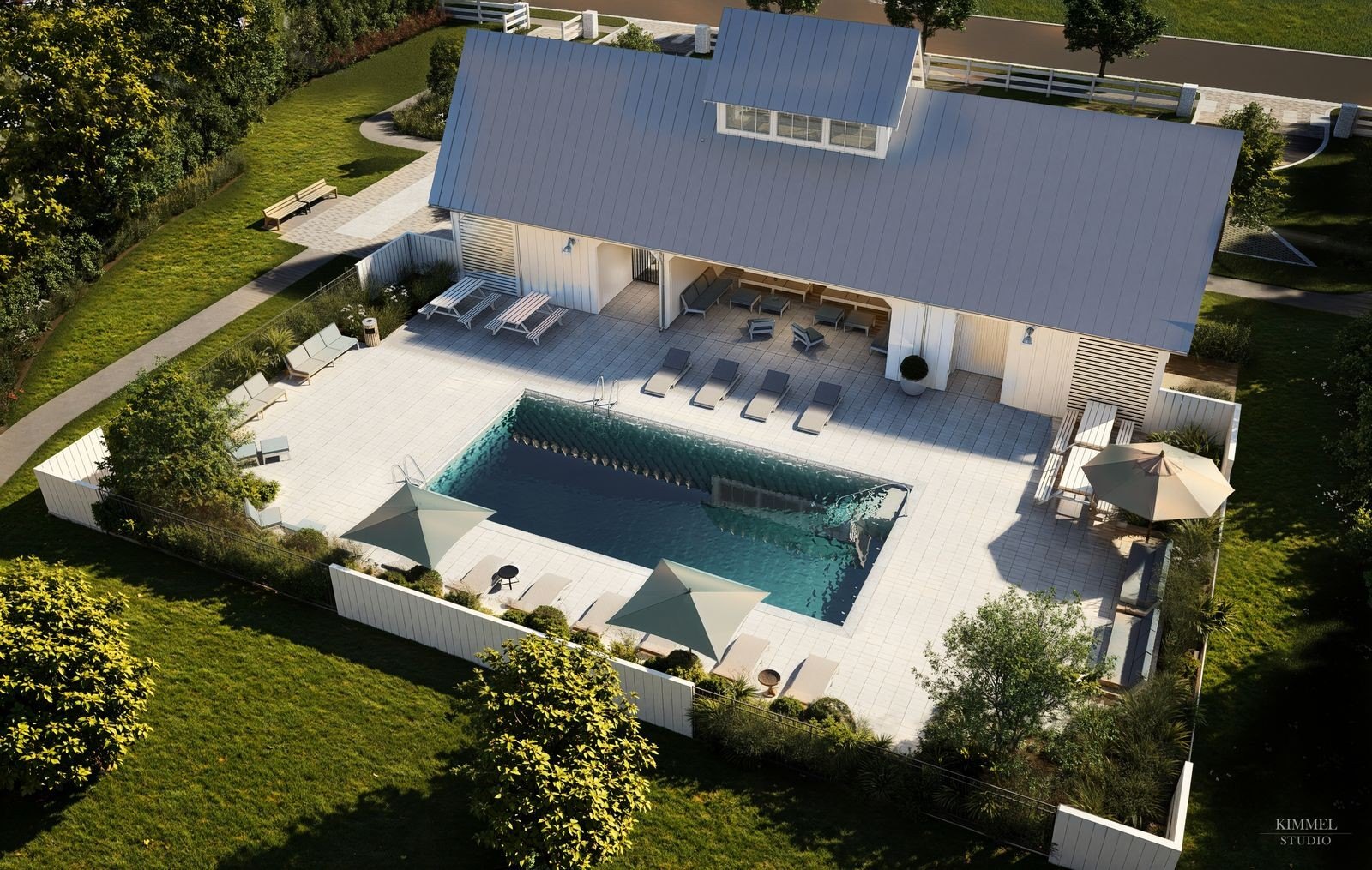
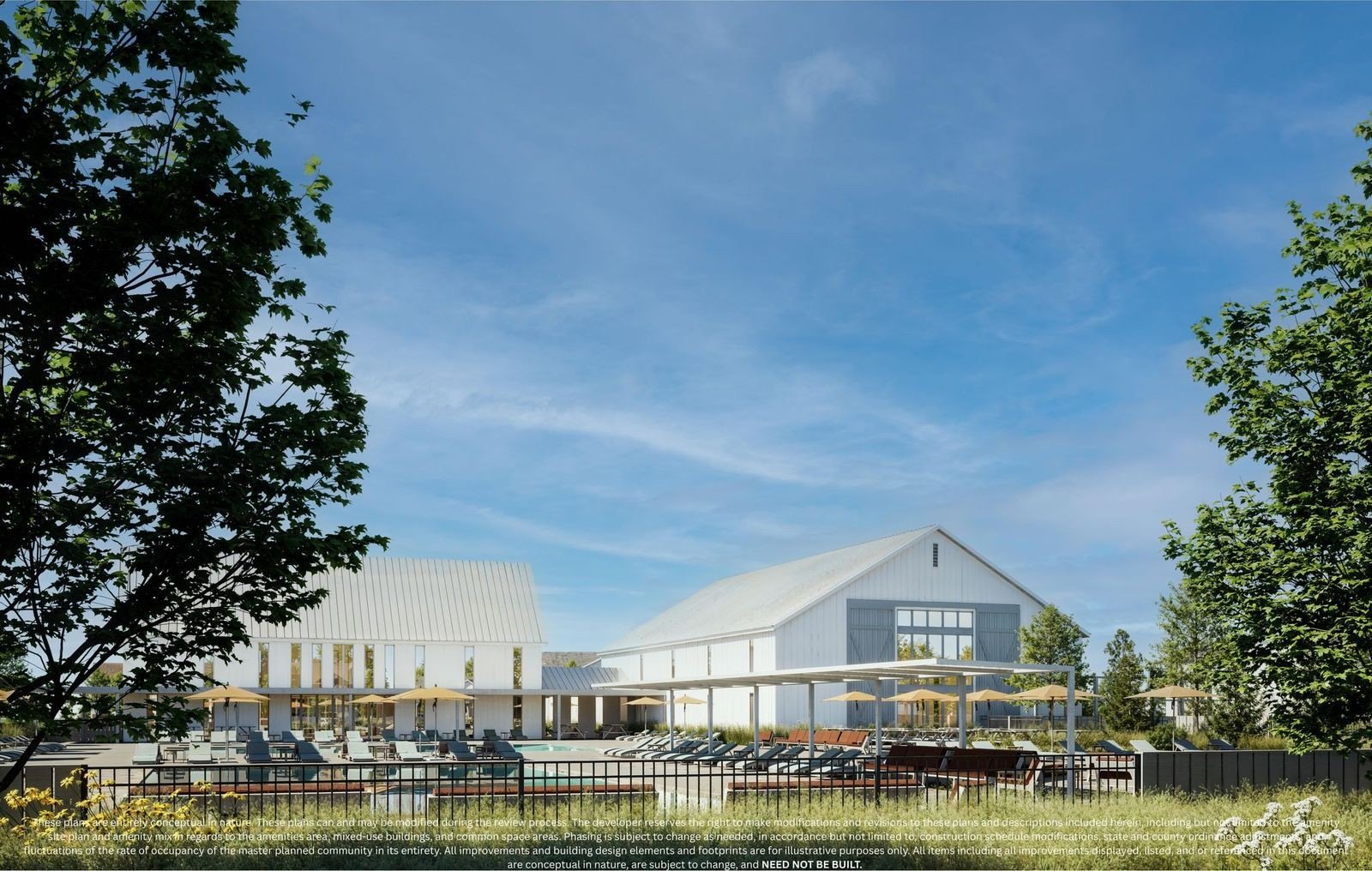
To foster a sense of community, there are plenty of shared spaces such as multiple recreational facilities with an 800-foot pool, a bouldering and skate park, an amphitheater, farmers market pavilion, food truck park, and access to nearby Diamond Pond. There will be no more than a two-block walk to reach a green space or an amenity.
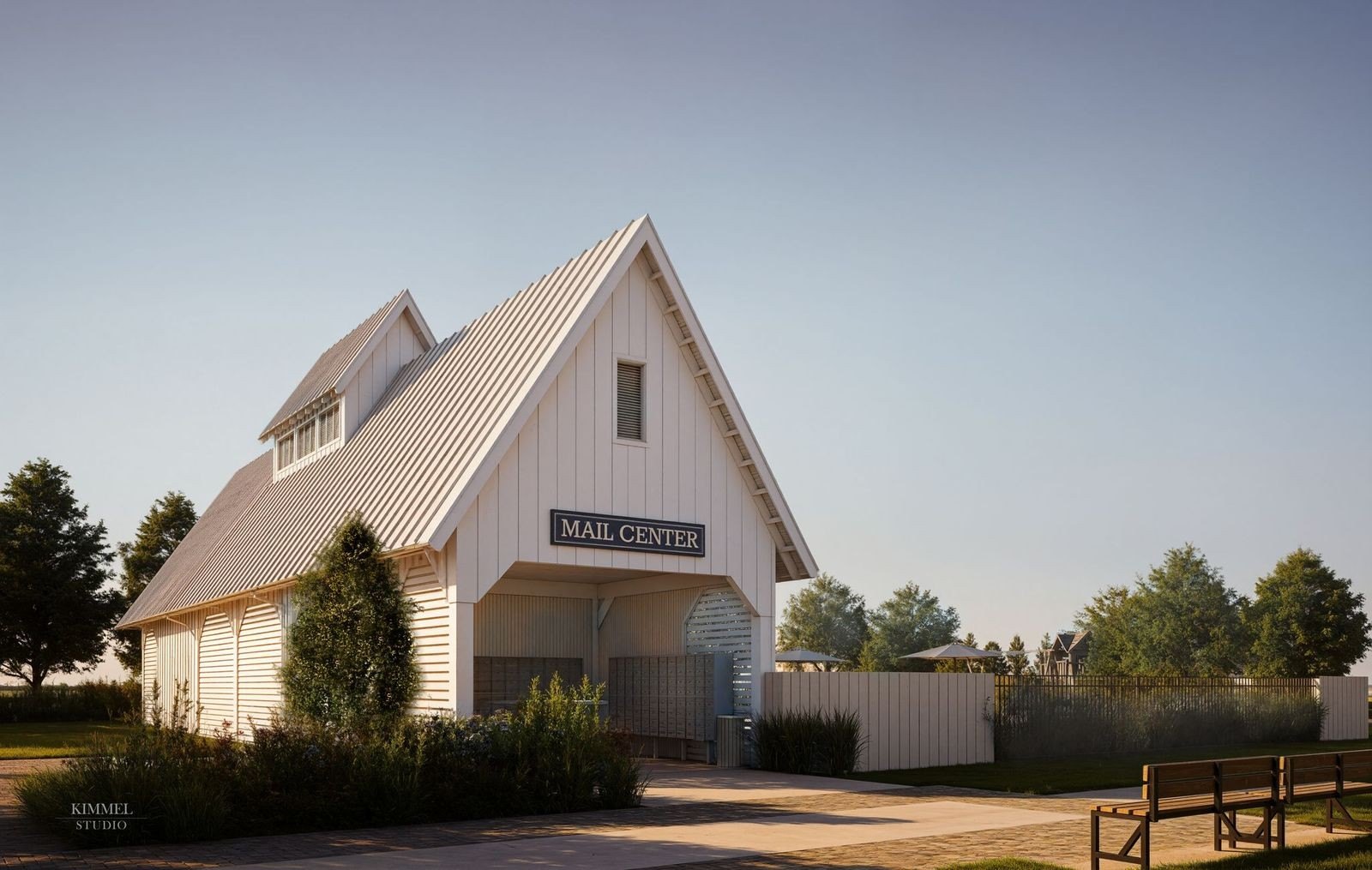
A unique aspect of the MPC—a common mailroom—was inspired by Cox’s adopted hometown of Jackson Hole, WY, where locals use the post office instead of home delivery.
“The people voted to keep it that way,” he says. “They enjoy getting their mail and seeing people they know.”
And 60,000 square feet of retail space means residents won’t always have to hop in their cars to pick up the basics. Cox is on the hunt for a specialty grocery store tenant.
“I’ll give them a good deal on rent,” he says.
But he stresses that The Granary’s retail won’t compete directly with Milton’s main street.
“I want to add the things that might be missing and some complimentary commercial uses,” he says.
He’s also building a path from the community to downtown Milton, so that in 10 minutes, residents can walk or bike to the center of town—kids will be able to use it without supervision.
“A lot of the elements in this community are designed to bring back some of those things we’ve lost, like playgrounds and places where you can send your kids and feel safe they won’t get hit by a car,” he says.
Microbrews and community
Then there’s the planned feature very close to Cox’s heart: a microbrewery incubator.
As the owner of two popular Jackson Hole craft breweries (Roadhouse and Melvin), Cox is an advocate of the taproom’s ability to foster jovial neighborliness.
His other Milton complex—the 511-unit, mixed-use Cannery Village—includes a Dogfish Head brewery. Cox hopes the future Granary brew incubator will serve as the launching pad for 20 to 30 independent breweries.
“It’s a 15-year project,” he says of The Granary. “My concepts will evolve over time, but I’m dedicated to fulfilling those three pillars: connection to nature, to neighbors, and to spirituality.
“I want to send the message that the people around you are your people—that is what community is.”