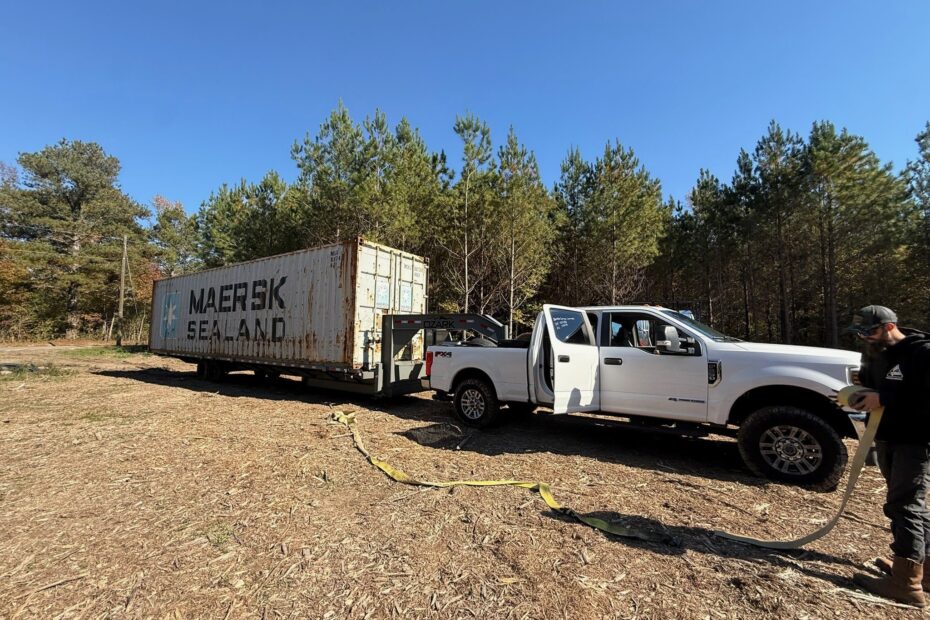
As soon as Jennifer and Chris Ohs purchased a 21-acre plot of land in rural Summerville, GA, they explored a variety of options for an affordable home—pre-built tiny homes, barndominums, and more.
Ultimately, they decided on the most cost-effective choice: a home made out of a used, rent-to-own, 40-foot long shipping container they found online for $2,450.
“Once we had the land, we were looking for something inexpensive, fast, and DIY (aka mistake) friendly. Of all the options, this met all three of our criteria,” Jen tells Realtor.com®.
While the shipping container home is still being built by the couple, who is commuting to it weekly from their single-family home in Atlanta, they’re excited about the finished product.
As of now, they plan to include an indoor/outdoor kitchen, bedroom, and small living room, as well as a bathhouse or a greywater filtration system and incinerator toilet for sewage.
If you’re toying around with the idea of an extremely affordable DIY home—like one made out of a shipping container—there’s a lot you can learn from these two.
Be flexible, take advantage of every resource you have, and budget for more than you think you need.
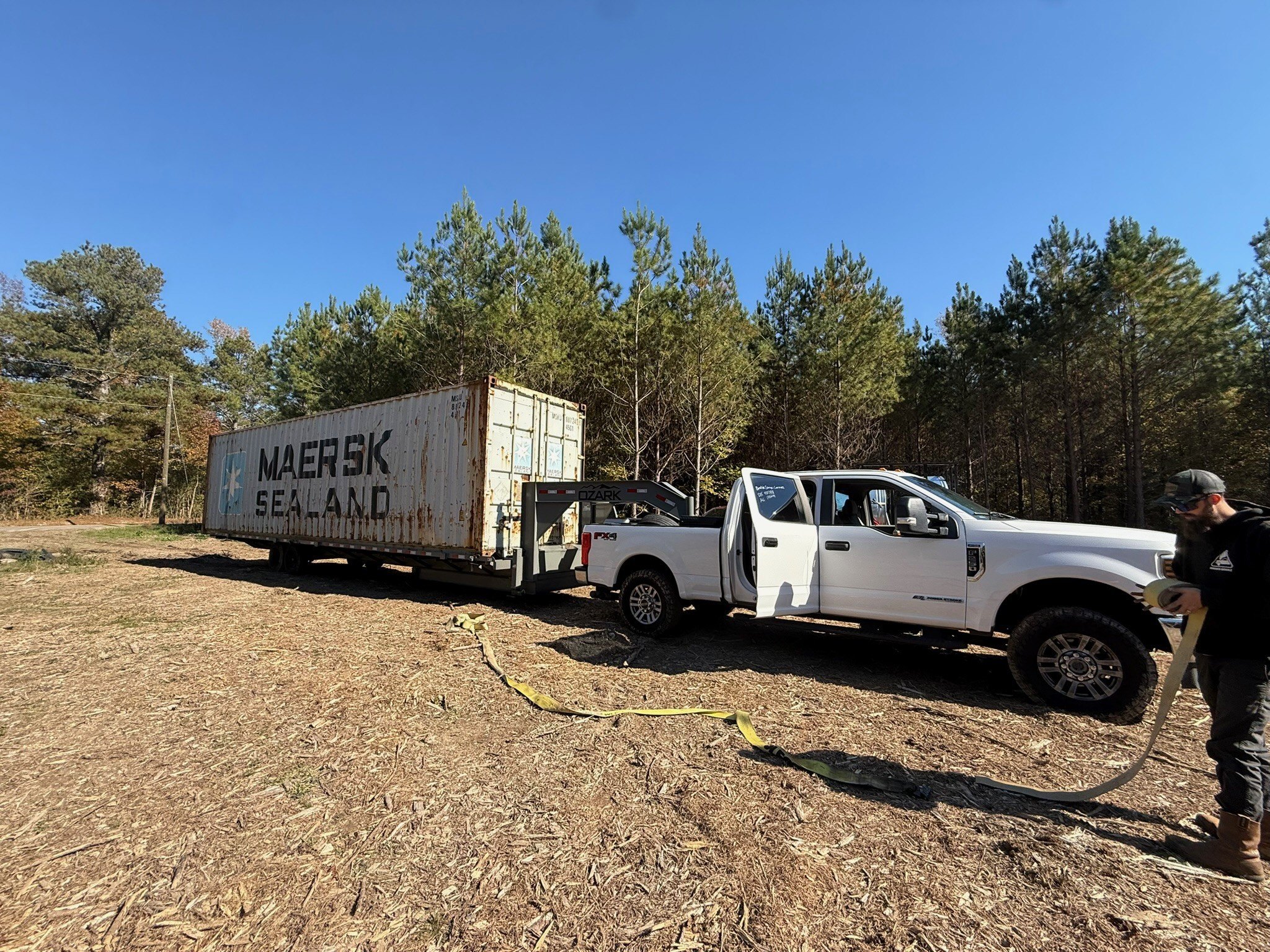
An inside look at the couple’s DIY approach
First and foremost, Jen and Chris had to research what they could and couldn’t do based on local requirements and permits.
“We lucked out in our county as there are not a lot of restrictions,” says Jen.
Once they were clear on the legalities, it was time to prep the land. While they had already cleared about an acre, tree debris was everywhere and none of it was level.
“We found someone on Facebook Marketplace who gave us a great deal on delivering the necessary rock. We tamped that down by hand then added a railroad tie at each end so the container could sit up and allow airflow underneath it,” Jen explains.
Next, Jen and Chris worked on the flooring inside the container, installing insulation and then subfloor on top.
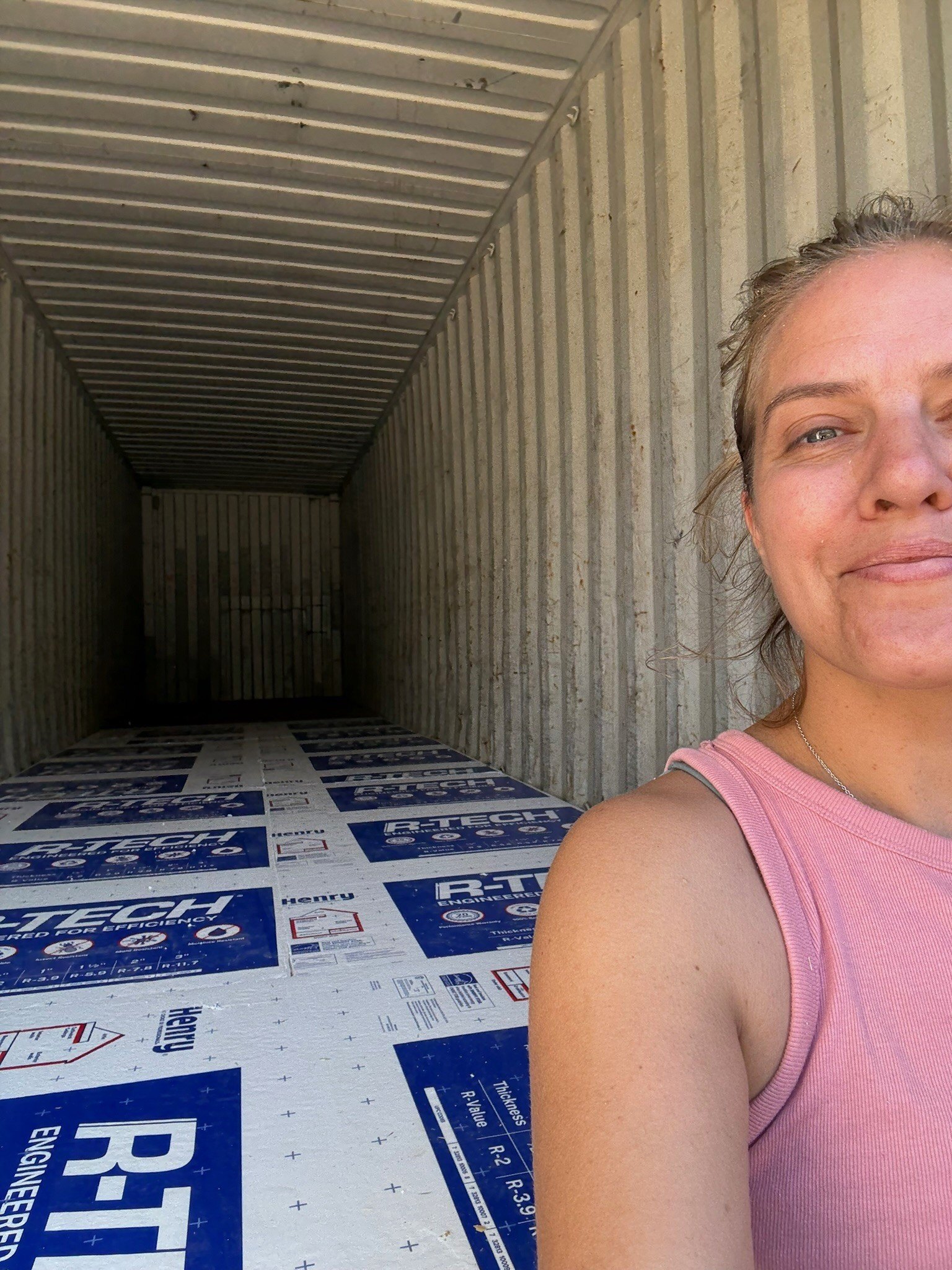
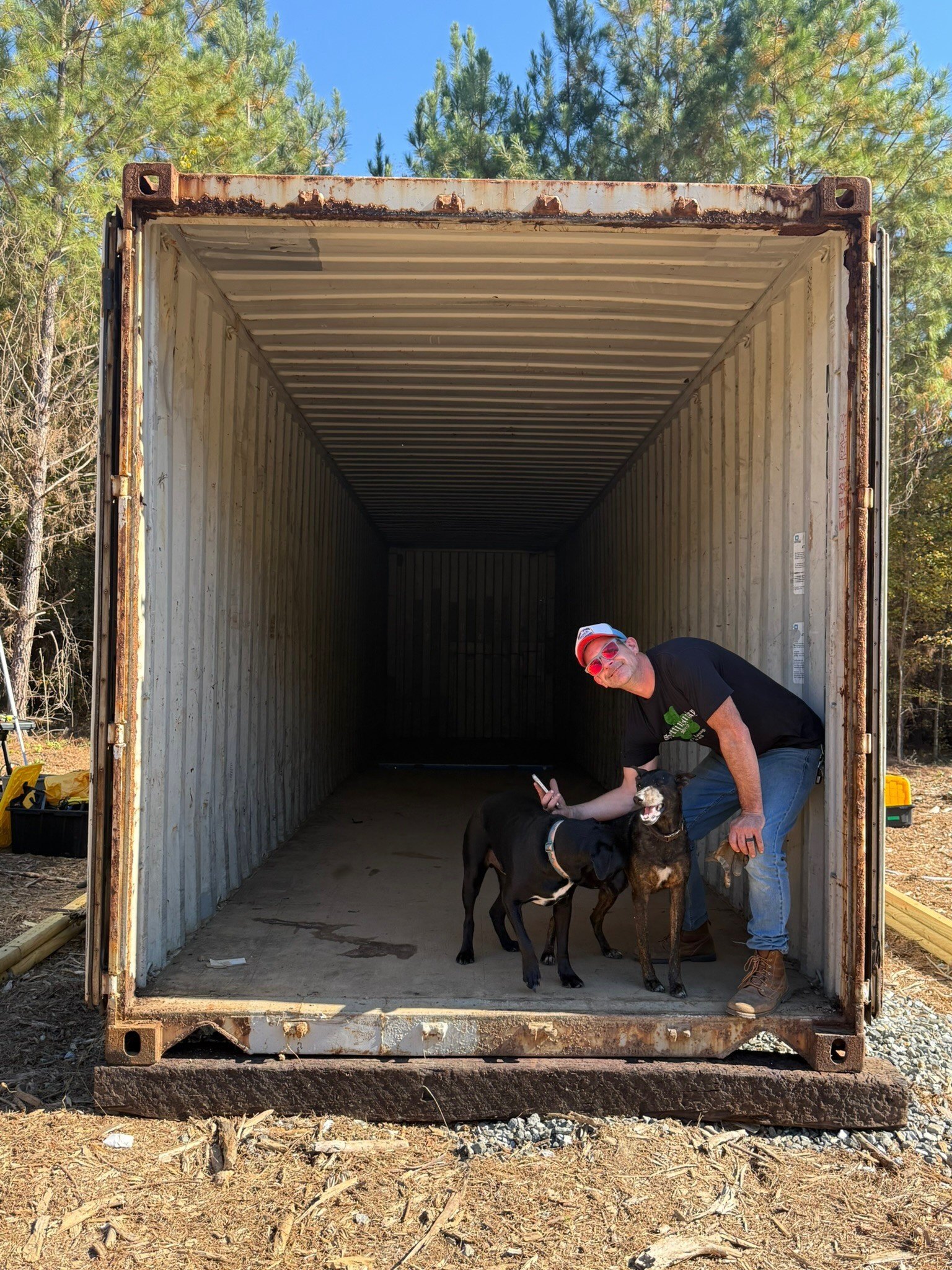
They weren’t flooring experts by any means but YouTube was (and still is) their best friend. The couple has spent over 100 hours watching homebuilding and container-building videos.
“Chris and I both attended college, but we’re also part of the YouTube University generation—there’s really no excuse for not knowing how to do something anymore when you can find instructional videos for just about anything online,” says Jen.
After the flooring was in good shape, they started framing the inside of the container.
“The real selling point of the container was that the interior walls aren’t load-bearing, which makes mistakes far less concerning than they would be with stick-built construction,” explains Jen.
After they insulated the walls in early 2026, Jen and Chris began camping in the container.
Now that the couple’s stock tank pool business, Stock Tank Life, is starting to take off, progress has slowed. However, they’re currently focused on getting a driveway ready to accept a load of stock tanks this month.
“Once that’s done, we hope to finish erecting the walls (we’re doing an all plywood interior) and then add storage, plumbing, and electrical. So far, we’re really enjoying the process,” says Jen.
Lessons for other DIYers pursuing a budget-friendly homebuild
While building their shipping container home, Jen and Chris discovered that everything is more expensive than they thought it would be.
“Lumber, rock, and nails aren’t cheap. I think we spend more on gas for our generator than I ever considered. Food as well. Without steady electricity, we aren’t in a position to store food long term yet so we are shopping for each trip up there. It adds up quickly,” Jen explains.
If you want to follow the couple’s footsteps and put some sweat equity into your own home, they recommend you make a plan but stay flexible as things won’t go as expected.
Also, build with those you trust and leverage all the resources available to you.
That means online resources, county resources, and anyone who can and will look at what you’re doing and give sound advice from experience.
“We’ve made friends at bars while discussing our shipping container build. One of them was a plumber who advised on an easy-to-set-up greywater system,” says Jen.
Additionally, the couple suggests you make friends with your local building supply company as the folks who work there are typically a wealth of knowledge.