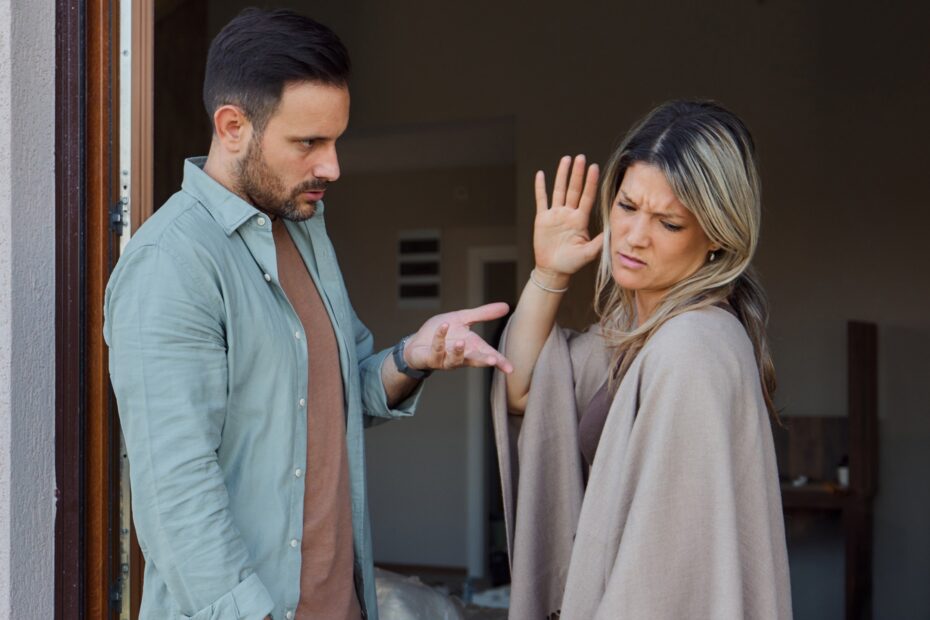
The idea of buying a home with your partner before getting a wedding ring used to be nearly unheard of. In 1981, less than 1% of first-time homebuyers were unmarried couples.
Things have changed: In recent years, that number has risen to 16%, plus there’s been a stunning rise in single woman homebuyers.
Whether these homebuying couples plan to get married later or not at all, there’s no doubt that purchasing a home first is an emerging trend—and one that can lead to a variety of legal dilemmas, especially if the relationships don’t last.
And the truth is, there’s still a lot of gray area around the subject.
The legal precedent that didn’t fix much
The question of what happens to property when an unmarried couple splits was first tested in a landmark 1976 California Supreme Court case. Actor Lee Marvin had lived with his partner, Michelle Triola, for years—she took his last name and became the homemaker, and he purchased all communal property in his name, allegedly promising to support her financially for life.
Unfortunately, the things we say when we’re in love don’t always last. When they split and the support stopped, Triola sued.
The case wound through the courts until the California Supreme Court ruled that agreements between unmarried partners, even oral ones, could be legally enforceable. If you’ve ever heard the term “palimony,” this is where it comes from.
That said, the ruling didn’t give unmarried partners broad property rights—it gave them the right to sue, if they could prove an agreement existed.
Triola couldn’t. After years of litigation, she walked away with nothing. The case established a theoretical right that, in practice, rarely pays off.
How unmarried couples typically buy—and where it goes wrong
Buying a home as an unmarried couple is simply different from buying one as a married couple, and the difference starts at closing. Marriage creates a legal contract between two partners that, in a sense, carries over to the property they acquire together. Without it, couples are on their own to formalize the terms. Many don’t.
“Many unmarried couples believe their relationship will operate as the ‘contract,'” says Evan Farr, an estate planning attorney and financial planner. “They usually only focus on the financing and the purchase of the home at closing, and neglect to formalize who owns what percentage of the property, who is liable for the mortgage payments, and who will own the home if the relationship ends.”
When a relationship ends between two unmarried people, the only thing that remains is the deed. Whose name is on the deed, and how does it appear?
If both names are on the deed, they typically hold title in one of two ways.
“Joint tenancy” means both partners own the property equally and in full, and if one partner dies, the other automatically inherits their share.
“Tenants in common” is more flexible—each partner holds a defined share that can reflect unequal contributions, such as 60/40 if one person covered the down payment. But there’s no automatic survivorship. If one partner dies, their share passes to their estate.
The mortgage is another question. Sometimes one partner has stronger credit, so only their name goes on the loan—while both remain on the deed. It feels like a practical workaround at the time. But it means one partner carries all the debt liability while both claim ownership, which makes things complicated when the situation goes south.
Then there’s the scenario that causes the most damage: only one partner’s name on the deed entirely. This sometimes happens for financial reasons, or unawareness at closing.
“If one of the partners is not listed on the deed, the courts will likely view this partner as having no interest in the property,” says Farr. “There are instances in which courts may grant equitable relief, but these types of claims are very difficult to pursue due to the heavy burden of proof required and the cost involved.”
What happens when you break up
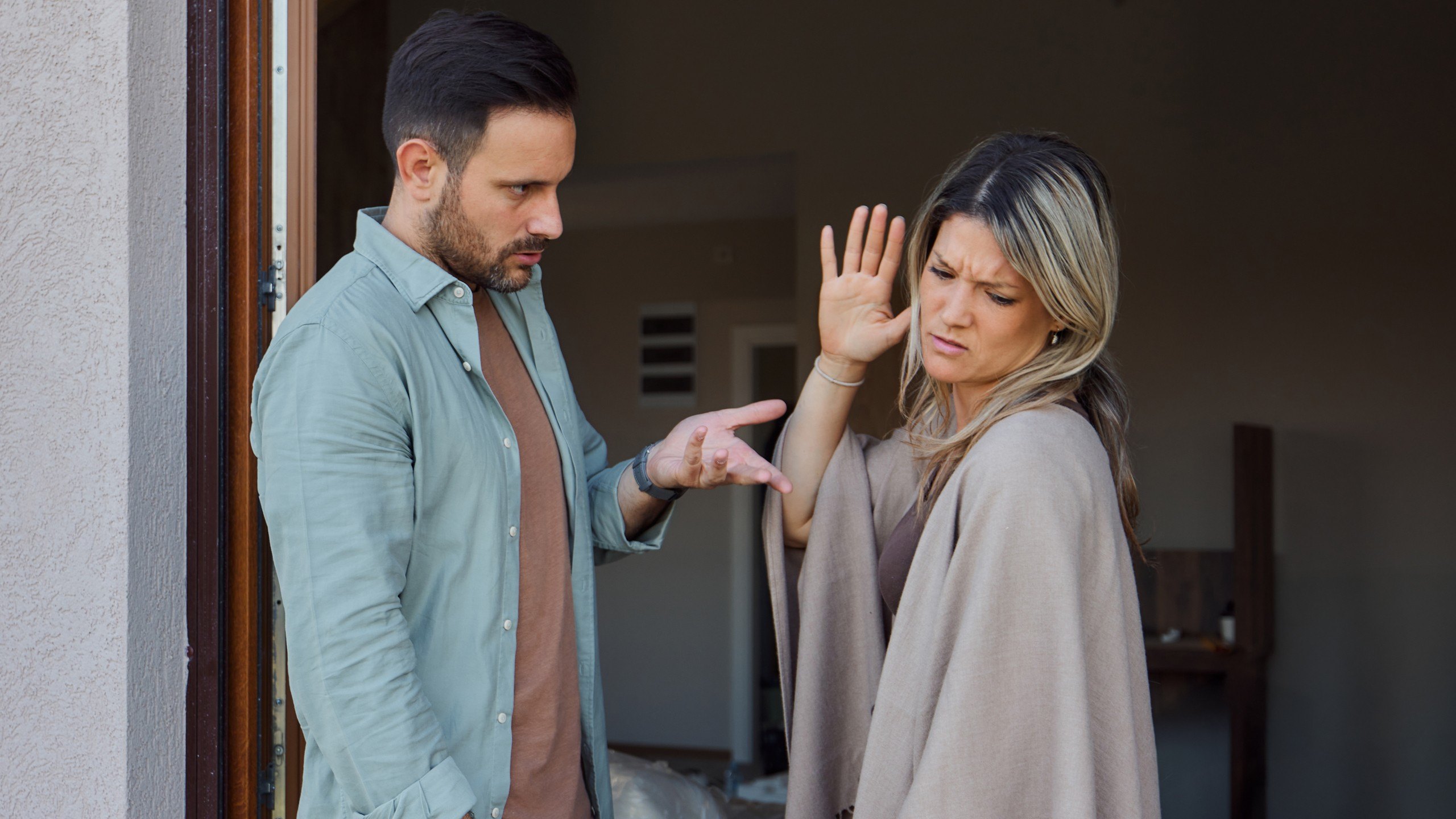
Without a written agreement, there’s often little either partner can do but fight. But fighting is expensive, and often there is little legal ground to stand on for certain parties.
This dynamic even plays out among the wealthy and famous.
Kourtney Kardashian and Scott Disick were together for nine years, had three children, and owned multiple properties together in California—all without ever getting married. When they split in 2015, there was no courtroom battle over the real estate. Not because it was amicable, but because without marriage, the law simply defaults to whoever’s on the title. As Kardashian kept the property and Disick moved out, it stands to reason her name was on the deed.
When couples can’t agree on what to do next, the matter typically ends up as a partition action—a lawsuit asking the court to order the property sold and the proceeds divided. It’s a remedy that exists, but it’s a brutal one.
Jordan Del Palacio, a home loan specialist at Churchill Mortgage, has seen it firsthand. Two friends bought an expensive home together, he recalls, and when the relationship soured, one co-owner wanted to sell and the other refused.
“The one who didn’t want to sell couldn’t afford the mortgage payment on his own, and so they were stuck in a stalemate,” Del Palacio says. “The result is that the one who wanted to sell had to take legal action to sue the other party to be able to remove his interest in the property, resulting in tens of thousands of dollars in legal fees.”
Another consequence often gets overlooked. Even after one partner moves out, their name stays on the mortgage and their credit is still on the line.
“You need to keep in contact with the other party to make sure that the mortgage payments are made on time,” Del Palacio warns, “as a late payment could affect your credit.”
The cleanest solution is for one partner to buy the other out and refinance the mortgage in their name alone—but that requires qualifying for the loan independently, which isn’t always possible.
Making the deal before you buy
The good news is that most of these scenarios are entirely preventable—not by avoiding buying together, or staying together forever, but by treating the purchase like what it legally is: a business arrangement that requires a written agreement.
“The issue is not in the purchase of the home,” says Farr. “The issue is the failure to enter into a written co-ownership agreement prior to purchasing the home.”
At minimum, a co-ownership or cohabitation agreement should spell out each partner’s ownership percentage, their financial contributions to the down payment and closing costs, how ongoing expenses like taxes, insurance, and repairs will be split, and critically—what happens if one partner wants out. Couples can find templates online, but the agreement should be reviewed, and ideally drafted, by a family law or estate planning attorney to ensure it’s enforceable in their state.
“Entering into a joint ownership agreement without a written exit strategy,” Farr says, “is similar to beginning a business partnership without entering into a partnership agreement.”
The conversation doesn’t have to wait for a lawyer’s office, either. Del Palacio says that as a loan officer, he tries to raise these questions early in the process.
“The most important details that we talk through are the handling of the estate to protect both sides in the event of the worst-case scenarios: separation or death,” he says. “As a loan originator, we can ask the important questions to advise on any potential pitfalls before they make the commitment.”
The Marvin case was decided nearly 50 years ago, and the legal landscape for unmarried homebuyers hasn’t changed much since. What has changed is the number of people it affects—and the size of the homes they’re buying together. A co-ownership agreement costs a fraction of what a partition lawsuit will. The conversation isn’t romantic, but the fallout of what can happen if you’re not careful will be even more awkward.