President Donald Trump has officially nominated Kevin Warsh to replace Jerome Powell as chairman of the Federal Reserve, but the widening U.S.-Israeli war with Iran is casting uncertainty over the swift interest rate cuts the president desires.
Trump sent his nomination to the Senate on Wednesday, formally naming Warsh as his pick to lead the Fed for a four-year term. Powell’s current term expires in May, and Trump publicly announced Warsh as his choice in January.
Warsh, a former Fed governor who served during the global financial crisis of 2007–09, has advocated for shrinking the central bank’s balance sheet and cutting interest rates for the benefit of homebuyers and consumers.
However, he may meet stiff resistance on the 12-member Federal Open Market Committee. This week, several members have raised concerns about further interest rate cuts after Israel and the U.S. entered war with Iran, warning that rising oil prices could ignite renewed inflation.
Minneapolis Fed President Neel Kashkari, a voting FOMC member, said on Tuesday that the war in Iran may create conditions that justify an extended pause in rate cuts.
“Before Iran, it seemed like things were gently heading in the right direction,” Kashkari told the Wall Street Journal regarding inflation. Now, he says the Iran war could complicate that picture by delivering higher inflation on the one hand, but a shock to consumer confidence on the other.
“Not being able to size those two things probably puts more weight on sitting tight for a while,” he said.
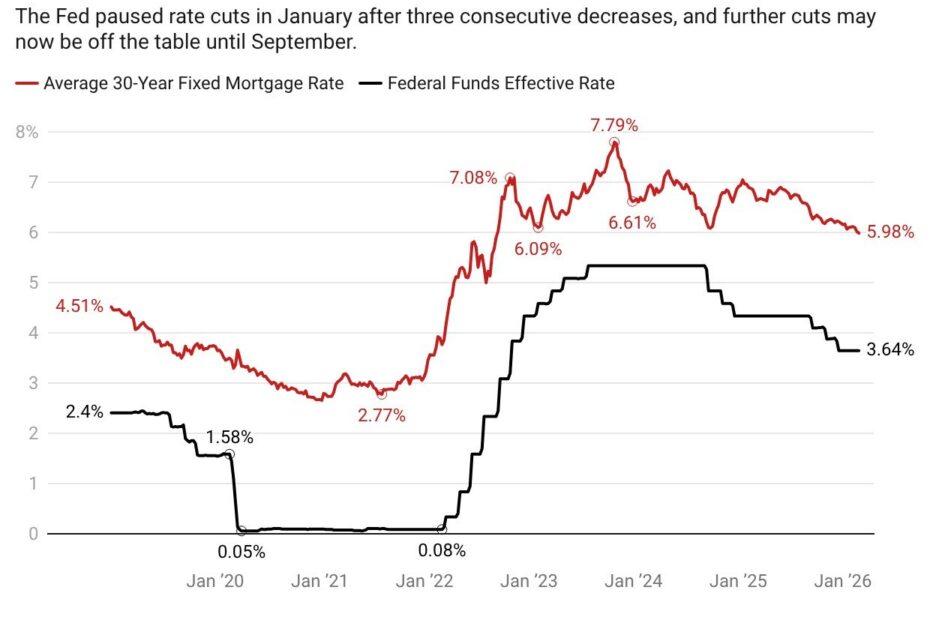
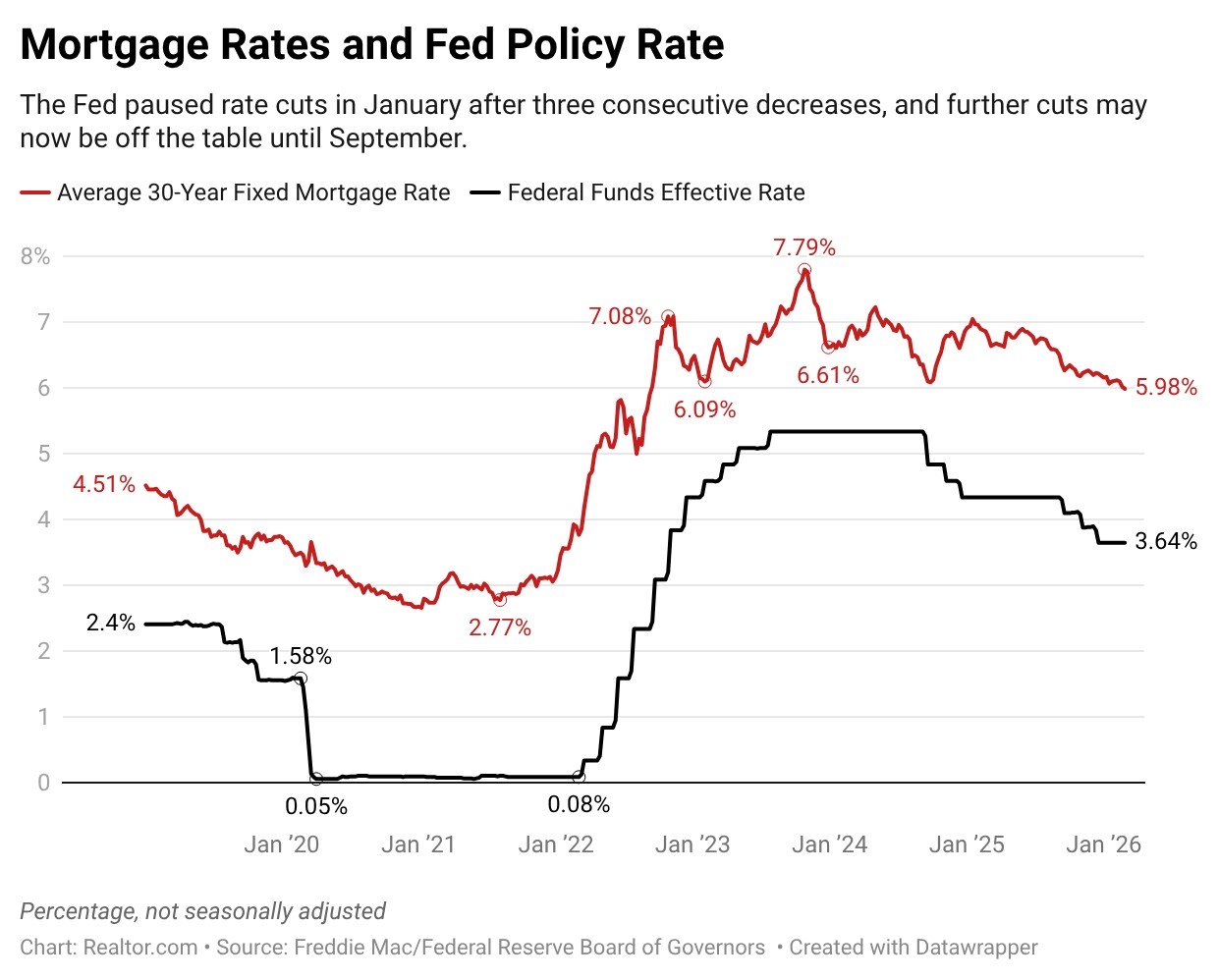
The FOMC will take its next vote on rate policy on March 18. It is widely expected to keep the Fed’s benchmark overnight rate unchanged in the current range of 3.5% to 3.75%.
Financial and prediction markets now also expect no rate change at the meetings in April and June, leaving the possibility that no cut will come until July or even September.
Cleveland Fed President Beth Hammack, another FOMC voter, has been the most outspoken skeptic of further rate cuts this year and warns that rate relief could be a long way off.
“We could be on hold for quite some time,” Hammack told the New York Times this week. “We’re in a good spot from a policy perspective.”
New York Fed President John Williams, a powerful vote on the FOMC and close ally of Powell, also sounded a cautionary note in a speech on Tuesday.
“Monetary policy is currently well positioned to support the stabilization of the labor market and return inflation to our 2% goal,” Williams said in remarks at a conference in Washington, DC.
Williams added that interest rate cuts “will eventually be warranted” if inflation continues to ease, language that appears to point to possible cuts later in 2026.
The Fed uses higher interest rates to fight inflation and lower rates to boost the job market, in line with the central bank’s dual mandate of price stability and maximum employment.
While the Fed doesn’t set mortgage rates directly, rate policy and inflation expectations play a key role in influencing the bond markets that dictate the mortgage rates that homebuyers pay.
Last week, mortgage rates hit a three-year low of 5.98%, according to Freddie Mac. However, with oil prices spiking this week, inflation fears are rattling bond markets, potentially reversing that downward trend.
Fed policymakers say rate hikes could be on the table
In their interviews this week, both Hammack and Kashkari warned that the Fed may need to communicate the possibility of rate hikes if inflation does not make steady downward progress over the summer.
“There are two-sided risk to rates,” said Hammack. “If we see more weakness emerging in the labor market, it could mean that we need to provide more accommodation. If we don’t see inflation moving toward target as I expect, it could mean that we need to put more restriction on the economy.”
Kashkari said that until now, he agreed with the Fed’s public stance that generally indicated the next move for rates would more likely be down than up.
“I’m OK with it, but again, the Iran developments and what it does to oil prices and other commodities, I think that that could upend that view a little bit,” he said.
That’s a stark departure from the past few years, in which hikes were off the table and the only realistic FOMC moves were to cut or pause.
The shift in messaging will come as unwelcome news to Trump, who has pushed aggressively for lower Fed rates in order to juice the economy and reduce government borrowing costs.
Warsh has said he shares that view, but if confirmed by the Senate, he will hold just one vote on the 12-member FOMC.
“That person will have to convince at least six other members of the committee to vote alongside them if they want to do something,” said Hammack.