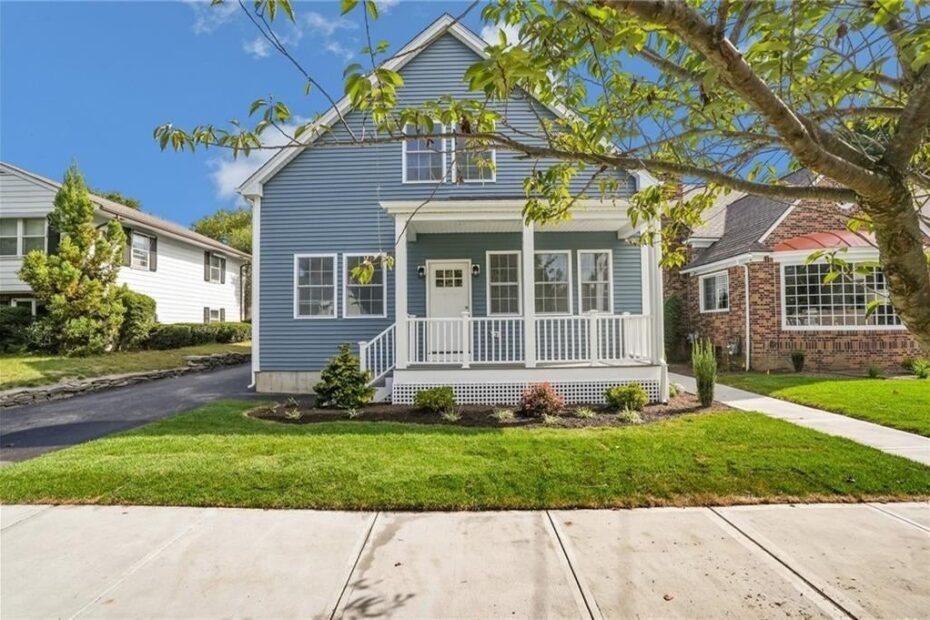
Skyrocketing housing prices in Rhode Island are pushing homeownership out of reach for many prospective buyers.
“The post-pandemic buying frenzy of 2021 and 2022 severely boosted home prices in Rhode Island as it did in much of the country,” says Joel Berner, senior economist at Realtor.com®. “Inventory was historically low in this period, and while in other parts of the country it has recovered, the Northeast and Rhode Island remain supply-constrained.”
The median home price in Rhode Island in February 2019 was $322,500. In February 2026, it was $518,734, and is still growing—up 6.5% from February 2025.
“This rapid and sustained price growth is outpacing income growth, stretching thin the housing budgets of Rhode Islanders,” says Berner.
To address these challenges, the state adopted a law in June 2024 to make it easier for homeowners to build an accessory dwelling unit on their existing property.
“To address Rhode Island’s housing challenges, our statewide housing plan, Housing 2030, prioritizes expanding the supply of homes across all housing types, including accessory dwelling units,” Rhode Island Secretary of Housing Deborah Goddard tells Realtor.com. “The plan sets an ambitious goal of permitting 15,000 new housing units through the end of 2030, including 525 ADUs—nearly tripling recent production levels.”
Berner says ADUs are a viable (if partial) solution to the housing affordability problem.
“Allowing for more dense housing will increase the inventory of homes for sale and put downward pressure on prices,” he says. “Buyers, as a result, will have more options to choose from at prices they can afford more easily. In the Northeast especially, zoning regulations tend to be quite restrictive and new construction is consequently hard to come by. Anything that boosts the flow of new homes onto the market will help the affordability crisis in Rhode Island.”
However, according to a State of Rhode Island report released last week, only 82 ADUs were actually built and issued certificates of occupancy in 2025.
“Although the state has its own mandate for ADUs, each city and municipality has its own zoning nuances, so we’d like to see that more streamlined,” Mike Pereira, 2026 president of the Rhode Island Association of Realtors®, tells Realtor.com. “There’s basically a lot of red tape.”
Goddard says there were 163 ADU units permitted in 2024, and 262 in 2025.
“Meeting Rhode Island’s housing needs requires a diverse range of housing options—there is no one-size-fits-all solution,” says Goddard. “To ensure communities can accommodate Rhode Islanders at different life stages and income levels, Housing 2030 highlights the importance of housing options, like ADUs, as a key strategy for creating more flexible, attainable homes statewide.”
Pereira emphasizes that ADUs represent only a limited part of the solution to Rhode Island’s affordability challenges. “Building an ADU isn’t cheap, and it’s cost-prohibitive for many people,” he explains. “Maybe it helps in the grand scheme of things, but it doesn’t solve the problem.”
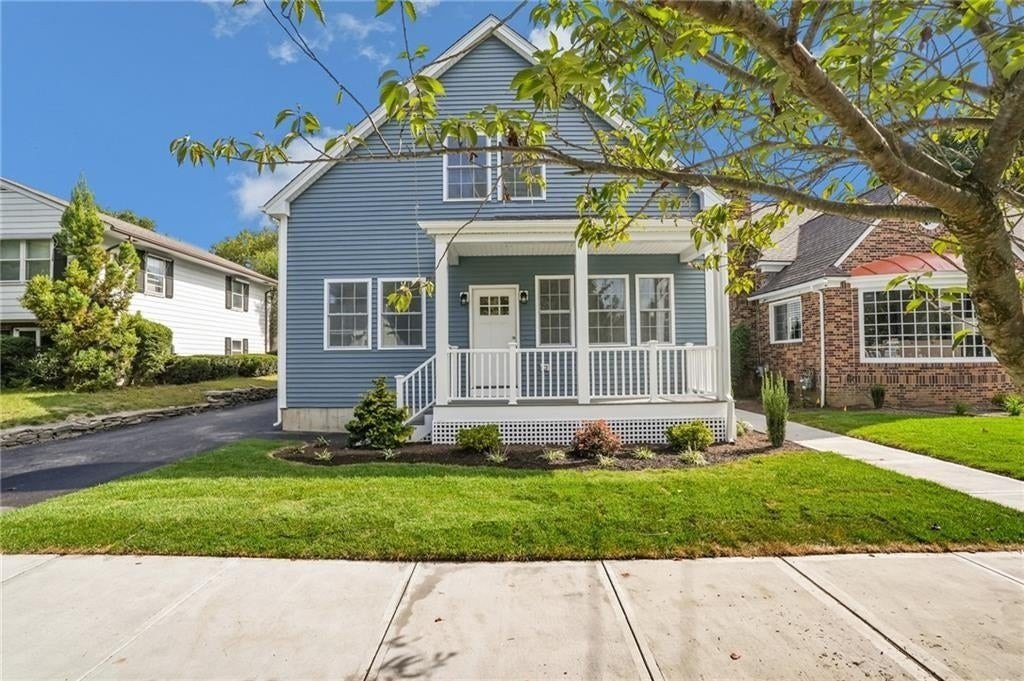
Rhode Island’s affordability crisis
On the Realtor.com national housing report card’s grading of each state’s response to the housing crisis, Rhode Island ranked last in housing affordability, scoring an F.
The state combines poor home affordability with inadequate residential construction activity to keep up with demand. As the smallest state, Rhode Island also suffers from a lack of available land to build on.
All 39 of Rhode Island’s municipalities—31 towns and eight cities—are considered unaffordable for the average resident looking to purchase or lease a home, according to the 2025 Housing Fact Book released by HousingWorks RI at Roger Williams University.
Based on 2024 median single-family home values, a household would need close to $130,000 in annual income to purchase a home affordably anywhere in Rhode Island, assuming a fixed-rate 30-year mortgage backed by the Federal Housing Administration, along with local property tax and hazard insurance rates.
However, the median household income in Rhode Island is roughly $86,000.
The affordability divide is most pronounced in New Shoreham—the lone municipality on Block Island, about 12 miles off the mainland—where researchers found that buying a home without financial strain would require an annual income exceeding $521,000.
The median listing price in Block Island is $3,120,000.
At the other end of the spectrum, Pawtucket, RI, was the most affordable municipality in the state, with a median home price of $399,900. The HousingWorks RI report found that a household earning roughly $128,000 annually could buy there without overextending financially.
The report found that 1 in 3 Rhode Island households—about 142,920 in total—are cost-burdened, meaning they spend more than 30% of their income on housing. Of those households, 44% are considered severely cost-burdened, devoting at least half their income to housing costs.
Which states lead the U.S. with the number of ADUs?
California is far and away the national leader in ADU construction. Data from the permit-tracking platform Shovels shows the state accounts for 32% of all ADU permits issued nationwide. In fact, ADU permits equal 127% of new residential construction permits in the state—meaning more ADUs are being approved than traditional homes.
Since 2018, 429,503 ADU permits been issued in California.
The Golden State enacted sweeping statewide ADU reforms that made approvals easier by stripping away barriers like parking mandates, owner-occupancy rules, and high impact fees—and permit numbers climbed sharply soon after.
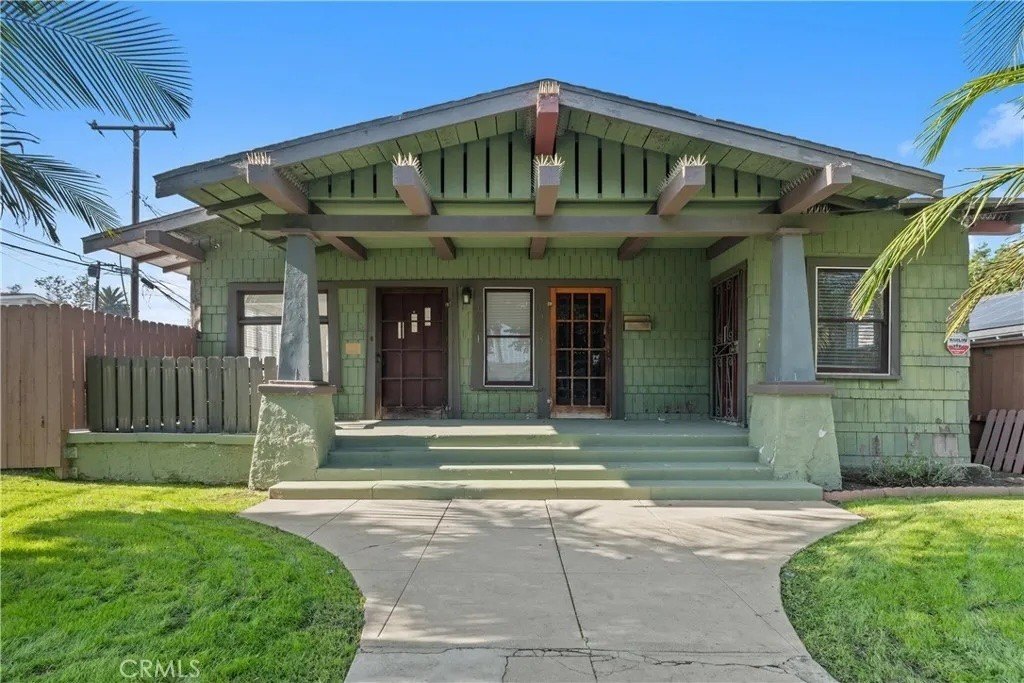
Florida ranks second nationally with 18% of all ADU permits, with 240,143 being issued since 2018. Ranking third is Texas (8%), with 103,140 permits being issued since 2018.
In Florida and Texas, reforms have been more incremental or city-driven, but similar efforts to ease restrictions have helped spur new construction in certain markets.