Canadian tourists are increasingly skipping U.S. ski resorts this winter, with an unfavorable exchange rate potentially playing as large a role in the decline in cross-border trips as President Donald Trump’s punishing tariffs and aggressive rhetoric.
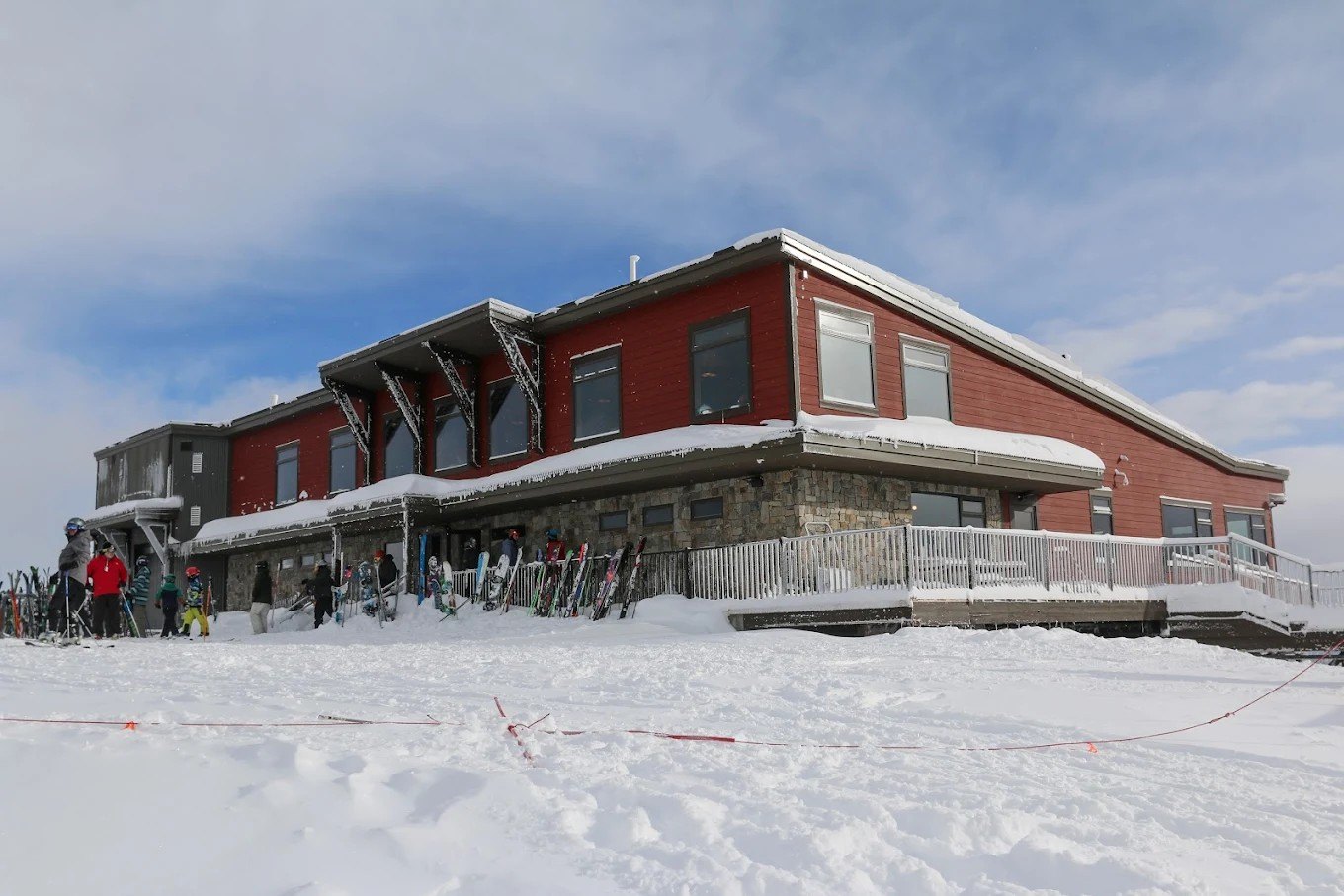
Located just over an hour south of the border, 49 Degrees North Mountain Resort in Chewelah, WA, has long attracted a steady stream of ski and snowboard enthusiasts from up north, but for the last couple of seasons, that flow has slowed to a trickle as the Canadian dollar stumbled.
“When we see the exchange rate closer to even, we see a lot more Canadian guests coming over the border to visit us,” Rick Brown, director of skier and rider services at 49 Degrees, tells Realtor.com®. “When there’s a disparity there like there is now, it doesn’t make as much sense to them, particularly if they have good options nearby.”
As of Friday, Jan. 30, 1 U.S. dollar equaled 1.36 Canadian loonies, reducing the purchasing power of northern visitors.
Dash Hegeman, director of marketing at Holiday Valley Ski Resort in Ellicottville, NY, similarly attributes the decline in cross-border tourism to the Canadian dollar’s weakness against its American counterpart.
“There is an unfavorable exchange rate for the Canadian dollar, and that certainly comes into play when people are making their vacation plans,” Hegeman tells Realtor.com.
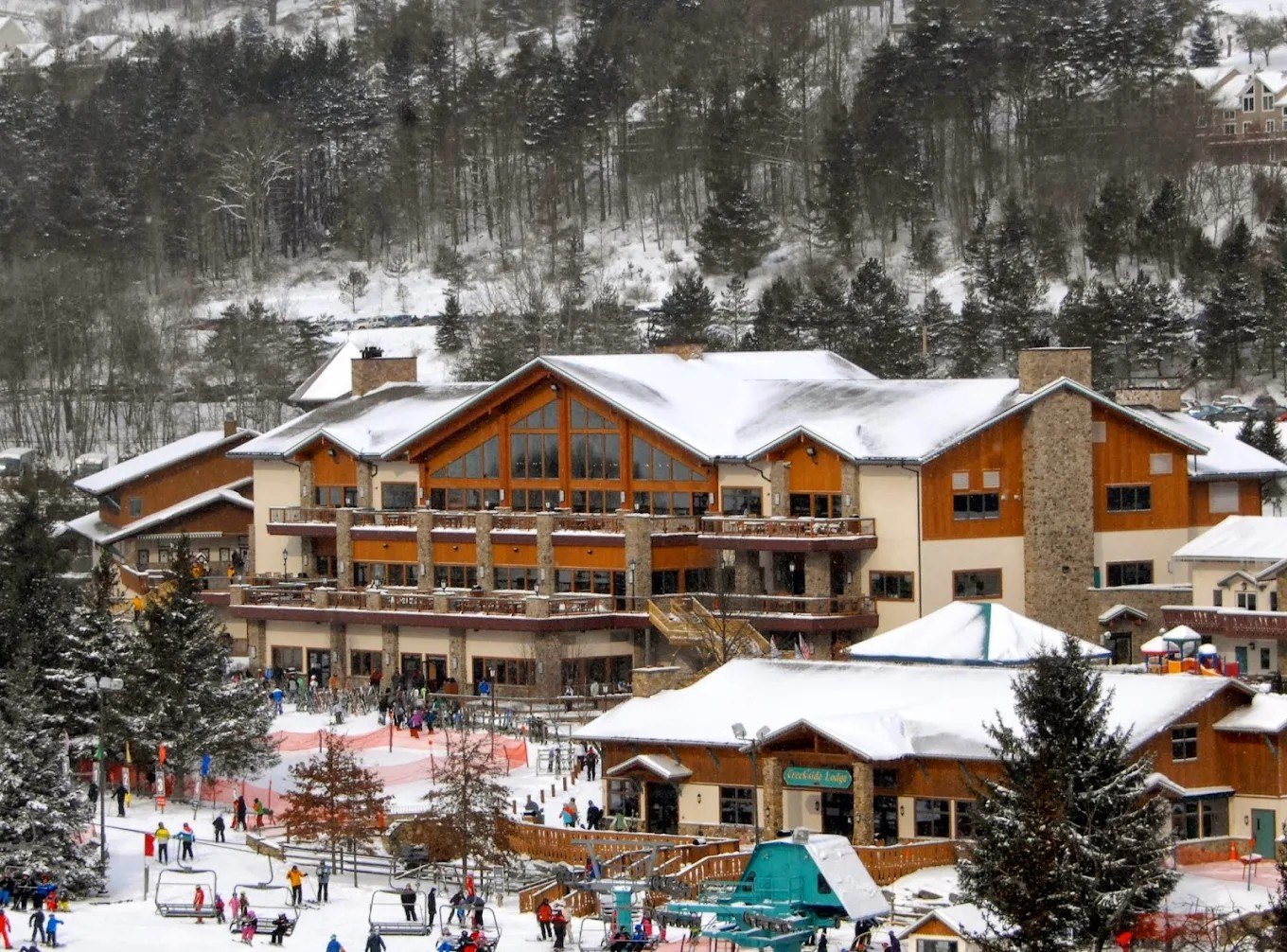
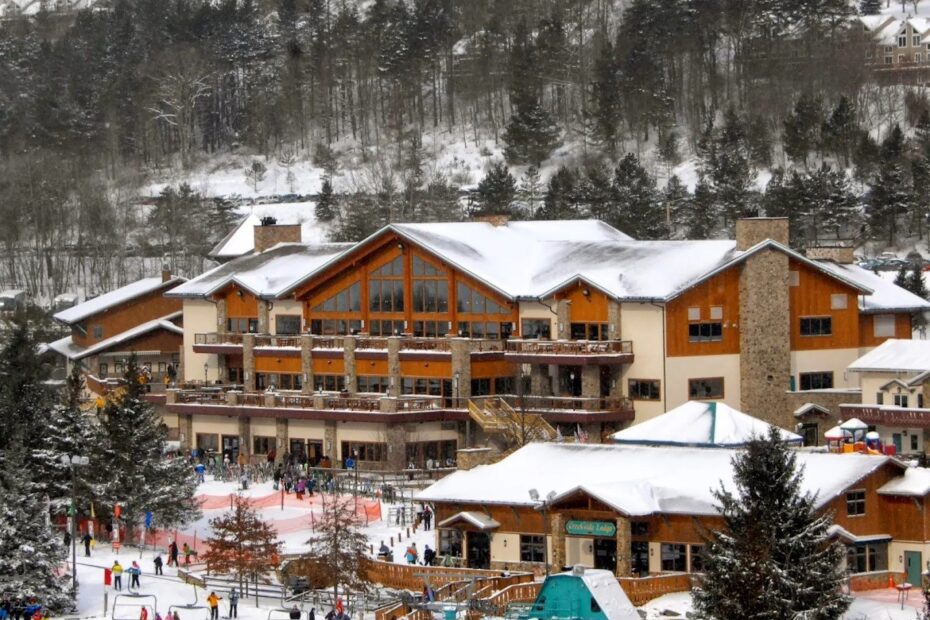
At Holiday Valley, situated roughly 60 miles south of the border, Canadian citizens historically have accounted for 20% of the resort’s visitors, taking the short drive south to enjoy skiing, tubing, and snowshoeing in the winter, and golf and biking in the summer.
The resort also operates a school night skiing program, offering multiweek ski instruction to students. According to Hegeman, Canadian school groups typically make up a sizable portion of enrollments, but this year, they are sitting the program out.
“Going into this winter, the school group advisers informed us that school boards had decided that there would not be any school-sanctioned international travel this year,” says the marketing director. “Obviously, that wasn’t what we were hoping to hear, but it’s something that’s out of our control so we are now just looking forward to welcoming them back to Holiday Valley when those rules change.”
How are political tensions affecting Canadian travel?
But cost pressures are not the only factors keeping some Canadians away from the U.S.
As of August, the Trump administration has imposed a 35% tariff on most Canadian imports, increased from a 25% levy introduced in March 2025 amid ongoing trade disputes and strained diplomatic relations.
At the same time, Trump has repeatedly suggested that Canada should become the 51st state, drawing widespread condemnation from Canadian leaders and the public, who have bristled at what they see as a lack of respect for the country’s sovereignty.
As recently as a week ago, Trump shared on his Truth Social account an AI-generated photo showing a map with the American flag over multiple foreign countries, including Canada, Greenland, and Venezuela.
All of this has not escaped the attention of Canadian visitors.
According to a November update to a tracking study of Canadian travelers conducted by Longwoods International, a tourism market research firm, more than half of all respondents said they did not intend to travel to the U.S. in the next 12 months.
Among the Canadians whose travel decisions were swayed by U.S. politics, roughly 3 out of 4 cited U.S. tariffs and economic policies as a negative influence, while nearly 70% pointed to “political statements by U.S. leaders as a negative factor.”
Zak Anderson, executive director of Explore Whitefish, the marketing organization for Whitefish, MT, the home of Whitefish Mountain Resort, says as soon as Trump began making incendiary comments about Canada following his inauguration, visitation from the north dropped. By December 2025, it was down 25% year over year, according to a market report shared with Realtor.com.
“We still have Canadian friends traveling down, and we have a long and historic connection with Alberta, but in general, they are avoiding travel due to difficulties at the border,” Anderson tells Realtor.com, citing longer wait times and increased scrutiny fueled by the Trump administration’s anti-immigration policies.
For local businesses in Whitefish that rely on Canadian visitors, the pullback in tourism means that they will have to adjust their revenue expectations.
“Thus far, the current administration has been bad for business for Montana,” says Anderson.
Brown, at the 49 Degrees resort in Washington state, says that he also heard from Canadian guests last winter that they were no longer interested in vacationing in the U.S.
“There were definitely a lot of people that were uninterested in crossing the border into the States for really anything, whether that be to recreate, to do any sort of tourist activities, or just to come shopping,” says Brown, noting that the rhetoric has since cooled.
As of late January, winter bookings from Canada in U.S. resorts were down approximately 41%—slightly better than December’s 44% decline, according to Inntopia, an online booking and marketing platform.
Steve Wright, president and general manager of Jay Peak Resort in Vermont, spoke at a forum on the impact of Trump’s trade war organized by Sen. Peter Welch, a Democrat from Vermont, in June 2025, revealing that winter season passes sold to Canadians were down 35%, while hotel reservations plunged 45%.
“The conversations that I had with these Canadian households who aren’t coming back next year … many had tears and were choking up over the fact that they just couldn’t, in good conscience, come to the States,” recounted Wright.
However, Hegeman, at Holiday Valley, says that despite an uptick in social media comments from some people saying they were planning to boycott U.S. resorts this winter, many Canadians that he knows view Ellicottville as a “second home.”
“My feeling right now is that many of those guests still continue to make the trip down here because they feel that it’s a part of who they are,” he says. “Many of our Canadian friends know what a special place Holiday Valley is and they continue to come down and enjoy the skiing and riding.”
U.S. resorts that have seen their Canadian bookings slip, whether it be because of Trump’s tariffs, immigration policies, or the disadvantageous exchange rate, are taking various steps to try to lure their northern visitors back.
At Holiday Valley, representatives have been keeping in touch with Canadian school board advisers and offering promotions through ski and snowboard shops in Canada to attract visitors.
The American resort also maintains a presence at ski, outdoor, and golf trade shows held annually in Toronto in an effort to boost demand.
Others, such as Whitefish Mountain Resort, are turning their focus to domestic visitors, operating on the assumption that it may be some time before Canadian tourism recovers.
“I do not expect it to rebound anytime soon, at least three or four years, and potentially much longer,” says Anderson.