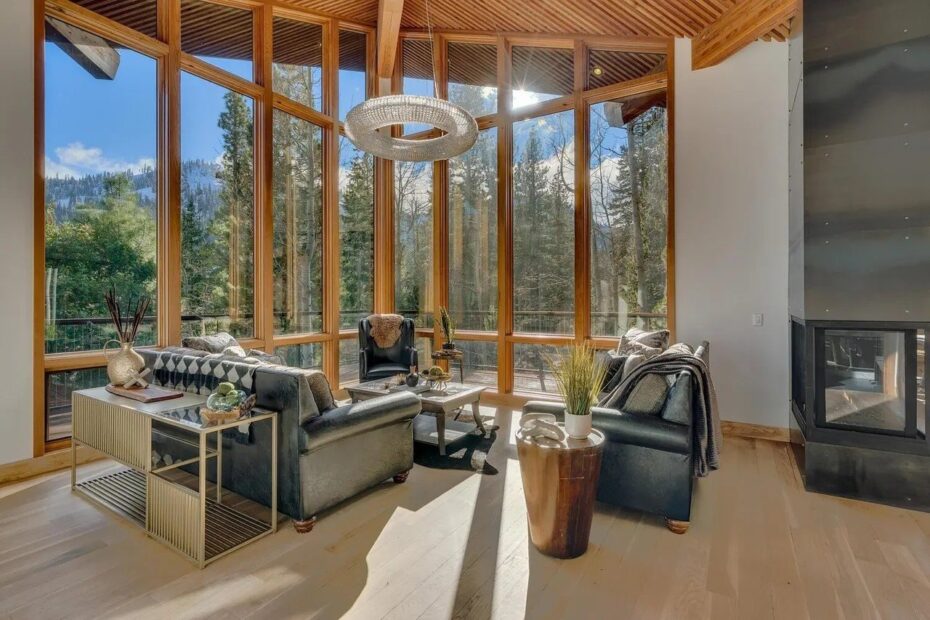
An “architectural jewel” in Lake Tahoe that was born out of the remains of a crumbling midcentury modern landscape has hit the market for $4.95 million.
Located just a short 12-minute drive from the shores of the lake and a stone’s throw from world-class skiing at Palisades Tahoe, the Olympic Valley, CA, property features enormous walls of windows that allow residents to enjoy spectacular views of the home’s entire surroundings at all hours of the day.
Dubbed the “Reimagined Klaussen Cabin,” the mountain retreat blends history, thoughtful design, and modern comfort into a warm haven that feels like it was made just for the holidays.
While the glass walls make it feel as though you are living atop a snowy peak, creating the feeling of residing inside a real-life snow globe, the 3,508-square-foot home still boasts an undeniably cozy aesthetic.
From the moment you step inside, the four-bedroom, 4.5-bathroom property makes an impression.
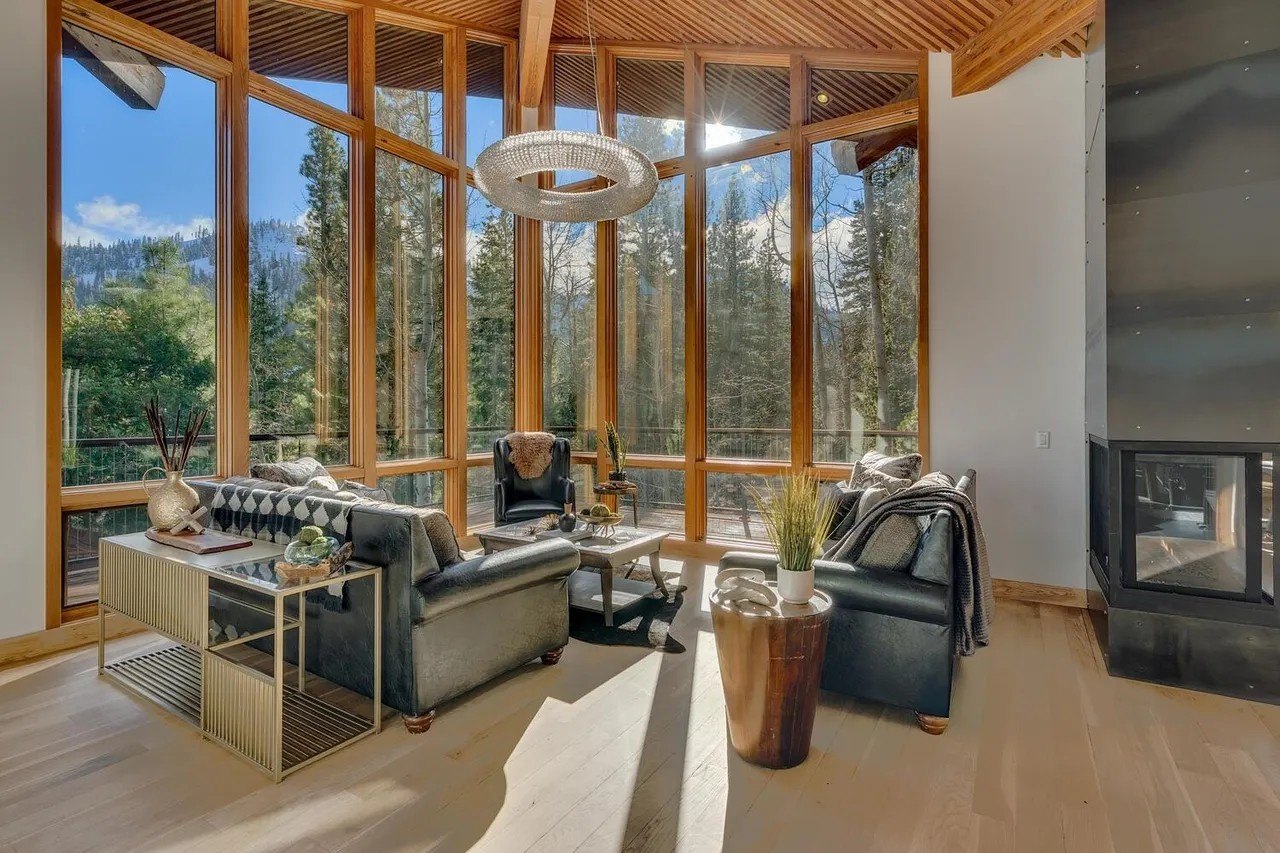
Floor-to-ceiling windows frame views of surrounding aspens and the peaks of Palisades Tahoe, pulling the landscape directly into the airy interiors. A gas fireplace anchors the living room, setting the tone for perfect après-ski evenings, while decks off every bedroom promise fresh alpine air on even the warmest summer days.
The property’s true distinction, however, lies in its origins, which began in the mid-1960s when the parcel was first developed.
As listing agent Bill Dietz explains, “The original home was constructed prior to the 1960 Winter Olympics and was designed by San Francisco-based architect Henrik Bull.”
Built for his college roommate, Peter Klaussen, the first cabin measured just 876 square feet and included a compact kitchen, small living area, sleeping loft, and exterior basement for ski and wood storage. Despite its modest footprint, the design stood out.
“In 1958, Sunset magazine showcased the Klaussen Cabin on its cover as the ‘Sunset Discovery Home,’ a milestone that helped launch Bull’s noteworthy career, particularly in snow-country design,” says Dietz.
Widely regarded as a pioneer of modern mountain architecture, Bull went on to design influential ski-country projects including lodges, resorts, and private residences.
As it stands today, the reimagined Klaussen Cabin has evolved significantly from Bull’s original design after “structural issues” led to the original structure being removed.
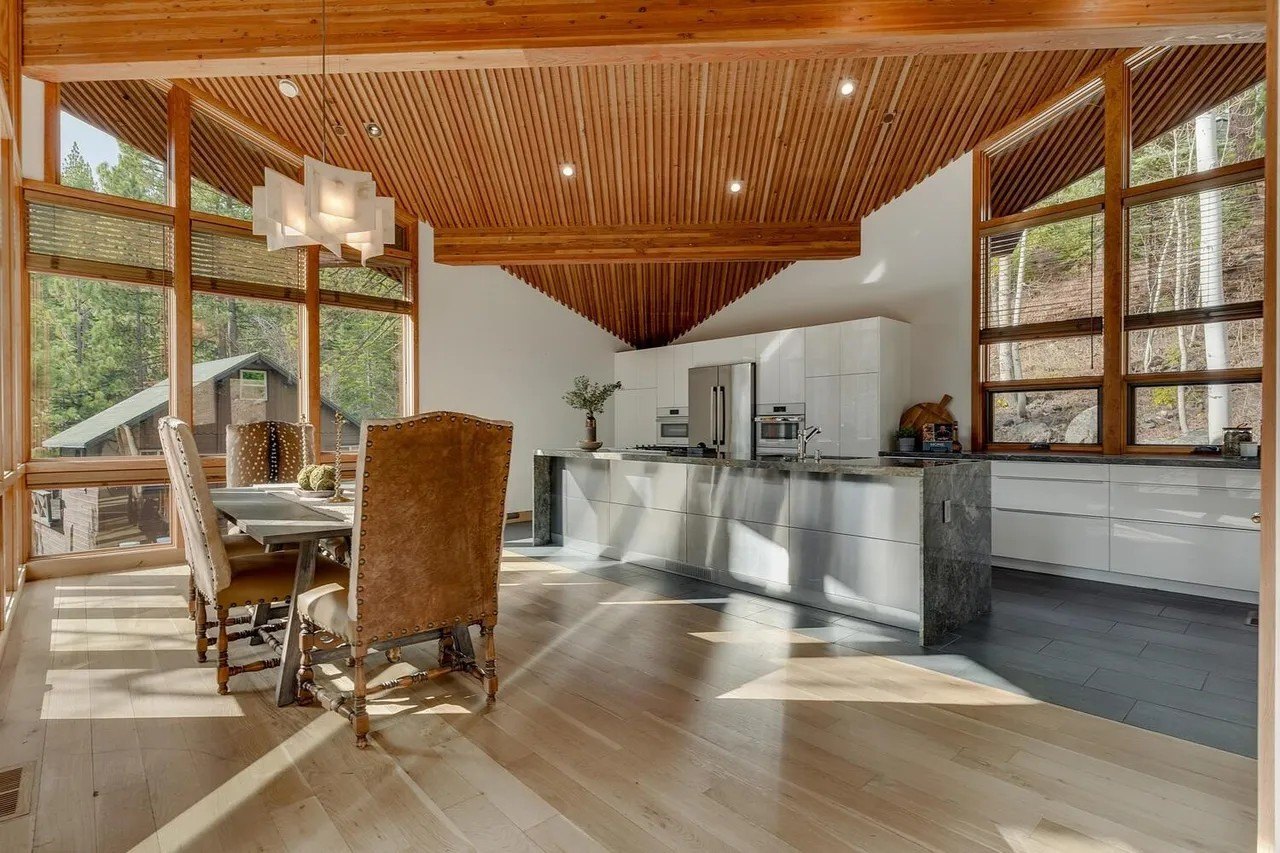
Rebuilt and expanded by the current owners in 2016, with deep reverence for the first structure, it retains the spirit of the 1955 cabin. Bull even served as an advisory architect before his passing, though he never saw the project completed. The result is a contemporary home that honors his vision through three connected “pods” featuring folded rooflines that echo the structure’s midcentury roots.
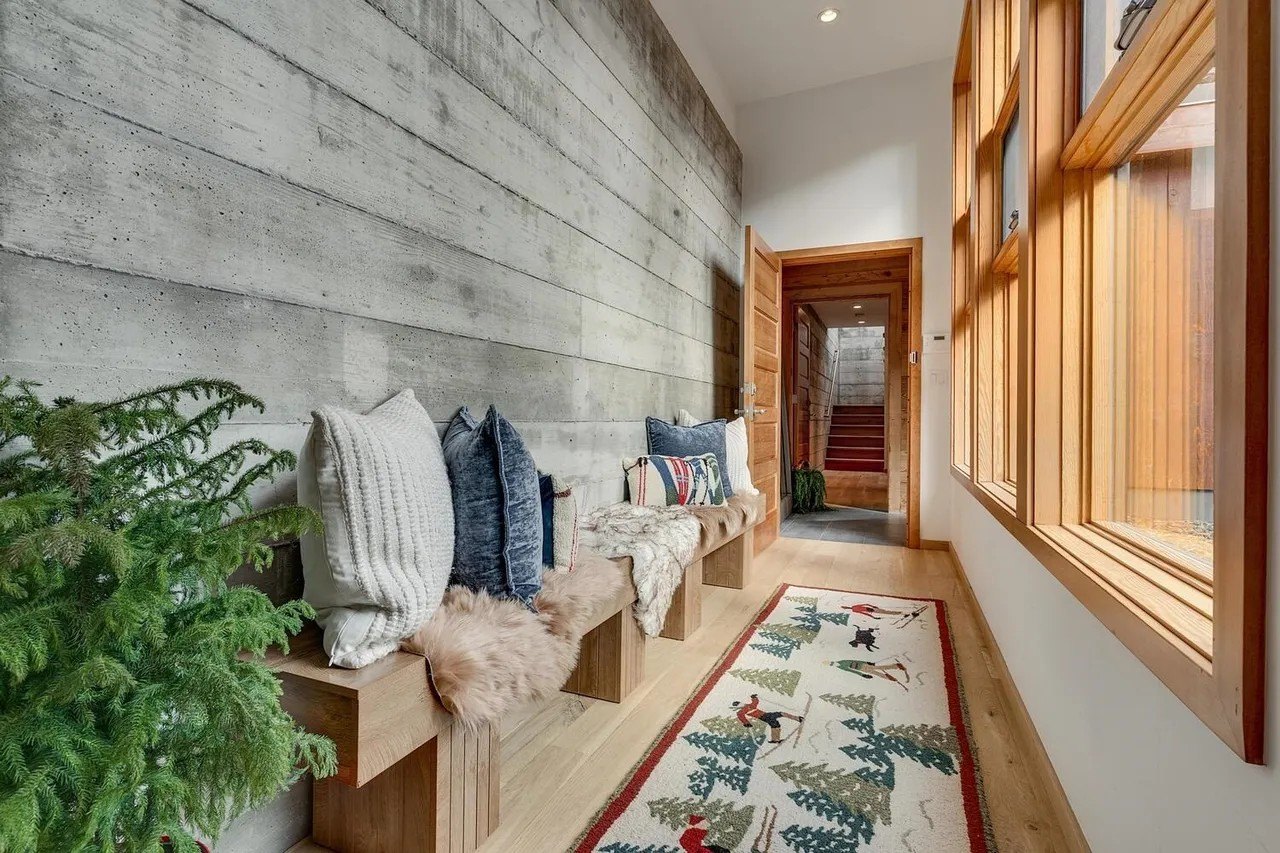
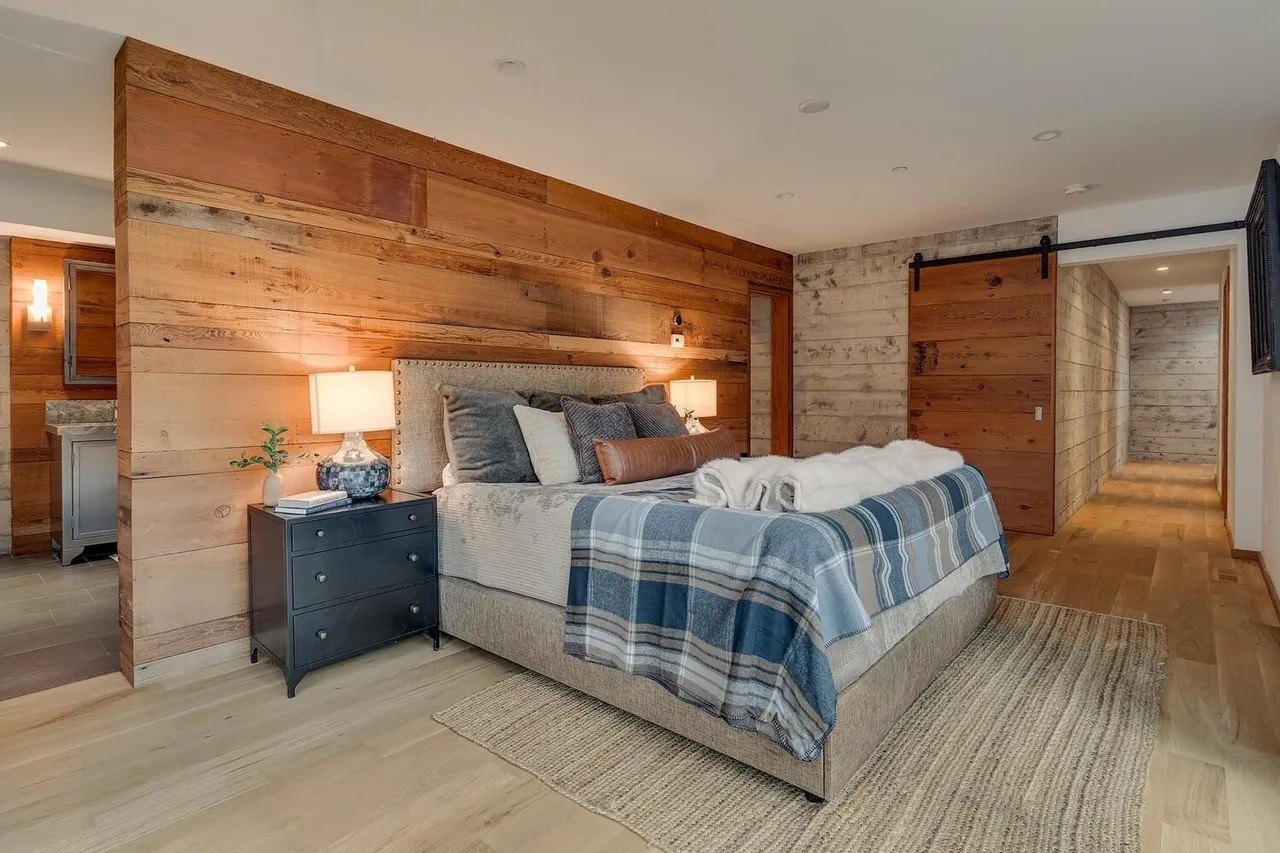
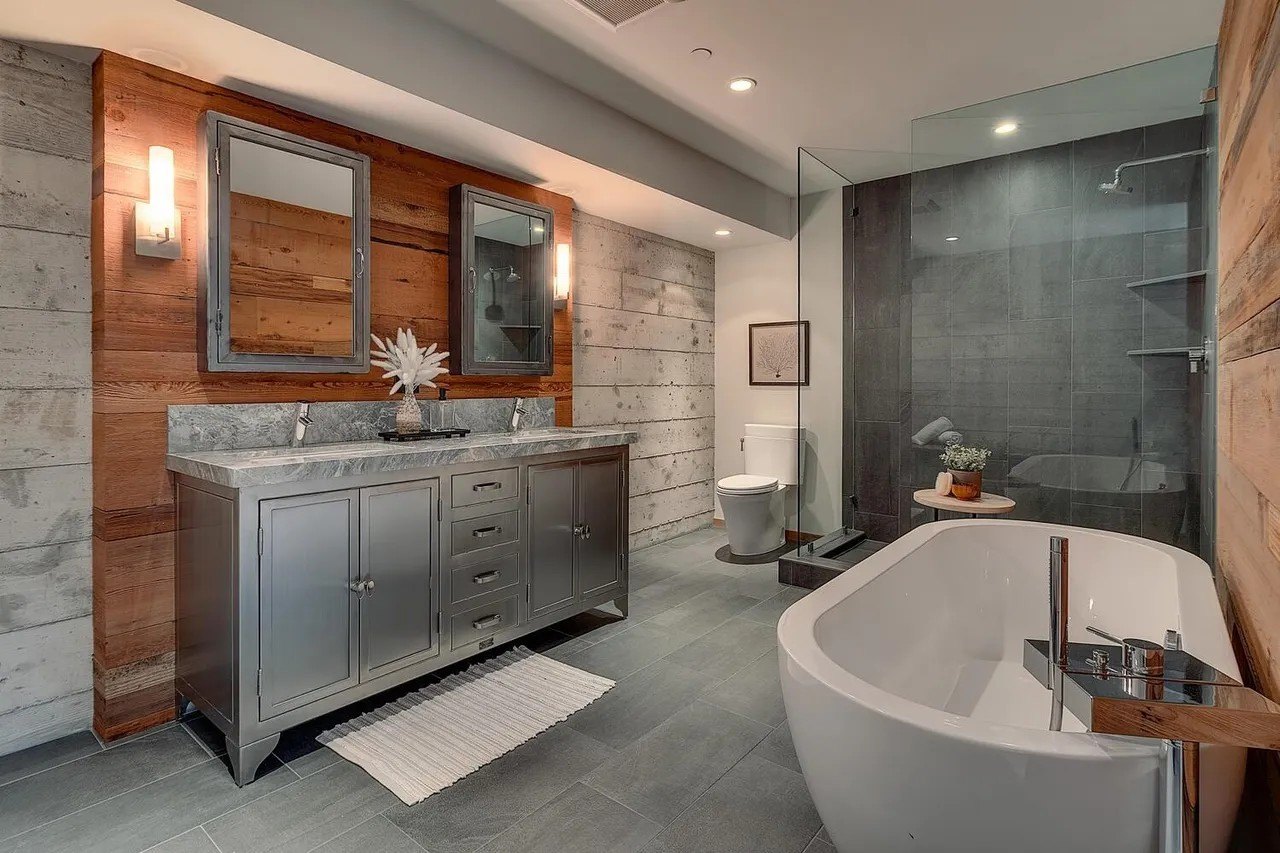
Inside, thoughtful details continue. Beyond the four bedrooms, two of which come with en-suite baths, the home also includes an office and family room. Reclaimed wood from the original cabin appears throughout, with siding repurposed as accents behind vanities and near entryways.
The kitchen, equipped with modern appliances, opens onto the main living area, reinforcing its role as the heart of the home. Just outside, a spacious back patio with a hot tub and firepit invites quiet evenings under the stars.
Practical comforts round out the property: in-floor hydronic heating, central air conditioning (a rarity in Tahoe homes), and an oversized two-car garage with ample storage for outdoor gear and toys.
And of course, there’s the location. Minutes from Palisades Tahoe’s village shops, restaurants, and lifts, the cabin offers both privacy and proximity—an irresistible combination for mountain dwellers.
“Positioned in the desirable West End neighborhood, the cabin is just minutes from Palisades Tahoe,” says Dietz. “It’s less than a mile from the resort, making it ideal for skiers or people with children on the ski team.”
At its core, the home is much more than a beautifully modernized residence. It’s a storybook cabin shaped by the signature ideas that defined an architect’s lifetime.
As Dietz explains, “This cabin was Henrik Bull’s first architectural project when he was beginning his career, and, as an adviser on the rebuild, it was also his last.”