Tucked along a quiet street in northern Connecticut is an 1803 Eyebrow Colonial farmhouse that has been transformed into a richly layered storybook residence that is as much a living work of art as it is a picturesque family home.
The historic Sherman, CT, property, known as Black Dog Farm, made an elegant entry onto the market recently, with an asking price of $3.9 million—offering a rare blend of impeccably preserved Americana, fine art, and pastoral seclusion.
Set on 4.6 acres and bordered by the Appalachian Trail, the property feels like an intentional time capsule, right down to its Eyebrow Colonial design, which takes its name from the small windows that peek out from under the roofline, looking very much like glittering eyes under a strong brow.
Thanks to its proximity to the Appalachian Trail, a future owner is guaranteed to be able to enjoy the serene beauty of nature for many years to come, with strict regulations in place that protect that area and prevent any developments.
“The Appalachian Trail assures the new property owner that this totally private pastoral setting will never change,” says owner and artist Elaine Voghel, who spent decades restoring the home with meticulous attention to detail.
History runs deep here. The house was originally built in 1803 for the Giddings family before becoming the Stapleton Dairy Farm.
Voghel still holds original dairy milk tags from the farm—hand-delivered years ago by the original owner’s son.
“He traveled from New Jersey to visit his childhood home,” she recalls. “I found him standing by the stone wall on Hoyt Road. He was a very old gentleman, with many stories to tell of his youth growing up here.”
The land itself has played a role in American history. In 2008, the Sherman Historical Society staged a reenactment of George Washington’s 1780 ride through the region, with the brigade assembling on the grounds of the property.
“A small army of horses with riders in full period-correct attire formed a line from the tobacco barn down the driveway,” commemorating Washington’s passage through what is now Sherman, Voghel says.
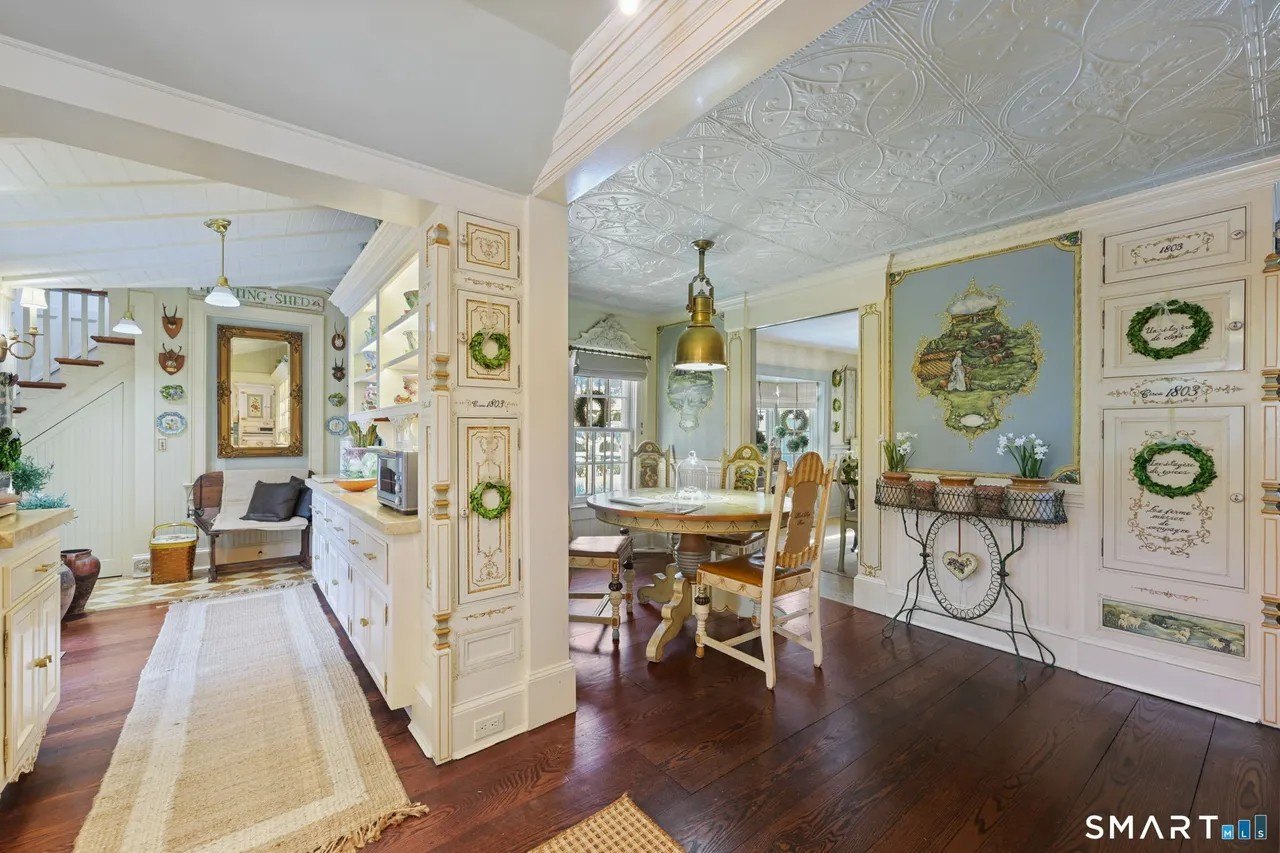
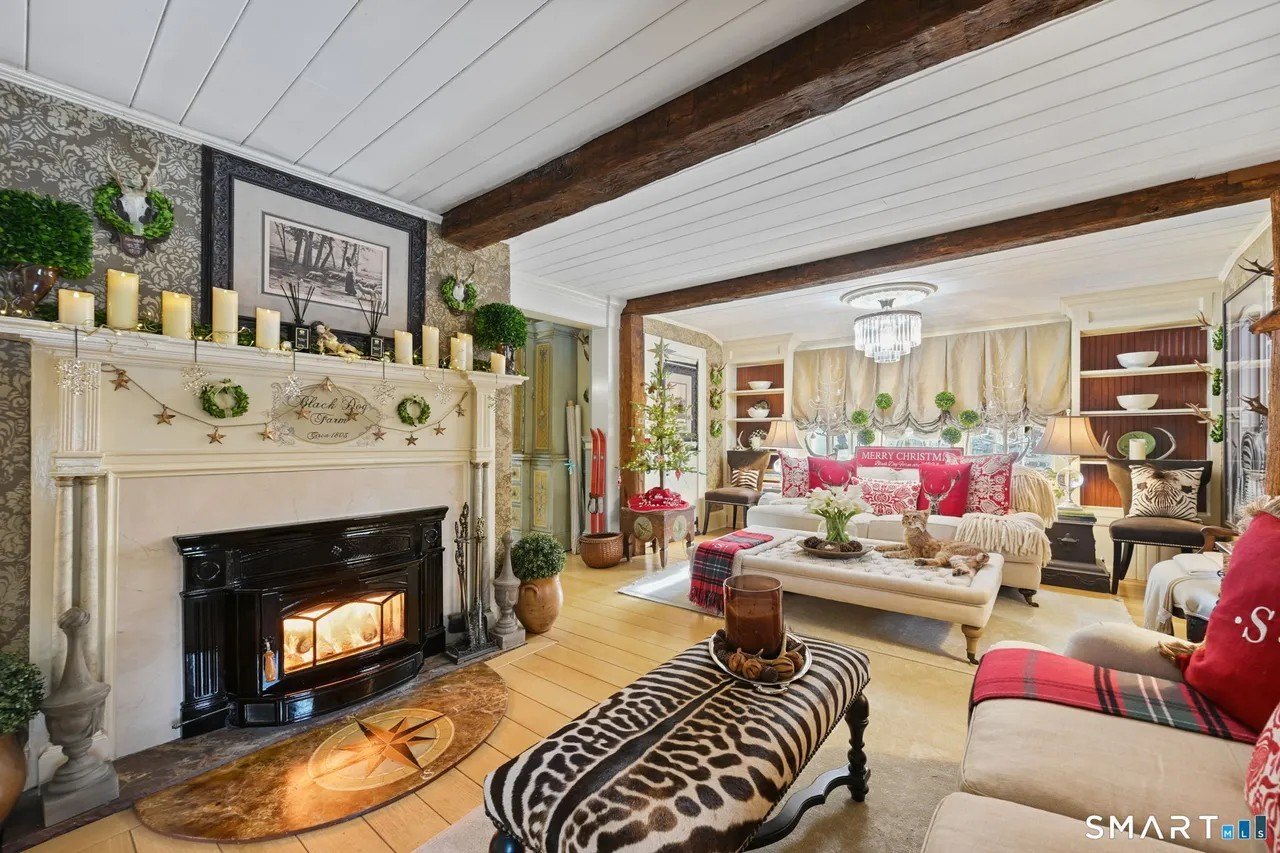
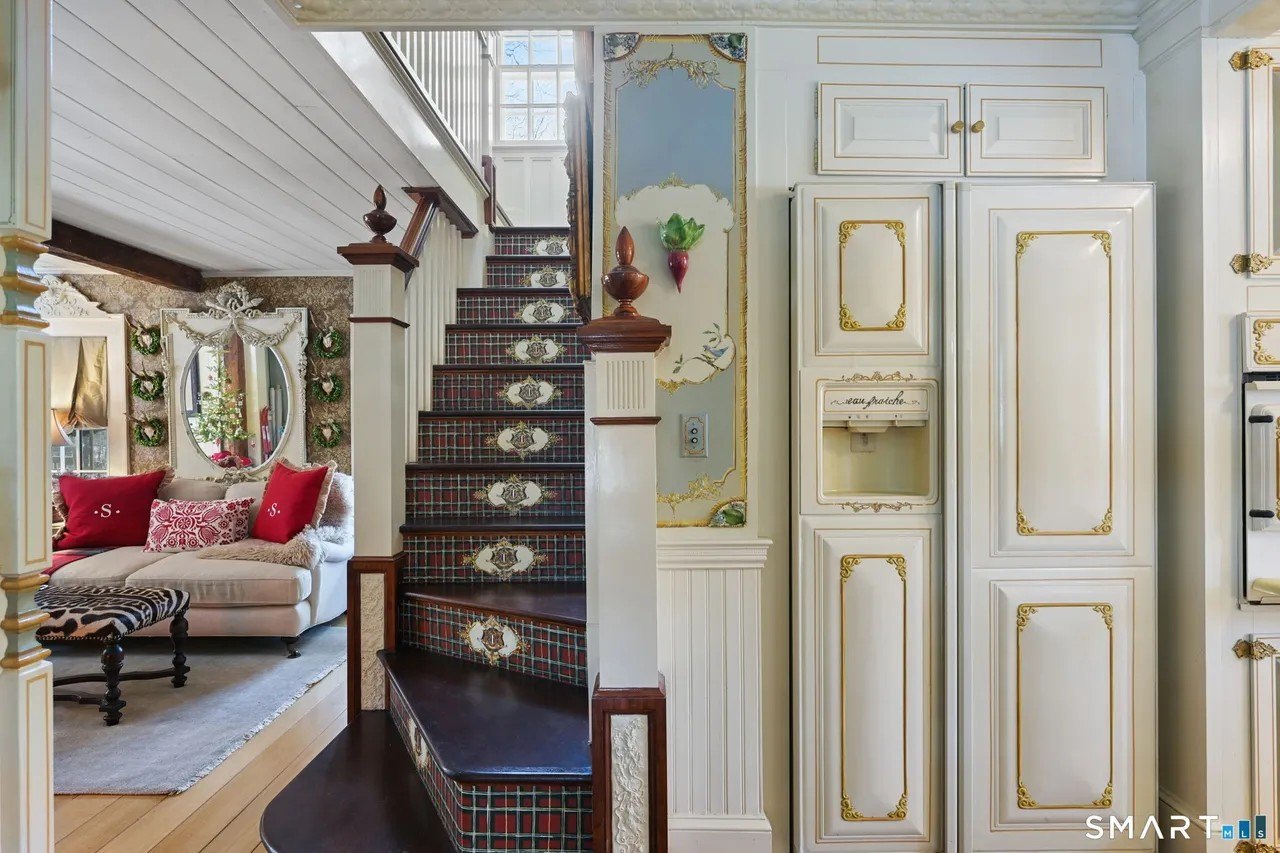
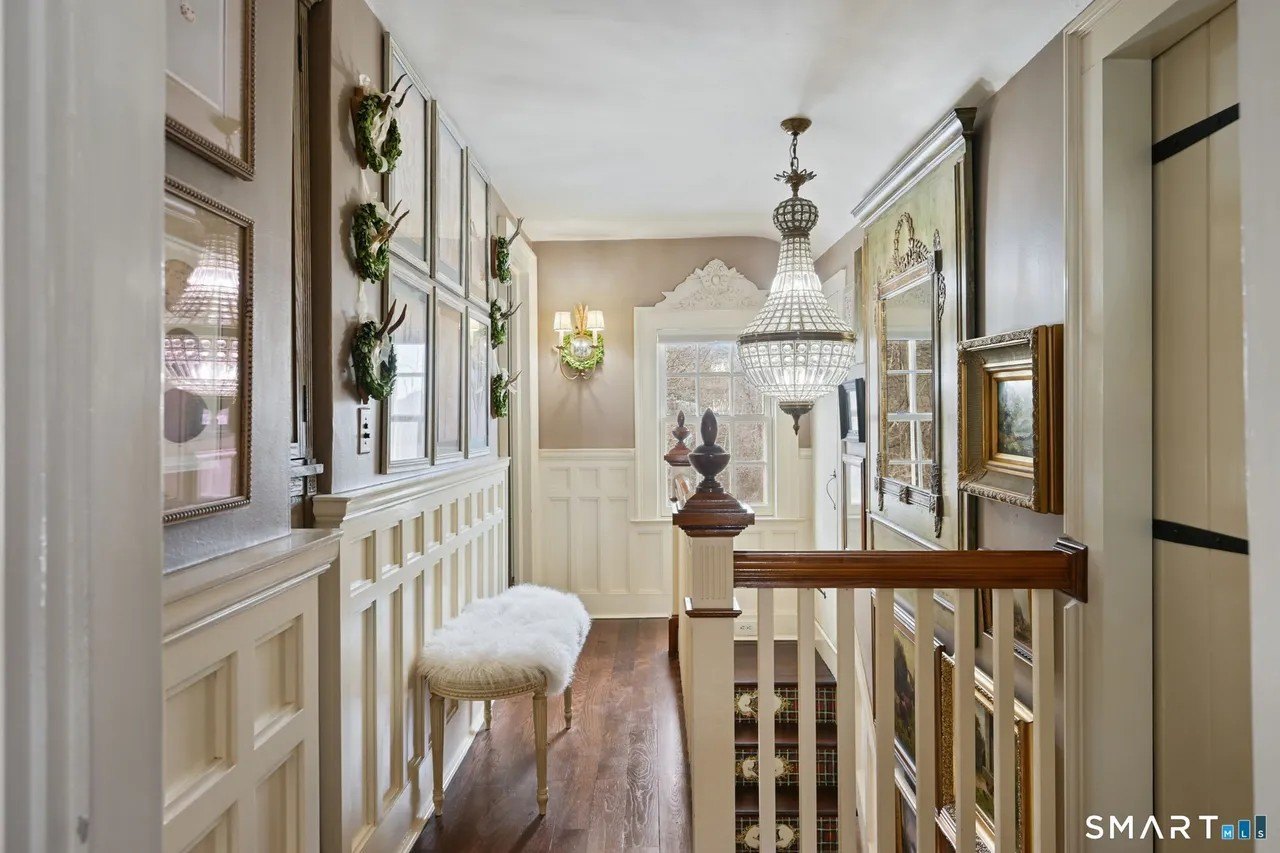
Inside, the three-bedroom farmhouse feels less like a restored antique and more like something from a living folktale. Voghel retained original hand-hewn beams, plaster walls, and a rare Dutch door with vintage bronze hardware.
“I researched the home’s history,” she says, “and that history is reflected in all the hand-painted murals and artwork throughout.”
The interiors carry an almost Dutch, Old World sensibility—quietly whimsical and entirely one of a kind.
The home’s defining architectural detail, the eyebrow windows on the second floor, has been thoughtfully reimagined.
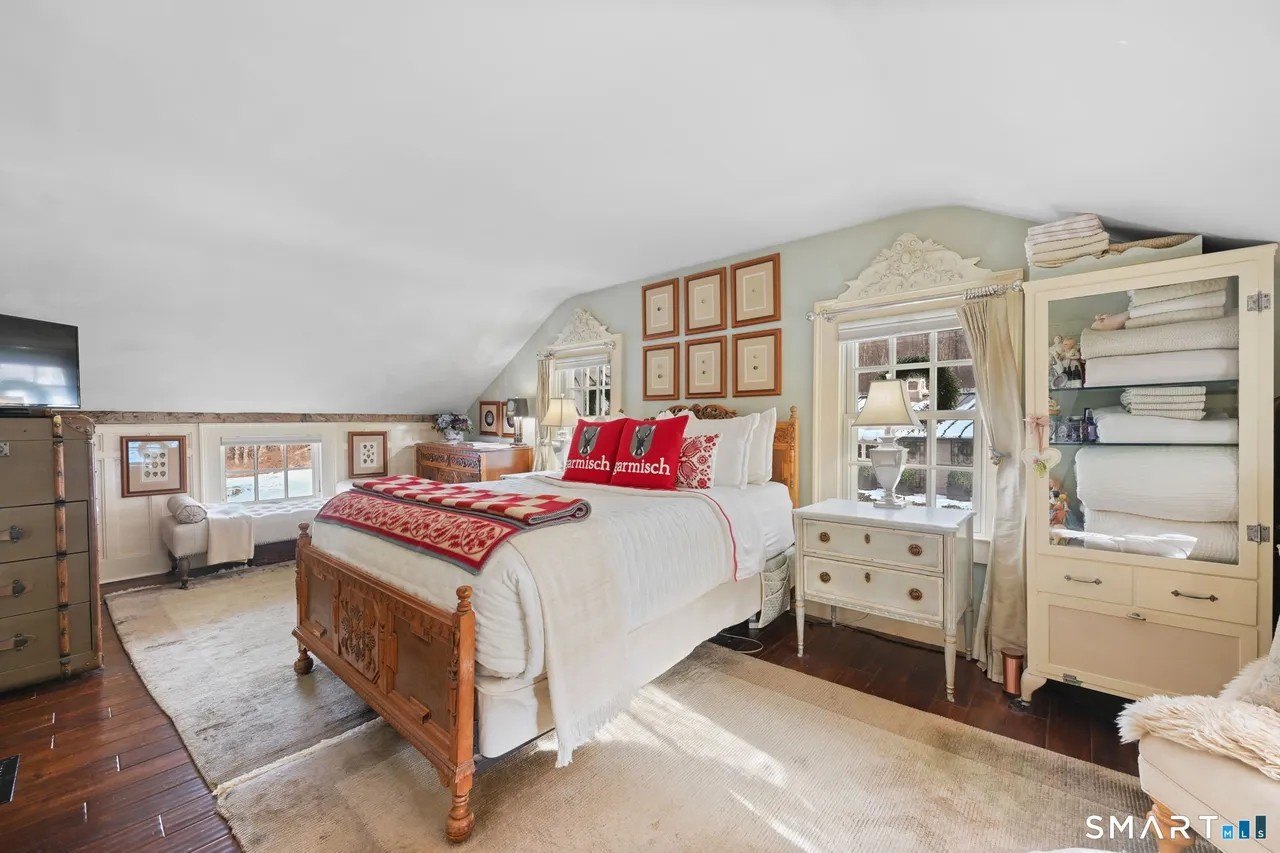
“They were replaced with state-of-the-art, handmade mahogany windows with mouth-blown restoration glass,” Voghel explains, “creating the perfect union of 20th-century functionality fused with 18th-century charm.”
Her most treasured upgrade, however, is the dining room bay window.
“This masterpiece is hand-milled out of mahogany and looks directly onto the lower courtyard star garden,” she says.
Outside, Voghel paid homage to classic English gardens. Beginning in 1998, she designed dry-stacked stone walls using Pennsylvania lichen moss stone, capped with rare lilac stone.
“In keeping with the English garden tradition,” she notes, “the property boasts hundreds of perfectly trimmed rows of English suffruticosa boxwoods.”
Tiered courtyards, Versailles-style planters, mature perennials, and rows of Chinese peony trees bring vibrant color throughout the seasons.
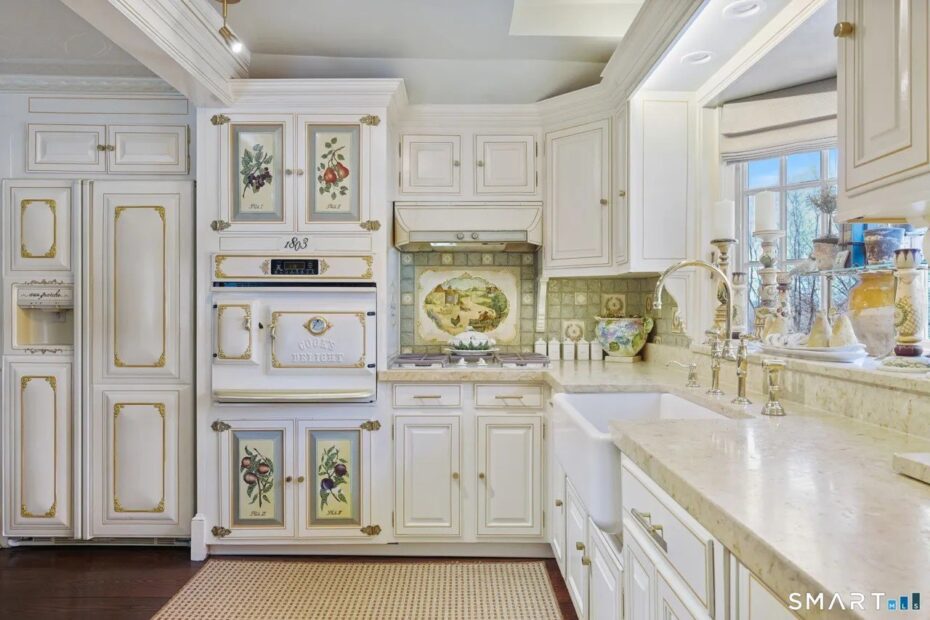
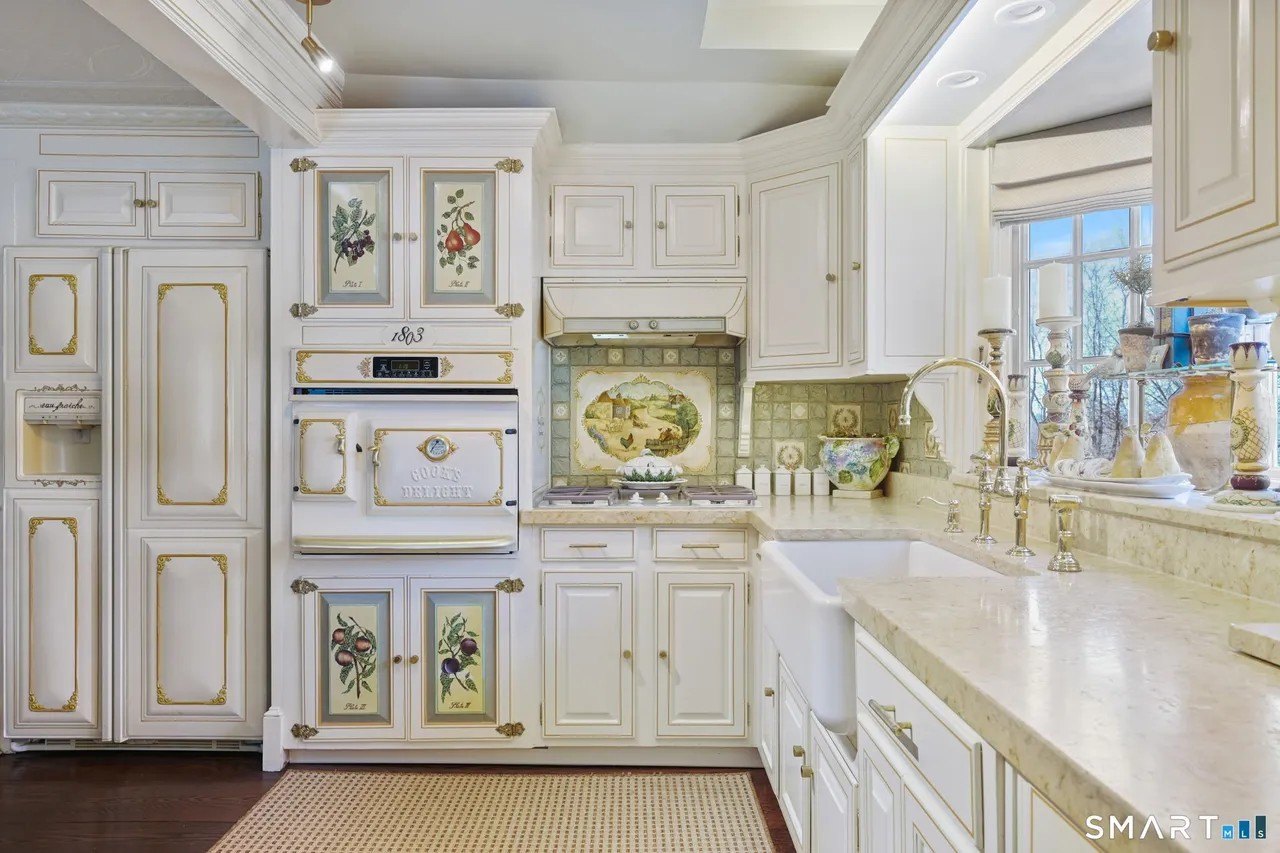
Modern upgrades were handled with the same sensibility. The primary bath was remodeled in 2018 with heated marble floors and a spa-worthy shower, while a 2021 kitchen renovation introduced leathered marble countertops, a Shaws fireclay farmhouse sink, Perrin & Rowe fixtures, and cabinetry hand-finished in French vanilla with mustard pinstriping.
Completing the estate is the renovated Cottage Barn at Black Dog Farm, envisioned as a flexible living space that could serve as a guesthouse, studio, an office, or a pool house. Just over an hour from New York City, this northern Fairfield County retreat stands as a singular work of art that’s impossible to replicate.